
If you are searching for the top US lakes, you will quickly find that there is no single official list that can label one lake as the best. A lake can stand out because of its size, depth, scenery, geology, wildlife, recreation, or national importance.
That is why this guide uses a more useful approach. Instead of creating an unsupported overall ranking, it highlights major U.S. lakes that stand out for documented characteristics and explains what makes each one worth knowing.
The list includes enormous freshwater lakes such as Lake Superior and Lake Michigan, deep mountain lakes such as Lake Tahoe, the volcanic Crater Lake, high-elevation Yellowstone Lake, and the saline Great Salt Lake. It also explains an important distinction that many lake lists miss: natural lakes and reservoirs are not the same thing.
If you are planning a family vacation, road trip, hiking adventure, fishing trip, photography outing, or simply researching America’s most notable lakes, this guide will help you choose a destination based on what you actually want to experience.
Quick Answer: What Are the Top US Lakes?
The United States has thousands of lakes, so the meaning of “top” depends on the purpose of the comparison.
Some of the country’s most notable lakes include:
- Lake Superior — largest of the Great Lakes by surface area and the largest by volume.
- Lake Michigan — the only Great Lake located entirely within the United States.
- Lake Huron — a huge Great Lake known for islands, shoreline scenery, and recreation.
- Lake Erie — a shallower Great Lake with beaches, fishing, boating, and waterfront communities.
- Lake Ontario — the smallest Great Lake by surface area but still a major freshwater lake.
- Lake Tahoe — a deep alpine lake on the California-Nevada border.
- Crater Lake — the deepest lake in the United States and a volcanic caldera lake.
- Yellowstone Lake — the largest high-elevation lake in North America.
- Great Salt Lake — a major saline lake with an unusual ecosystem and extensive wetlands.
- Lake Okeechobee — a large, shallow Florida lake important to the state’s water system.
These are not presented as an official government ranking. They represent different categories of importance, recreation, scenery, geography, and scientific interest.
How Were These Lakes Selected?
A useful lake guide should explain its selection criteria rather than simply calling a list “the best.”
For this article, the focus is on lakes with at least one significant, verifiable characteristic.
Geographic Importance
The Great Lakes are included because they form the largest surface freshwater system in the world. USGS describes the five Great Lakes Superior, Michigan, Huron, Erie, and Ontario as covering more than 94,250 square miles.
Exceptional Physical Features
Some lakes are notable because of their depth, elevation, size, or unusual geological setting.
Crater Lake, for example, reaches 1,949 feet at its maximum depth and is the deepest lake in the United States.
Recreation and Travel Value
Large lakes can support boating, fishing, swimming, hiking, wildlife viewing, photography, camping, and scenic travel.
The right choice depends on which of these activities matters most to you.
Ecological Importance
Some lakes are important not simply because they are attractive but because they provide habitat for wildlife.
Great Salt Lake, for example, supports brine shrimp, shorebirds, waterfowl, wetlands, and other parts of a specialized saline ecosystem.
National or Cultural Significance
Several major U.S. lakes are located within national parks or protected landscapes. Their importance extends beyond recreation to geology, wildlife, history, and conservation.
Yellowstone Lake is a strong example because its shoreline and surrounding ecosystem have both natural and archaeological significance.
Top US Lakes at a Glance
The following table provides a practical starting point rather than an overall ranking.
| Lake | Location | Type or Setting | Best Known For |
| Lake Superior | MN, WI, MI and Ontario | Great Lake | Size, depth, wilderness shoreline |
| Lake Michigan | IL, IN, MI, WI | Great Lake | Beaches, cities, boating, recreation |
| Lake Huron | MI and Ontario | Great Lake | Islands, beaches, open water |
| Lake Erie | MI, OH, PA, NY and Ontario | Great Lake | Fishing, beaches, recreation |
| Lake Ontario | NY and Ontario | Great Lake | Waterfront communities and recreation |
| Lake Tahoe | CA and NV | Alpine lake | Mountain scenery and deep water |
| Crater Lake | OR | Volcanic caldera lake | Deepest U.S. lake |
| Yellowstone Lake | WY | High-elevation natural lake | Wilderness and national park scenery |
| Great Salt Lake | UT | Saline terminal lake | Birds, wetlands, brine shrimp, unique ecology |
| Lake Okeechobee | FL | Large shallow lake | Fishing, wetlands, South Florida water system |
The table deliberately includes different types of lakes. Comparing all of them using only surface area would hide many of the characteristics that make them significant.
Natural Lakes vs. Reservoirs: Why the Difference Matters
One of the most common problems with online lake lists is that the word lake can be used for both natural lakes and reservoirs.
A natural lake forms through geological or natural processes. A reservoir is an artificial water body created or enlarged through human intervention, often by damming a river.
USGS has documented both natural lakes and artificial reservoirs separately and notes that reservoirs play major roles in water supply, energy, irrigation, flood control, and recreation.
Why Lake Mead Is Different
Lake Mead is an important example.
It was formed following the construction of Hoover Dam on the Colorado River. USGS identifies Lake Mead as the largest reservoir in the United States by volume.
That makes Lake Mead highly relevant to a broad search for major U.S. lakes, but it should not be confused with a naturally formed lake.
Should Reservoirs Be Included in a Top Lakes List?
That depends on the purpose.
If you are researching:
- Natural lake geography → focus on natural lakes.
- Major recreational waters → reservoirs can reasonably be included.
- Largest U.S. water bodies → clearly state whether reservoirs count.
- Lake formation → separate natural lakes from artificial reservoirs.
- Fishing and boating destinations → both types may be relevant.
This distinction prevents misleading comparisons.
Lake Superior: The Largest Great Lake
Lake Superior is one of the most significant freshwater lakes in North America.
It borders Minnesota, Wisconsin, and Michigan in the United States and Ontario in Canada. The U.S. Environmental Protection Agency identifies it as the largest Great Lake by volume, as well as the deepest and coldest of the Great Lakes.
What Makes Lake Superior Special?
Lake Superior stands out because of its enormous scale and relatively wild shoreline.
The lake’s basin includes forests, rocky shorelines, islands, beaches, bays, and protected natural areas.
Its large size also means visitors should not think of it as a small recreational lake. Weather and water conditions can change, and open-water conditions can become challenging.
Best Activities Around Lake Superior
Depending on the location, visitors can enjoy:
- Hiking
- Camping
- Fishing
- Kayaking
- Boating
- Scenic drives
- Beach walks
- Wildlife watching
- Photography
For travelers who want a combination of freshwater scenery and large-scale wilderness, Lake Superior offers a very different experience from a heavily developed resort lake.
Lake Michigan: The Largest Great Lake Entirely in the United States
Lake Michigan borders Illinois, Indiana, Michigan, and Wisconsin.
It is the only Great Lake whose shoreline is entirely within the United States.
Why Visit Lake Michigan?
Lake Michigan offers an unusual mix of major urban waterfronts and natural shoreline.
Travelers can find beaches, dunes, forests, harbors, islands, parks, and recreational communities around the lake.
That variety makes it useful for several types of trips.
Who Might Enjoy Lake Michigan?
Lake Michigan can work well for travelers interested in:
- Beach vacations
- Boating
- Fishing
- Hiking
- Dune landscapes
- Road trips
- City-and-lake vacations
- Photography
Someone can visit a major lakefront city and then reach quieter natural areas without leaving the broader Lake Michigan region.
Lake Huron: Islands, Beaches, and Open Water
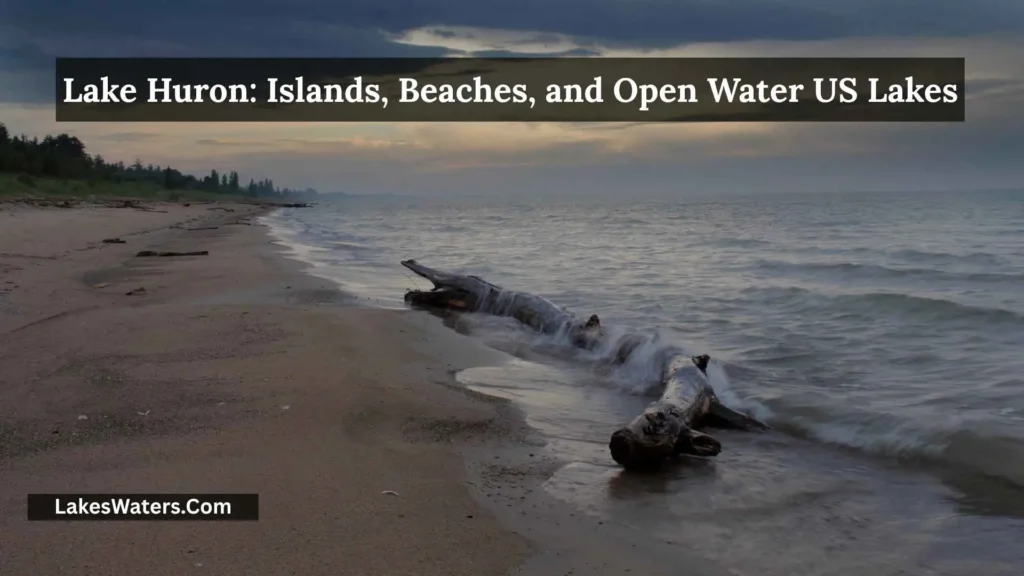
Lake Huron borders Michigan and Ontario and is one of the five Great Lakes.
Its geography includes an extensive shoreline and numerous islands.
What Makes Lake Huron Different?
Lake Huron is particularly interesting for travelers who enjoy exploring beyond a single waterfront.
Its shoreline provides access to:
- Beaches
- Islands
- Lighthouses
- Boating areas
- Fishing locations
- Hiking opportunities
- Scenic communities
The lake is also home to Manitoulin Island, which is the world’s largest island in a freshwater lake.
Best Reason to Visit
Lake Huron is a good example of why surface area alone does not tell the whole story.
Its combination of islands, shoreline, water, and surrounding landscapes creates opportunities for exploration that are different from those at a compact inland lake.
Lake Erie: Beaches, Fishing, and Recreation
Lake Erie is the shallowest of the five Great Lakes.
Its location along Michigan, Ohio, Pennsylvania, and New York makes it accessible to large populations in the surrounding region.
What Can You Do at Lake Erie?
Popular activities around different parts of the lake include:
- Fishing
- Boating
- Swimming
- Beach recreation
- Birdwatching
- Hiking
- Photography
- Visiting waterfront communities
Because Lake Erie is relatively shallow compared with the other Great Lakes, its water can respond differently to seasonal weather patterns.
As with every major lake, visitors should check local weather and water conditions before boating or swimming.
Lake Ontario: New York’s Great Lake
Lake Ontario is the smallest of the five Great Lakes by surface area, but it remains enormous compared with most inland lakes.
Its U.S. shoreline is in New York.
Why Is Lake Ontario Worth Visiting?
The lake provides a mixture of natural and developed shoreline.
Visitors can combine:
- Beaches
- Fishing
- Boating
- Parks
- Waterfront trails
- Historic communities
- Scenic drives
Its location also makes it useful for travelers who want to combine a lake visit with other destinations in New York.
Lake Tahoe: A Deep Alpine Lake
Lake Tahoe sits on the California-Nevada border in the Sierra Nevada.
EPA lists its surface area at about 192 square miles, its elevation at about 6,223 feet, and its maximum depth at approximately 1,645 feet. EPA identifies it as the second-deepest lake in the United States after Crater Lake.
Why Is Lake Tahoe So Popular?
Lake Tahoe combines several features in one destination:
- Mountain scenery
- Deep freshwater
- Forests
- Beaches
- Hiking
- Boating
- Kayaking
- Paddleboarding
- Winter recreation
The lake is especially distinctive because its high elevation places it within a mountain environment rather than a lowland basin.
Who Should Consider Lake Tahoe?
Lake Tahoe can appeal to travelers who want:
- A mountain vacation
- Scenic photography
- Hiking
- Water recreation
- Beaches with alpine scenery
- Summer and winter activities in the same region
Because conditions can vary sharply with elevation and season, trip planning should include current weather, road, trail, and park information.
Crater Lake: The Deepest Lake in the United States
Crater Lake in Oregon is unlike the Great Lakes and Lake Tahoe.
It occupies a volcanic caldera formed after the collapse of Mount Mazama approximately 7,700 years ago. USGS identifies its maximum depth as 594 meters, or 1,949 feet, making it the deepest lake in the United States.
How Did Crater Lake Form?
Mount Mazama was a large volcanic system.
A major eruption emptied part of the volcano’s magma chamber, causing the summit area to collapse and form a large depression called a caldera.
Over time, rain and snowfall accumulated inside the basin, helping create the lake seen today. The National Park Service explains that Crater Lake is an example of a volcanic lake formed within a caldera.
Why Visit Crater Lake?
Crater Lake is especially suited to:
- Scenic viewpoints
- Photography
- Hiking
- Geology enthusiasts
- National park trips
- Road trips
- Nature study
Its geological origin is a major part of the experience.
Yellowstone Lake: A High-Elevation Wilderness Lake
Yellowstone Lake is located inside Yellowstone National Park in Wyoming.
The National Park Service identifies it as the largest high-elevation lake in North America above 7,000 feet. It sits at roughly 7,733 feet above sea level and covers about 132 square miles.
How Did Yellowstone Lake Form?
The main basin of Yellowstone Lake is associated with the Yellowstone Caldera.
Later geological processes, including volcanic activity, faulting, and glacial processes, helped shape different parts of the lake.
This gives Yellowstone Lake a complex geological history rather than a single simple origin.
What Makes Yellowstone Lake Different?
The lake is part of a much larger wilderness ecosystem.
Visitors may combine a lake visit with:
- Wildlife viewing
- Hiking
- Photography
- Scenic drives
- Boating in permitted areas
- National park sightseeing
The water is extremely cold. NPS states that swimming is not recommended and notes that survival time in the lake’s cold water can be very short.
That is an important practical distinction: a beautiful lake is not automatically a swimming destination.
Great Salt Lake: A Unique Saline Lake
Great Salt Lake in Utah belongs on a major U.S. lake list for an entirely different reason.
It is a saline terminal lake, meaning water flows into it but does not flow out through a river to another body of water. Evaporation concentrates salts and minerals in the lake.
Utah’s official Great Salt Lake website describes it as the largest saline lake in the Western Hemisphere.
Why Is Great Salt Lake Important?
The lake supports an unusual ecosystem involving:
- Brine shrimp
- Brine flies
- Algae
- Shorebirds
- Waterfowl
- Wetlands
- Salt-tolerant organisms
Utah wildlife officials note that the lake does not support fish because of its high salinity, while brine shrimp and brine flies provide important food for migratory birds.
Why Does Its Size Change?
Great Salt Lake is shallow, so changes in water supply can produce large changes in lake level and surface area.
That means an older measurement of its surface area may not represent current conditions.
For travelers and researchers, this is an important lesson: lake statistics are sometimes snapshots rather than permanent characteristics.
Lake Okeechobee: Florida’s Major Inland Lake
Lake Okeechobee is a large, shallow freshwater lake in South Florida.
Its importance extends beyond recreation. It is part of the broader water-management system of South Florida and has strong connections to wetlands, agriculture, wildlife, and regional water management.
What Can You Do Around Lake Okeechobee?
Depending on location and current conditions, visitors may find opportunities for:
- Fishing
- Boating
- Wildlife viewing
- Birdwatching
- Hiking
- Photography
- Scenic exploration
Because Lake Okeechobee is relatively shallow and water levels are managed within a larger regional system, conditions can differ from those at deep natural mountain lakes.
Which US Lakes Are Best for Different Types of Travelers?
Instead of asking which lake is universally “best,” start with the experience you want.
Best for Mountain Scenery
Consider:
- Lake Tahoe
- Crater Lake
- Yellowstone Lake
These lakes combine water with mountains, volcanic landscapes, forests, or high-elevation terrain.
Best for Huge Freshwater Landscapes
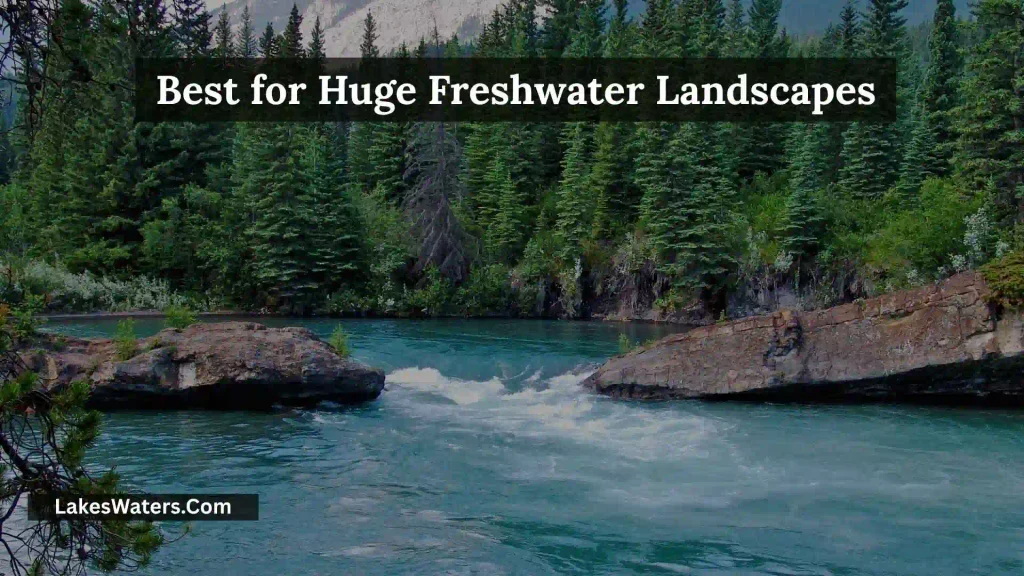
Consider the Great Lakes, especially:
- Lake Superior
- Lake Michigan
- Lake Huron
Their scale makes them feel very different from ordinary inland lakes.
Best for Geology
Crater Lake is an obvious choice because its basin is a volcanic caldera.
Yellowstone Lake also offers a complex geological story involving the Yellowstone Caldera, faulting, volcanic processes, and glaciers.
Best for Wildlife and Birdwatching
Great Salt Lake is especially important for migratory birds and wetland habitat. Utah officials describe the lake as a critical stopover for birds along the Pacific Flyway.
Yellowstone Lake also provides important aquatic habitat within a protected national park ecosystem.
Best for Beach Recreation
Parts of:
- Lake Michigan
- Lake Erie
- Lake Huron
- Lake Superior
offer beaches and shoreline recreation.
However, beach conditions vary by location. A lake is not one uniform destination; the experience can be very different from one shoreline community to another.
Best for Hiking
Lake Tahoe, Crater Lake, Yellowstone Lake, and parts of Lake Superior are strong choices for travelers who want to combine lake scenery with hiking.
The exact experience depends on trail access, elevation, season, and nearby public lands.
Best for a Road Trip
Great Lakes destinations work particularly well for road trips because the shoreline passes through many communities, parks, beaches, scenic areas, and cultural attractions.
Lake Tahoe and Yellowstone Lake can also work well as parts of larger mountain or national park itineraries.
Top US Lakes by Important Characteristics
The following comparison avoids pretending that one measurement determines the overall value of a lake.
| Characteristic | Lake |
| Largest Great Lake by surface area | Lake Superior |
| Largest Great Lake entirely within the U.S. | Lake Michigan |
| Deepest U.S. lake | Crater Lake |
| Second-deepest U.S. lake | Lake Tahoe |
| Largest high-elevation lake in North America | Yellowstone Lake |
| Major saline lake | Great Salt Lake |
| Major Florida freshwater lake | Lake Okeechobee |
| Largest Great Lake by volume | Lake Superior |
For example, EPA identifies Lake Superior as the largest Great Lake by volume, while USGS identifies Crater Lake as the deepest lake in the United States. EPA identifies Lake Tahoe as the second-deepest U.S. lake.
What Is the Difference Between the Largest and Deepest Lakes?
This distinction is essential when comparing U.S. lakes.
Surface area measures how much area the lake covers at the water’s surface.
Maximum depth measures the deepest point in the basin.
Volume measures how much water the lake contains.
These measurements can produce very different results.
Lake Superior covers an enormous surface area and is the largest Great Lake by volume. Crater Lake has a tiny fraction of Lake Superior’s surface area but reaches almost 2,000 feet deep.
Lake Tahoe provides another example. It covers about 192 square miles but reaches about 1,645 feet deep.
The practical lesson is simple: never assume the largest lake is also the deepest.
Are the Top US Lakes Natural or Man-Made?
Both natural lakes and reservoirs can be major U.S. destinations.
Natural Lakes
Natural lakes form through processes such as:
- Glacial activity
- Volcanic activity
- Tectonic movement
- Landslides
- River processes
- Changes in drainage patterns
Crater Lake is volcanic, while many northern lakes were strongly influenced by glacial processes.
Reservoirs
Reservoirs are created by human intervention, often through dams.
Examples include:
- Lake Mead
- Lake Powell
- Lake Oahe
- Lake Sakakawea
Lake Mead was formed by Hoover Dam and is a major reservoir serving water, energy, agricultural, and recreational needs in the Southwest. USGS identifies it as the largest U.S. reservoir by volume.
If you are researching the “largest lakes in the U.S.,” always check whether the source includes reservoirs.
Common Misconceptions About US Lakes
Several popular assumptions can lead to inaccurate lake comparisons.
The Biggest Lake Is Also the Deepest
Not true.
Lake Superior dominates the Great Lakes by surface area and volume, while Crater Lake is the deepest lake in the United States.
Every Lake on a Large-Lake List Is Natural
Not necessarily.
Reservoirs such as Lake Mead are artificial water bodies created by dams.
All Large US Lakes Are Freshwater
No.
Great Salt Lake is saline and has an ecosystem adapted to high salt concentrations.
Lake Size Never Changes
This is also incorrect.
Water levels can change the surface area of a lake, particularly in shallow lakes such as Great Salt Lake. Utah officials specifically note that even modest changes in water level can significantly affect its surface area.
A Beautiful Lake Is Always Safe for Swimming
No.
Water temperature, waves, currents, weather, access, and local rules all matter.
Yellowstone Lake is a good example. Despite its scenic setting, NPS warns that its water is extremely cold and does not recommend swimming.
How to Choose the Right US Lake for Your Trip
Use your priorities rather than an arbitrary overall ranking.
If You Want a Mountain Lake
→ Lake Tahoe or Crater Lake
Choose Tahoe for a broader range of mountain recreation. Choose Crater Lake for volcanic scenery and geological interest.
If You Want Huge Open Water
→ Lake Superior, Lake Michigan, or Lake Huron
These Great Lakes provide a large-scale freshwater experience.
If You Want Wildlife
→ Yellowstone Lake or Great Salt Lake
Yellowstone offers a protected national park ecosystem, while Great Salt Lake is especially important for migratory birds and saline-adapted wildlife.
If You Want a Beach-Oriented Trip
→ Lake Michigan, Lake Erie, or Lake Huron
Look at individual shoreline destinations rather than treating an entire Great Lake as one beach.
If You Want Geology
→ Crater Lake or Yellowstone Lake
Both have strong connections to volcanic and geological processes.
If You Want to Understand Water Management
→ Lake Mead or Lake Okeechobee
These lakes illustrate how water bodies can be closely tied to large regional water-management systems.
What Is the Best Time to Visit a US Lake?

There is no single best season for every lake.
Summer
Summer is often the main season for:
- Swimming
- Boating
- Kayaking
- Paddleboarding
- Camping
- Beach recreation
But popular destinations can also be busier during this period.
Spring
Spring can be attractive for:
- Waterfalls
- Wildflowers
- Wildlife
- Lower visitor levels
- Changing landscapes
However, snow can remain at high elevations.
Fall
Fall can offer:
- Autumn colors
- Cooler temperatures
- Photography
- Quieter trails
- Scenic drives
Northern and mountain destinations can become cold quickly.
Winter
Winter can transform mountain and northern lakes completely.
Snow and ice may make some locations beautiful but inaccessible or unsuitable for ordinary water recreation.
For national parks and mountain destinations, always check current road, trail, weather, and facility conditions before traveling.
Practical Lake Trip Checklist
Before visiting a major U.S. lake, check these items.
Before You Leave
- Check the official weather forecast.
- Check road and trail conditions.
- Confirm seasonal opening dates.
- Check boating regulations.
- Check fishing-license requirements.
- Check swimming rules.
- Look for water-quality advisories.
- Check campground availability.
- Pack appropriate clothing for changing weather.
- Bring sufficient drinking water.
- Download maps if cell service may be limited.
If You Are Boating
Check:
- Weather
- Wind
- Wave conditions
- Local boating rules
- Required safety equipment
- Boat-launch conditions
Large lakes can behave differently from small inland lakes. Do not underestimate open water simply because the lake is technically inland.
If You Are Hiking
Check:
- Trail distance
- Elevation gain
- Current trail conditions
- Water availability
- Wildlife guidance
- Emergency access
- Daylight hours
A lakeside trail can be much harder than it appears in a photograph.
Real-World Lake Trip Scenarios
The best lake depends on the person making the trip.
A Family Wants a Summer Beach Vacation
The family may care more about beaches, easy access, parking, restrooms, swimming conditions, and nearby lodging than maximum lake depth.
A shoreline destination on Lake Michigan, Lake Erie, or Lake Huron may therefore make more sense than a remote mountain lake.
A Photographer Wants Dramatic Landscapes
The photographer may prioritize:
- Mountain backdrops
- Clear viewpoints
- Sunrise and sunset locations
- Seasonal colors
- Interesting geological formations
Lake Tahoe and Crater Lake offer very different versions of this experience.
A Traveler Loves Geology
Instead of choosing based on recreational popularity, the traveler may prefer a lake with a strong geological story.
Crater Lake’s volcanic caldera and Yellowstone Lake’s volcanic and glacial history provide particularly useful examples.
A Birdwatcher Wants a Wildlife-Focused Trip
Great Salt Lake may be a more relevant choice because of its wetlands, brine shrimp, and importance to migratory birds. Utah wildlife officials describe the lake as an important stop for shorebirds and waterfowl.
Frequently Asked Questions About Top US Lakes
What Is the Largest Lake in the United States?
The answer depends on how “largest” is defined and whether the comparison includes the Canadian portion of the Great Lakes and artificial reservoirs.
Lake Superior is the largest Great Lake by surface area and volume. It is shared by the United States and Canada.
What Is the Largest Great Lake Entirely Within the United States?
Lake Michigan is the only Great Lake located entirely within the United States.
What Is the Deepest Lake in the United States?
Crater Lake in Oregon is the deepest lake in the United States, with a maximum depth of about 1,949 feet.
Is Lake Tahoe Deeper Than the Great Lakes?
Lake Tahoe is deeper than most of the Great Lakes, but not deeper than Lake Superior. EPA lists Tahoe’s maximum depth at about 1,645 feet, while Lake Superior reaches about 1,332 feet.
Is Crater Lake a Natural Lake?
Yes. Crater Lake is a natural volcanic lake that occupies a caldera formed by the collapse of Mount Mazama.
Is Lake Mead a Natural Lake?
No. Lake Mead is a reservoir formed by Hoover Dam on the Colorado River. USGS identifies it as the largest U.S. reservoir by volume.
Is Great Salt Lake Freshwater?
No. Great Salt Lake is a saline lake. Its high salt concentration supports a specialized ecosystem that differs greatly from freshwater lakes.
Which US Lakes Are Best for Mountain Scenery?
Lake Tahoe, Crater Lake, and Yellowstone Lake are particularly notable for mountain or high-elevation landscapes.
Which US Lakes Are Best for Wildlife?
Great Salt Lake is especially important for migratory birds, while Yellowstone Lake is part of a protected national park ecosystem supporting aquatic and terrestrial wildlife.
Can You Swim in Yellowstone Lake?
NPS does not recommend swimming in Yellowstone Lake because the water is extremely cold.
Why Do Different Sources Give Different Lake Sizes?
Lake measurements can differ because of changing water levels, measurement dates, geographic definitions, and whether a source is measuring surface area, water area, maximum pool area, or another characteristic.
This is especially important for shallow or managed water bodies.
Are Reservoirs Included in Lists of the Largest US Lakes?
Sometimes.
There is no single universal rule for every online list. A careful source should explain whether artificial reservoirs are included.
Which US Lake Is Best to Visit?
There is no objective single answer.
Choose according to your goal:
- Huge freshwater scenery: Lake Superior
- Beach and recreation: Lake Michigan or Lake Erie
- Mountain scenery: Lake Tahoe
- Volcanic geology: Crater Lake
- National park wilderness: Yellowstone Lake
- Birds and unusual ecology: Great Salt Lake
- Reservoir recreation: Lake Mead
These are category-based choices, not an overall ranking.
Key Takeaways About the Top US Lakes
The most useful way to understand America’s major lakes is by category rather than by an unsupported overall ranking.
- Lake Superior stands out for its enormous scale and importance within the Great Lakes system.
- Lake Michigan is the largest Great Lake entirely within the United States.
- Lake Huron offers extensive shoreline and island geography.
- Lake Erie is known for recreation, beaches, and fishing.
- Lake Ontario combines a major freshwater lake with New York’s developed and natural shoreline.
- Lake Tahoe is a deep alpine lake with major mountain recreation.
- Crater Lake is the deepest lake in the United States and has a volcanic origin.
- Yellowstone Lake is North America’s largest high-elevation lake.
- Great Salt Lake is a saline ecosystem with major importance for migratory birds.
- Lake Okeechobee is a major shallow lake in South Florida.
- Lake Mead is an important example of a large human-made reservoir rather than a natural lake.
The biggest lesson is that “top” does not have to mean “number one.” A lake can be exceptional because of its geology, scenery, ecology, recreation, depth, size, or cultural significance.
Conclusion
The top US lakes include some of the country’s most remarkable natural landscapes, but they cannot be meaningfully reduced to one simple ranking.
Lake Superior represents an enormous freshwater scale. Lake Michigan combines a huge lake with beaches, cities, and recreation. Lake Tahoe offers an alpine setting, while Crater Lake provides one of the clearest examples of volcanic lake formation in the country. Yellowstone Lake combines high elevation, geology, wildlife, and national park scenery, while Great Salt Lake demonstrates how different a saline lake ecosystem can be.
When choosing a lake to visit, start with the experience you want rather than a generic “best lake” label. Consider scenery, recreation, wildlife, geology, accessibility, season, and water conditions.
That approach will help you find the U.S. lake that actually fits your trip and gives you a more useful answer than a simple list of names.

I am Ethan Reynolds, a nature researcher and writer focused on freshwater environments, aquatic ecosystems, and sustainable water solutions.
I enjoy sharing knowledge about lakes, rivers, wetlands, and the challenges facing global water resources.
My goal is to help readers understand the value of water and encourage responsible actions to protect it.
Books by Ethan Reynolds:
- Lakes and Landscapes: Stories from Nature
- Protecting Water for Future Generations