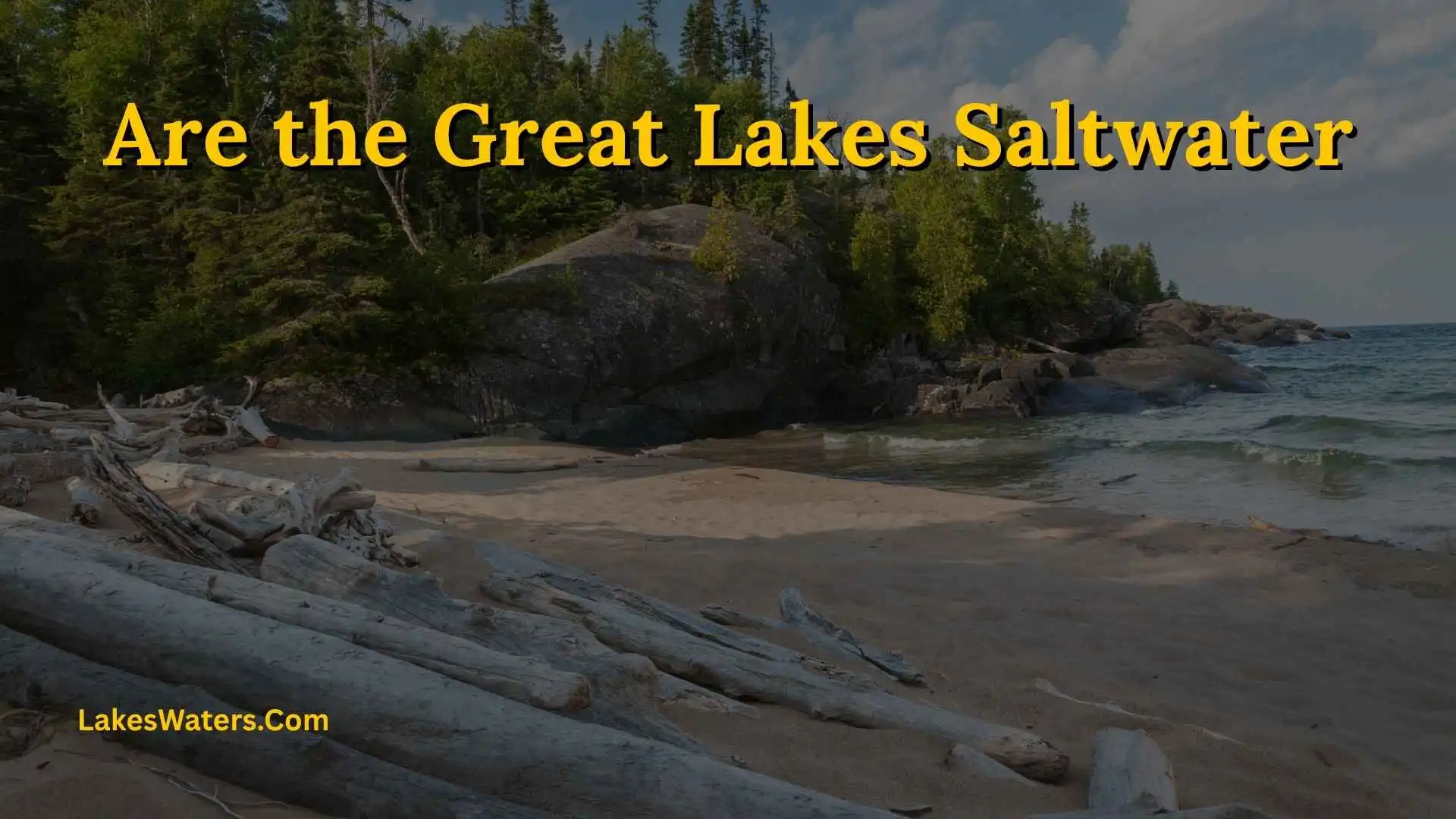
The Great Lakes may look like oceans because of their enormous size, deep water, powerful waves, and long shorelines. They also support major shipping routes and are connected to the Atlantic Ocean through the St. Lawrence River. These features often lead people to ask: Are the Great Lakes saltwater?
No. All five Great Lakes are freshwater lakes. Lake Superior, Lake Michigan, Lake Huron, Lake Erie, and Lake Ontario contain naturally occurring minerals and small amounts of dissolved salts, but they do not have the high salinity of seawater.
The Great Lakes are part of a large freshwater drainage system. Their water eventually reaches the Atlantic Ocean, but the lakes themselves remain freshwater because they receive water mainly from rain, snow, rivers, groundwater, and runoff—not from the open ocean.
Are the Great Lakes Saltwater or Freshwater?
The five Great Lakes are:
- Lake Superior
- Lake Michigan
- Lake Huron
- Lake Erie
- Lake Ontario
All five are classified as freshwater lakes. The U.S. Environmental Protection Agency describes them as a chain of deep inland freshwater lakes shared by the United States and Canada. Together, they form one of the largest surface freshwater systems in the world.
Freshwater does not mean that water contains absolutely no salt. It means that the concentration of dissolved salts is very low compared with seawater.
The Great Lakes contain dissolved substances such as:
- Calcium
- Magnesium
- Sodium
- Chloride
- Sulfate
- Bicarbonate
- Other naturally occurring minerals
These substances enter the lakes through weathering rocks, groundwater, rivers, precipitation, and runoff. Their presence does not make the lakes saltwater.
How Salty Are the Great Lakes Compared With the Ocean?
The difference between the Great Lakes and the ocean is the concentration of dissolved salts.
According to NOAA, freshwater has salinity close to zero, while the average salinity of the open ocean is about 35 parts per thousand, often written as 35 ppt. This means that approximately 35 grams of dissolved salts are present in every kilogram of typical seawater.
| Type of Water | General Salinity | Typical Location |
| Freshwater | Very low, close to 0 ppt | Lakes, rivers, streams, and groundwater |
| Brackish water | Between freshwater and seawater | Estuaries and some coastal lagoons |
| Seawater | About 35 ppt on average | Oceans and many seas |
The Great Lakes fall within the freshwater category. Their water contains minerals, but not enough dissolved salt to behave chemically like seawater.
What Does Salinity Mean?
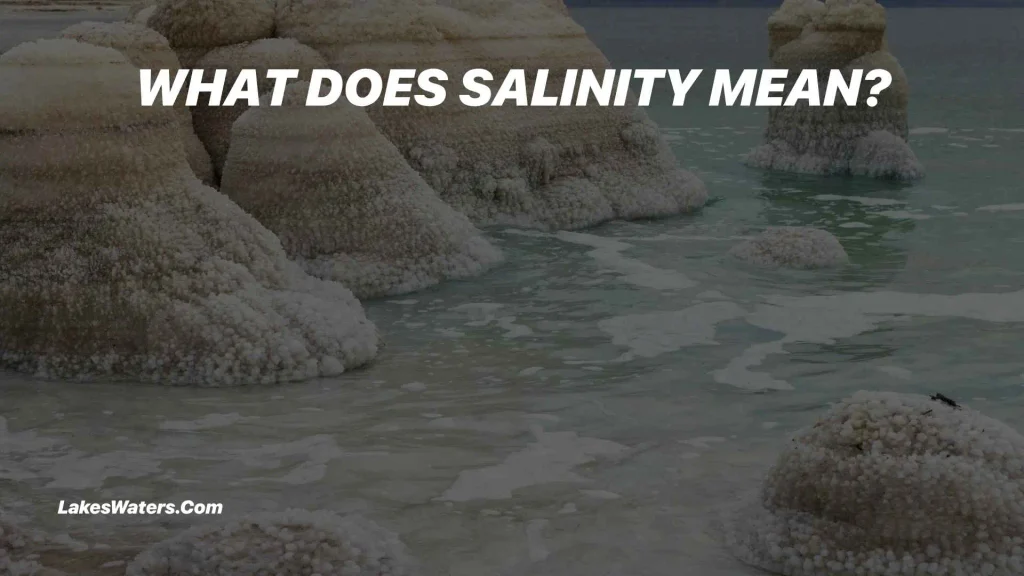
Salinity is the concentration of dissolved salts in water. It is not simply a measurement of whether a sample contains any sodium or chloride.
For example, a freshwater lake may contain measurable chloride. That does not mean the lake has the same chemical characteristics as the Atlantic Ocean. Scientists consider the overall concentration and composition of dissolved substances when studying water chemistry.
The EPA monitors several chemical properties in the Great Lakes, including conductivity, hardness, alkalinity, chloride, nutrients, and metals. These measurements help scientists understand changes in water quality and the condition of the lake ecosystem.
Why Are the Great Lakes Freshwater if They Connect to the Atlantic Ocean?
The Great Lakes connect to the Atlantic Ocean through a long downstream water route. That connection does not mean that seawater fills the lakes.
The general drainage route is:
Lake Superior → Lake Huron → Lake Erie → Lake Ontario → St. Lawrence River → Gulf of St. Lawrence → Atlantic Ocean
Lake Michigan is connected to Lake Huron through the Straits of Mackinac. The Great Lakes system then continues eastward through Lake Erie and Lake Ontario before flowing into the St. Lawrence River.
The St. Lawrence River and Seaway include different environmental sections: a freshwater river, an estuary, and the Gulf of St. Lawrence. The freshwater river extends downstream from Lake Ontario before the system gradually becomes influenced by marine water.
The Great Lakes Are Upstream From the Ocean
Most water entering the Great Lakes comes from:
- Rainfall
- Snowfall
- Snowmelt
- Rivers and streams
- Groundwater
- Surface runoff
The lakes then release water toward the St. Lawrence River. In other words, the Great Lakes are located upstream from the main marine environment.
A river can flow into the ocean without being salty throughout its entire length. The same principle helps explain why the Great Lakes remain freshwater even though their water eventually reaches the Atlantic.
The Ocean Connection Is Not the Same as Direct Ocean Water
The Great Lakes are not open ocean basins. They are inland lakes connected by rivers, channels, and waterways.
The Atlantic Ocean is many hundreds of miles downstream from the upper Great Lakes. Freshwater flows through the system, while the strongest marine influence occurs farther east in the St. Lawrence estuary and Gulf of St. Lawrence.
This separation between the inland freshwater system and the downstream marine environment is one of the main reasons the Great Lakes are not saltwater.
Where Does Saltwater Begin in the St. Lawrence System?
The St. Lawrence system changes gradually as it moves from freshwater toward the ocean.
Near Lake Ontario, the St. Lawrence River is a freshwater environment. Farther downstream, it becomes an estuary, where freshwater and seawater can mix. Eventually, the water reaches the Gulf of St. Lawrence and the Atlantic Ocean.
What Is an Estuary?
An estuary is a transition area where freshwater and seawater meet and mix. Estuarine water is often called brackish because its salinity is higher than freshwater but lower than normal seawater.
NOAA explains that estuaries can have changing salinity levels depending on tides, weather, freshwater flow, and location. In general, salinity is lower near the freshwater source and higher closer to the ocean.
The Great Lakes Are Not a Saltwater Estuary
The Great Lakes themselves are inland freshwater lakes. They should not be confused with the marine sections of the St. Lawrence system.
The water becomes more affected by ocean tides and saltwater farther downstream. That marine influence does not extend throughout Lake Superior, Lake Michigan, Lake Huron, Lake Erie, or Lake Ontario.
Why Do the Great Lakes Look Like Oceans?
The Great Lakes are sometimes called inland seas because of their appearance and physical behavior. However, this nickname does not mean that their water is salty.
Their Shorelines Are Extremely Long
The Great Lakes cover a vast area and stretch across more than 750 miles from west to east. From some shoreline locations, the opposite side may be difficult to see or completely hidden by the curvature of the Earth, weather, or distance.
This creates an ocean-like horizon even though the water is freshwater.
They Can Produce Powerful Waves
Strong winds and storms can create large waves on the Great Lakes. Wave conditions depend on:
- Wind speed
- Wind direction
- The distance wind travels across open water
- Water depth
- Shoreline shape
- Storm duration
Large waves are not evidence of saltwater. A freshwater lake can experience severe storms and dangerous wave conditions just as a coastal area can.
They Support Commercial Shipping
Large vessels travel through the Great Lakes and the St. Lawrence Seaway. The connected waterway allows ships to transport goods between inland ports and the Atlantic Ocean.
Their shipping activity, deep water, and broad open surfaces contribute to the inland-sea comparison. Their classification as freshwater, however, is based on water chemistry rather than their size or economic importance.
Do the Great Lakes Contain Salt and Minerals?
Yes. The Great Lakes contain naturally occurring dissolved minerals and salts.
As water moves through the surrounding landscape, it can dissolve small amounts of material from soil and rock. Rivers and groundwater then carry these substances into the lakes.
Common dissolved substances include:
- Calcium
- Magnesium
- Sodium
- Chloride
- Sulfate
- Silica
- Bicarbonate
These materials influence properties such as water hardness, conductivity, and alkalinity.
Freshwater Is Not Chemically Pure Water
Pure water would contain almost nothing except hydrogen and oxygen. Natural water, however, comes into contact with rocks, soil, air, plants, animals, and human activities.
As a result, natural freshwater usually contains dissolved minerals and other substances. The important difference is that their concentration is much lower than the salt concentration of seawater.
Chloride Does Not Equal Ocean Salinity
Chloride is one component of dissolved salts. It is useful for monitoring salt-related pollution, but chloride alone does not define the complete salinity of a lake.
For example, a lake may experience an increase in chloride because of road salt without becoming comparable to the ocean. Scientists must examine the broader chemical composition of the water before making conclusions about salinity.
Can Road Salt Make the Great Lakes Saltwater?
Road salt can increase chloride levels in some freshwater environments, but it does not turn the Great Lakes into saltwater lakes.
During winter, road crews may apply deicing materials containing sodium chloride or other salts to roads, bridges, parking lots, and sidewalks. Snowmelt and rain can carry these substances into streams, groundwater, wetlands, and lakes.
Where Can Road Salt Cause Problems?
Salt pollution may be more noticeable in:
- Urban streams
- Small lakes
- Roadside wetlands
- Groundwater
- Enclosed bays
- Areas near heavily salted roads
- Waterways receiving large amounts of winter runoff
The EPA identifies salt pollution as a freshwater-quality concern because excessive chloride can harm aquatic organisms, affect drinking-water sources, and contribute to infrastructure problems.
Why Salt Pollution Is Different From Seawater
Ocean water contains a high concentration of many dissolved salts. Road salt pollution usually involves an increase in particular substances, especially sodium and chloride, in a local freshwater environment.
Therefore:
- Salt pollution can damage freshwater ecosystems.
- Higher chloride levels can affect water quality.
- Road salt does not transform the Great Lakes into oceans.
The issue is freshwater contamination, not a change from freshwater to seawater.
How Did the Great Lakes Become Freshwater Lakes?
The modern Great Lakes were strongly shaped by glaciers during the last Ice Age.
Large ice sheets moved across the northern part of North America, eroding bedrock and deepening existing depressions. When the glaciers retreated, meltwater filled these basins and helped create the lake system.
Their Geological History Matters
The Great Lakes were not formed as ordinary ocean bays that later became isolated. They are inland basins connected to a freshwater drainage network.
Their water supply, location, and geological history help explain why they remain freshwater bodies.
Their Water Chemistry Can Change
Although the Great Lakes are freshwater, their chemical conditions can change over time. Factors that may affect water chemistry include:
- Rainfall and snowfall
- River inflow
- Groundwater movement
- Erosion
- Agricultural runoff
- Industrial activity
- Urban development
- Road salt
- Changes in water levels
These changes can affect water quality without changing the fundamental classification of the lakes.
Do the Great Lakes Have Tides Like the Ocean?
The Great Lakes experience very small water-level changes caused by the gravitational effects of the Moon and Sun. These changes are much smaller than typical ocean tides.
In everyday conditions, noticeable water-level changes on the Great Lakes are more often caused by:
- Strong winds
- Storms
- Atmospheric pressure
- Heavy rainfall
- Seasonal changes
- River inflow
- Seiches
What Is a Seiche?
A seiche is a back-and-forth movement of water within a lake or partly enclosed body of water.
A strong wind may push water toward one side of a lake. When the wind decreases or changes direction, the water can move back across the basin. This movement may produce sudden changes in water level along different parts of the shoreline.
Seiches can be dangerous for swimmers, boaters, and people near low-lying shorelines.
The presence of seiches or small tides does not make the Great Lakes saltwater. Water movement and salinity are separate characteristics.
Can Saltwater Fish Live in the Great Lakes?
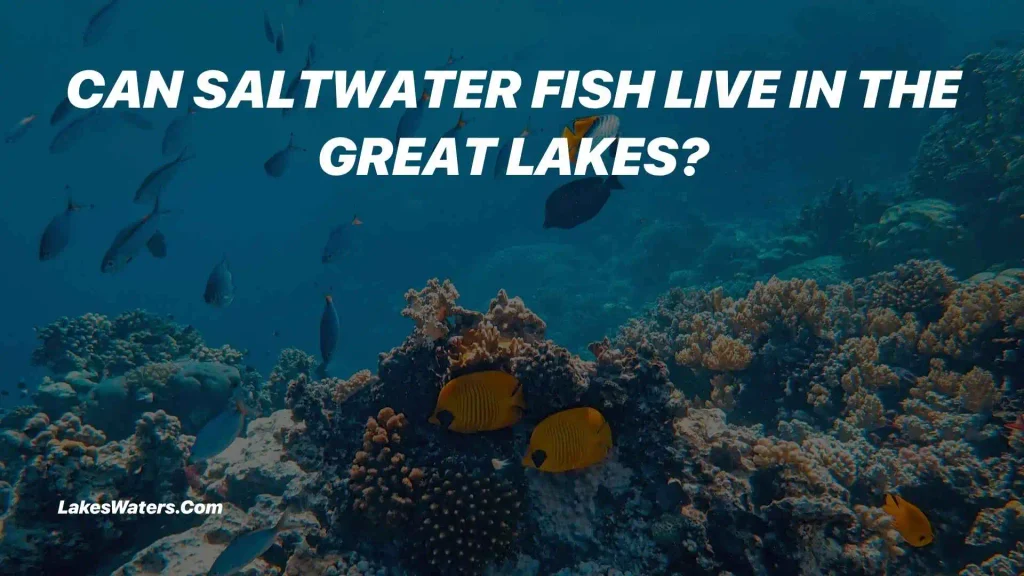
Most marine fish cannot survive permanently in the Great Lakes because they are adapted to much higher salinity.
Freshwater fish and marine fish have different ways of controlling water and salt inside their bodies. A fish adapted to seawater may struggle to maintain the correct balance of fluids and minerals in freshwater.
The Great Lakes support many freshwater species, including:
- Lake trout
- Walleye
- Yellow perch
- Lake whitefish
- Smallmouth bass
- Northern pike
- Freshwater mussels
- Other native and introduced species
Some fish can tolerate a broad range of water conditions, but the Great Lakes remain freshwater ecosystems.
What About Invasive Species?
The Great Lakes contain several introduced and invasive species. Some arrived through shipping, ballast water, canals, or other human-related pathways.
The presence of invasive species does not indicate that the lakes have become saltwater. It reflects changes in the biological community and creates separate ecological challenges.
Is Great Lakes Water Safe to Drink?
The Great Lakes provide drinking water for millions of people, but untreated lake water should not be consumed directly.
Freshwater may contain:
- Bacteria
- Viruses
- Parasites
- Agricultural chemicals
- Industrial pollutants
- Heavy metals
- Algal toxins
- Sewage-related contaminants
Public water systems treat and test water before distributing it for drinking.
Freshwater Does Not Mean Safe Drinking Water
The terms freshwater and potable water describe different things.
- Freshwater refers mainly to low salt concentration.
- Potable water means water that meets safety standards for human consumption.
A lake can be freshwater but still contain harmful organisms or chemicals. Water should be properly treated and tested before it is considered safe to drink.
Great Lakes vs. Ocean Water
The main differences can be summarized as follows:
| Feature | Great Lakes | Ocean |
| Water classification | Freshwater | Saltwater |
| Salinity | Very low compared with seawater | About 35 ppt on average |
| Main water sources | Rain, snow, rivers, groundwater, and runoff | Precipitation, rivers, evaporation, ocean circulation, and other processes |
| Location | Inland North America | Connected global marine system |
| Water movement | Wind, storms, seiches, inflow, and small astronomical tides | Waves, currents, wind, storms, and tides |
| Common aquatic life | Freshwater species | Marine species |
| Connection to the Atlantic | Drains toward the Atlantic through the St. Lawrence system | Directly part of the marine environment |
| Water taste | Generally not strongly salty | Distinctly salty |
The most important distinction is simple: the Great Lakes drain toward the ocean, but they are not part of the salty ocean itself.
Frequently Asked Questions
Are All Five Great Lakes Freshwater?
Yes. Lake Superior, Lake Michigan, Lake Huron, Lake Erie, and Lake Ontario are all freshwater lakes.
Which Great Lake Is the Saltiest?
The Great Lakes are not saltwater lakes, and it is misleading to compare them with ocean regions by asking which one is the “saltiest.” Their concentrations of dissolved minerals and chloride can vary by location and over time, but all five are freshwater.
Can You Taste Salt in the Great Lakes?
The water contains small amounts of dissolved minerals and salts, but it generally does not have the strong salty taste of seawater. Local water chemistry may affect taste.
Are the Great Lakes Connected to the Atlantic Ocean?
Yes. The Great Lakes drain through the St. Lawrence River toward the Gulf of St. Lawrence and the Atlantic Ocean. The connection is mainly a downstream freshwater route.
Does Ocean Water Enter the Great Lakes?
The Great Lakes are upstream from the main marine environment. The strongest saltwater influence occurs farther downstream in the St. Lawrence estuary and Gulf of St. Lawrence, not throughout the five lakes.
Why Are the Great Lakes Called Inland Seas?
They are called inland seas because of their huge size, deep water, powerful waves, long horizons, and shipping activity. The term describes their physical appearance, not their salinity.
Can Road Salt Make Lake Michigan or Lake Erie Salty?
Road salt can increase chloride levels in local waterways and parts of the Great Lakes basin. However, it does not turn Lake Michigan, Lake Erie, or the entire Great Lakes system into seawater.
Do the Great Lakes Have Ocean Tides?
They experience very small astronomical tides. However, most noticeable water-level changes are caused by wind, storms, atmospheric pressure, rainfall, seasonal conditions, and seiches.
Can Ocean Fish Live in the Great Lakes?
Most marine fish cannot survive permanently in the Great Lakes because they are adapted to much saltier water. The lakes mainly support freshwater species.
Is Great Lakes Water Safe to Drink Directly?
No. Untreated lake water may contain microorganisms, pollutants, or toxins. It must be properly treated and tested before it is safe for drinking.
Conclusion
The Great Lakes are freshwater lakes, not saltwater seas. Lake Superior, Lake Michigan, Lake Huron, Lake Erie, and Lake Ontario contain dissolved minerals and small amounts of salts, but their salinity is far below that of the ocean.
Their connection to the Atlantic Ocean causes confusion because water eventually travels from the lakes through the St. Lawrence River to the Gulf of St. Lawrence. However, the Great Lakes are located upstream within a large freshwater drainage system. The marine influence becomes stronger much farther downstream.
Their enormous size, strong waves, deep water, and commercial shipping explain why they are often called inland seas. Despite their ocean-like appearance, their water chemistry, aquatic life, and drainage pattern clearly show that the Great Lakes are freshwater.

I am Ethan Reynolds, a nature researcher and writer focused on freshwater environments, aquatic ecosystems, and sustainable water solutions.
I enjoy sharing knowledge about lakes, rivers, wetlands, and the challenges facing global water resources.
My goal is to help readers understand the value of water and encourage responsible actions to protect it.
Books by Ethan Reynolds:
- Lakes and Landscapes: Stories from Nature
- Protecting Water for Future Generations
 Daniel Brooks