There are 64 officially designated national parks in the United States as of November 2026. These protected places preserve some of the country’s most remarkable natural landscapes, including mountains, forests, deserts, coastlines, caves, and wildlife habitats. Chiricahua National Park in Arizona is the newest addition, following its redesignation in October 2026.
However, the United States has many more federally protected places than these 64 national parks. The National Park Service manages 434 individual units, including national monuments, historic sites, national preserves, battlefields, and recreation areas.
The difference between these two numbers often confuses people searching for the total number of national parks in America. This guide explains how the numbers are calculated, lists all 64 national parks, identifies the states with the most parks, and answers common questions about America’s national park system.
How Many National Parks Are in the US?
The United States has 64 officially designated national parks. These parks are managed by the National Park Service and protect nationally significant natural and cultural resources.
They are spread across 30 states and two US territories. Each park has its own landscape, wildlife, history, and conservation purpose.
Some protect enormous wilderness areas, while others preserve unique geological formations, volcanic landscapes, tropical ecosystems, or important natural landmarks.
Well-known examples include:
- Yellowstone National Park
- Grand Canyon National Park
- Yosemite National Park
- Grand Teton National Park
- Zion National Park
- Glacier National Park
- Everglades National Park
- Great Smoky Mountains National Park
- Rocky Mountain National Park
- Olympic National Park
These destinations attract visitors interested in hiking, camping, wildlife watching, sightseeing, photography, and outdoor recreation.
The official count changes when Congress establishes a new national park or redesignates an existing protected area. For that reason, older articles may show a different number.
As of November 2026, the National Park Service directory lists 64 parks under the National Parks category.
Why Do Some Sources Still Say 63?
Some websites still report that the United States has 63 national parks. This figure was correct before October 2026, but it no longer reflects the current designation count.
The difference comes from Chiricahua National Park in southeastern Arizona.
For several years, the United States had 63 officially designated national parks. New River Gorge became the 63rd national park in December 2020, and the count remained unchanged until 2026.
Congress later passed legislation to redesignate Chiricahua National Monument as Chiricahua National Park.
President Donald Trump signed the Chiricahua National Park Act into law on October 20, 2026. Following this change, Chiricahua became the 64th national park in the country.
The count can be understood through this simple comparison:
| Period | Number of National Parks |
| Before October 2026 | 63 |
| After Chiricahua’s redesignation | 64 |
This change explains why older travel guides, articles, and park checklists may still mention 63 national parks.
There is also an inconsistency within the National Park Service’s own online information. Its main directory lists 64 national parks, but a separate Chiricahua FAQ still includes an outdated statement referring to 63 while identifying Chiricahua as the 64th park.
For the current count, the main directory’s category listing supports the figure of 64.
What Is the Difference Between National Parks and National Park Sites?
The terms national parks and National Park System are related, but they do not mean exactly the same thing.
The United States has 64 officially designated national parks, while the National Park Service manages 434 individual units.
The broader system includes places with different designations. Some protect natural landscapes, while others preserve historic buildings, archaeological sites, battlefields, coastlines, and recreational areas.
Understanding these categories helps explain why the National Park Service manages hundreds of places even though only 64 carry the official national park designation.
National Parks
National parks generally protect nationally significant natural landscapes, wildlife habitats, geological features, and ecosystems.
They often contain large areas of protected land with opportunities for outdoor recreation and nature study.
Examples include:
- Yellowstone National Park
- Grand Canyon National Park
- Denali National Park
- Glacier National Park
- Yosemite National Park
National Monuments
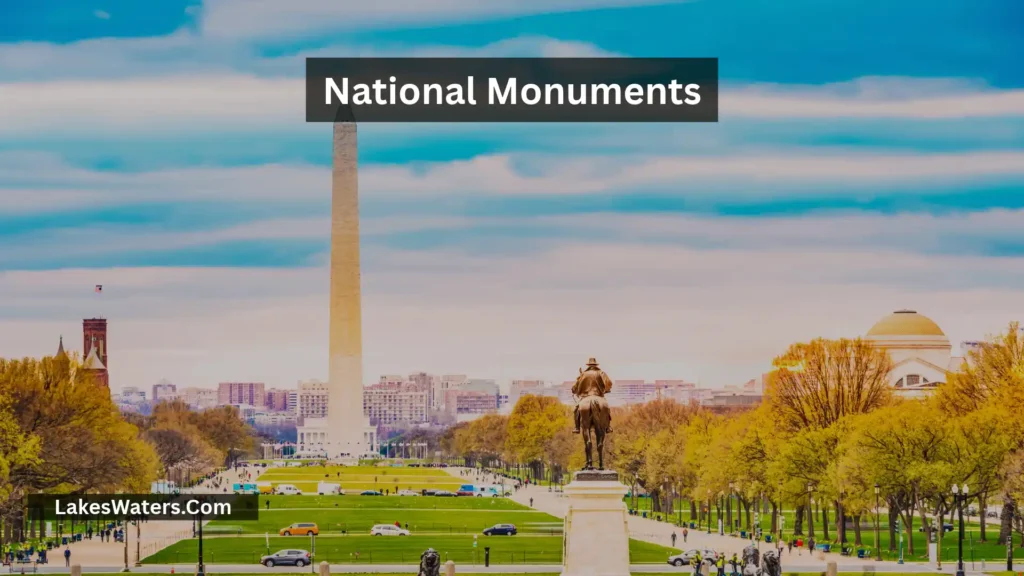
National monuments protect important natural, historical, geological, archaeological, and cultural resources.
They may be established through presidential proclamation under the Antiquities Act or through congressional legislation.
Examples include Devils Tower National Monument in Wyoming, Statue of Liberty National Monument in New York and New Jersey, and Organ Pipe Cactus National Monument in Arizona.
A national monument can protect an area of considerable natural or historical importance without carrying the national park designation.
National Historic Sites and Historical Parks
These locations preserve important events, people, buildings, and places connected to American history.
They help visitors understand the country’s cultural heritage and historical development.
Examples include:
- Boston National Historical Park
- Abraham Lincoln Birthplace National Historical Park
- Brown v. Board of Education National Historical Park
- Martin Luther King, Jr. National Historical Park
National Preserves
National preserves protect important natural environments while allowing certain additional activities under their individual management laws.
Some preserves permit regulated hunting or other uses that may not be allowed in national parks.
Examples include Big Cypress National Preserve in Florida and Mojave National Preserve in California.
National Recreation Areas
National recreation areas generally provide opportunities for outdoor activities such as boating, fishing, camping, hiking, and water-based recreation.
Examples include Lake Mead National Recreation Area and Golden Gate National Recreation Area.
National Seashores
National seashores protect coastal landscapes, beaches, barrier islands, wildlife habitats, and other important natural resources.
Examples include Cape Cod National Seashore in Massachusetts and Assateague Island National Seashore in Maryland and Virginia.
National Battlefields
National battlefields preserve locations connected to important military events and American history.
They help protect historic landscapes and provide opportunities to understand the events that shaped the country.
Examples include Antietam National Battlefield in Maryland and Gettysburg National Military Park in Pennsylvania.
These different designations are all part of the wider National Park System, but they do not all count toward the total of 64 national parks.
| Category | What It Protects |
| National parks | Significant natural landscapes and ecosystems |
| National monuments | Natural, historical, and cultural resources |
| National historic sites | Important historical locations |
| National historical parks | Larger areas connected to American history |
| National preserves | Protected natural environments with certain additional uses |
| National recreation areas | Places for outdoor recreation |
| National seashores | Coastal environments and beaches |
| National battlefields | Important military and historical locations |
What Is the Newest National Park in the US?
Chiricahua National Park in Arizona is the newest national park in the United States.
It received this designation on October 20, 2026, when the Chiricahua National Park Act was signed into law. Before that date, the protected area was known as Chiricahua National Monument.
Located in southeastern Arizona, Chiricahua is famous for its unusual rock formations, volcanic history, mountain scenery, and diverse wildlife.
The area was first protected as a national monument in 1924. Its recent redesignation recognizes the national significance of its natural and cultural resources.
What Makes Chiricahua National Park Special?
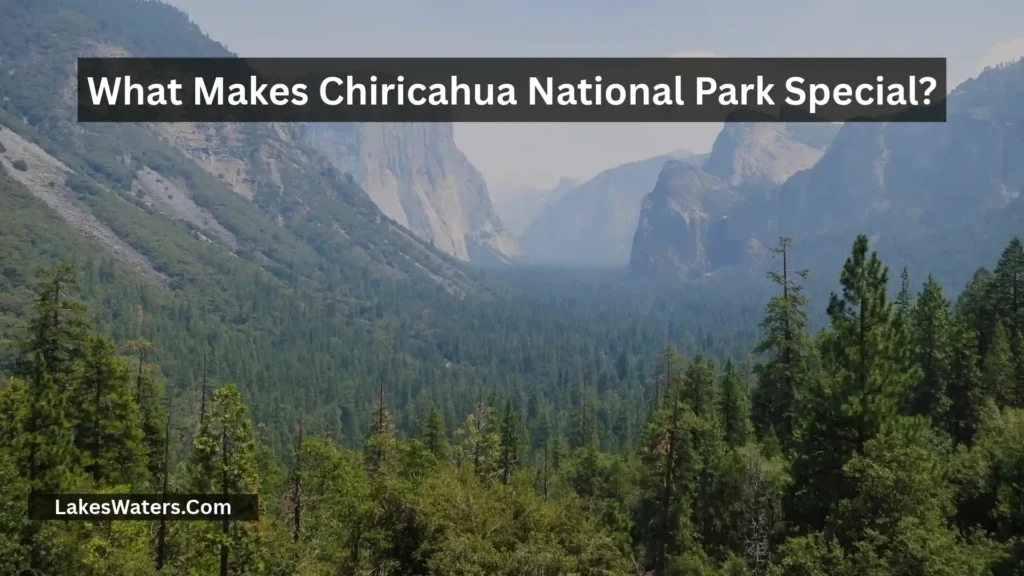
Chiricahua is particularly known for its towering volcanic rock formations, often described as a wonderland of rocks.
These formations developed after a massive volcanic eruption approximately 27 million years ago. Over time, erosion shaped the volcanic rock into pinnacles, columns, and balanced formations.
The park offers several interesting natural and cultural features.
Distinctive rock formations: Thousands of unusual rock structures create a landscape unlike many other national parks in the American Southwest.
Rich biodiversity: The region contains different habitats that support a variety of plants and animals.
Mountain environment: Its elevation and geography create environmental conditions that differ from the surrounding desert.
Hiking opportunities: Visitors can explore trails through the rock formations and experience the area’s natural scenery.
Cultural history: The region has important Apache history as well as a history of ranching and settlement.
Chiricahua covers approximately 12,000 acres. Its redesignation did not change the park’s existing boundaries or automatically create new facilities.
The change primarily recognizes its importance through a new national park designation.
Which State Has the Most National Parks?
California has the most national parks in the United States, with nine officially designated parks.
Alaska comes second with eight, followed by Utah with five. Arizona and Colorado each have four.
These states contain some of America’s most recognizable landscapes, including mountain ranges, deserts, forests, glaciers, coastlines, and volcanic environments.
The following table shows the states with the highest numbers of national parks.
| State | Number of National Parks |
| California | 9 |
| Alaska | 8 |
| Utah | 5 |
| Arizona | 4 |
| Colorado | 4 |
| Florida | 3 |
| Washington | 3 |
California
California has nine national parks, making it the leading state for officially designated national parks.
Its parks protect an impressive variety of natural environments, from giant sequoia forests and rugged coastlines to desert landscapes and mountain ecosystems.
The nine national parks are:
- Channel Islands National Park
- Death Valley National Park
- Joshua Tree National Park
- Kings Canyon National Park
- Lassen Volcanic National Park
- Pinnacles National Park
- Redwood National Park
- Sequoia National Park
- Yosemite National Park
Alaska
Alaska has eight national parks and contains some of the country’s largest and most remote protected wilderness areas.
Its parks are famous for glaciers, mountains, forests, wildlife, and vast undeveloped landscapes.
The eight national parks are:
- Denali National Park
- Gates of the Arctic National Park
- Glacier Bay National Park
- Katmai National Park
- Kenai Fjords National Park
- Kobuk Valley National Park
- Lake Clark National Park
- Wrangell-St. Elias National Park
Utah
Utah has five national parks, commonly known as the Mighty Five.
These parks are especially popular for their sandstone formations, natural arches, colorful canyons, and distinctive desert landscapes.
The five parks are:
- Arches National Park
- Bryce Canyon National Park
- Canyonlands National Park
- Capitol Reef National Park
- Zion National Park
Arizona
Arizona has four national parks following Chiricahua’s redesignation.
They include:
- Chiricahua National Park
- Grand Canyon National Park
- Petrified Forest National Park
- Saguaro National Park
The state is known for its desert scenery, ancient geological features, distinctive rock formations, and important natural habitats.
Colorado
Colorado also has four national parks.
Its parks protect mountain environments, ancient cultural resources, dramatic canyons, and impressive sand dunes.
They include:
- Black Canyon of the Gunnison National Park
- Great Sand Dunes National Park
- Mesa Verde National Park
- Rocky Mountain National Park
Florida
Florida has three national parks that protect different coastal, marine, and wetland environments.
They include:
- Biscayne National Park
- Dry Tortugas National Park
- Everglades National Park
Washington
Washington has three national parks, each with a distinctive natural environment.
They include:
- Mount Rainier National Park
- North Cascades National Park
- Olympic National Park
A note about state counts: some national parks extend across more than one state. For example, Yellowstone covers parts of Wyoming, Montana, and Idaho. Great Smoky Mountains extends across Tennessee and North Carolina.
Therefore, adding every state’s count together produces a number greater than 64 because some parks appear in multiple state totals.
Complete List of All 64 US National Parks
The following list includes all 64 national parks in alphabetical order, along with their locations.
| No. | National Park | State or Territory |
| 1 | Acadia | Maine |
| 2 | Arches | Utah |
| 3 | Badlands | South Dakota |
| 4 | Big Bend | Texas |
| 5 | Biscayne | Florida |
| 6 | Black Canyon of the Gunnison | Colorado |
| 7 | Bryce Canyon | Utah |
| 8 | Canyonlands | Utah |
| 9 | Capitol Reef | Utah |
| 10 | Carlsbad Caverns | New Mexico |
| 11 | Channel Islands | California |
| 12 | Chiricahua | Arizona |
| 13 | Congaree | South Carolina |
| 14 | Crater Lake | Oregon |
| 15 | Cuyahoga Valley | Ohio |
| 16 | Death Valley | California and Nevada |
| 17 | Denali | Alaska |
| 18 | Dry Tortugas | Florida |
| 19 | Everglades | Florida |
| 20 | Gates of the Arctic | Alaska |
| 21 | Gateway Arch | Missouri and Illinois |
| 22 | Glacier Bay | Alaska |
| 23 | Glacier | Montana |
| 24 | Grand Canyon | Arizona |
| 25 | Grand Teton | Wyoming |
| 26 | Great Basin | Nevada |
| 27 | Great Sand Dunes | Colorado |
| 28 | Great Smoky Mountains | North Carolina and Tennessee |
| 29 | Guadalupe Mountains | Texas |
| 30 | Haleakalā | Hawaii |
| 31 | Hawai’i Volcanoes | Hawaii |
| 32 | Hot Springs | Arkansas |
| 33 | Indiana Dunes | Indiana |
| 34 | Isle Royale | Michigan |
| 35 | Joshua Tree | California |
| 36 | Katmai | Alaska |
| 37 | Kenai Fjords | Alaska |
| 38 | Kings Canyon | California |
| 39 | Kobuk Valley | Alaska |
| 40 | Lake Clark | Alaska |
| 41 | Lassen Volcanic | California |
| 42 | Mammoth Cave | Kentucky |
| 43 | Mesa Verde | Colorado |
| 44 | Mount Rainier | Washington |
| 45 | National Park of American Samoa | American Samoa |
| 46 | New River Gorge | West Virginia |
| 47 | North Cascades | Washington |
| 48 | Olympic | Washington |
| 49 | Petrified Forest | Arizona |
| 50 | Pinnacles | California |
| 51 | Redwood | California |
| 52 | Rocky Mountain | Colorado |
| 53 | Saguaro | Arizona |
| 54 | Sequoia | California |
| 55 | Shenandoah | Virginia |
| 56 | Theodore Roosevelt | North Dakota |
| 57 | Virgin Islands | US Virgin Islands |
| 58 | Voyageurs | Minnesota |
| 59 | White Sands | New Mexico |
| 60 | Wind Cave | South Dakota |
| 61 | Wrangell-St. Elias | Alaska |
| 62 | Yellowstone | Idaho, Montana, and Wyoming |
| 63 | Yosemite | California |
| 64 | Zion | Utah |
This alphabetical list includes the two national parks located in US territories rather than the 50 states: National Park of American Samoa and Virgin Islands National Park.
It also includes parks that cross state boundaries. Each park is counted only once in the national total, even if it occupies land in multiple states.
What Was the First National Park in America?
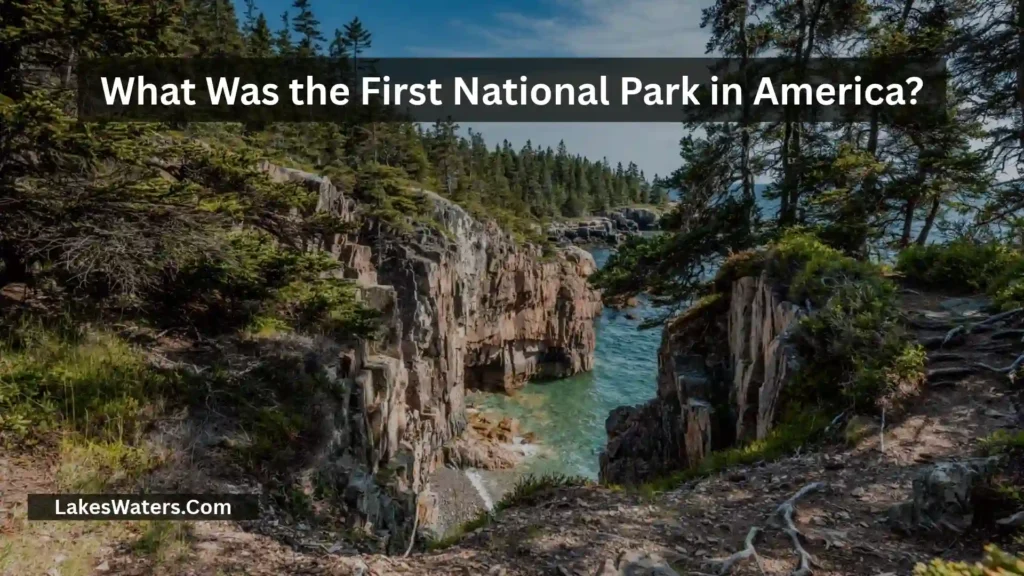
Yellowstone National Park was the first national park in the United States. It was established on March 1, 1872, when President Ulysses S. Grant signed the Yellowstone National Park Protection Act.
Yellowstone is located primarily in Wyoming, although parts of the park extend into Montana and Idaho.
The park became famous for its geothermal features, including geysers, hot springs, mud pots, and other unusual geological formations.
Its establishment introduced an important conservation idea: remarkable natural landscapes should be protected for public enjoyment and preserved for future generations.
Why Was Yellowstone Established?
Yellowstone was established because of its extraordinary natural features and ecological importance.
The region contains:
- Famous geothermal attractions
- Mountain landscapes
- Forests and rivers
- Waterfalls and lakes
- Wildlife habitats
- Distinctive volcanic features
Old Faithful is among its most recognized attractions. The geyser is famous for its recurring eruptions, making it one of the park’s best-known natural features.
Yellowstone also supports wildlife such as bison, elk, bears, and wolves.
When Was the National Park Service Established?
The National Park Service was established on August 25, 1916, when President Woodrow Wilson signed the National Park Service Organic Act.
This means Yellowstone existed as a national park for more than four decades before the federal agency responsible for managing the National Park System was created.
The distinction between these dates is important. Yellowstone became America’s first national park in 1872, while the National Park Service began operating in 1916.
How Does a Place Become a National Park?
A place does not automatically become a national park simply because it has beautiful scenery, rare wildlife, or important historical features.
The designation involves legal and governmental decisions, along with an evaluation of the area’s significance and conservation needs.
Congress plays an important role in establishing new national parks and changing the designation of existing protected areas.
National Significance
A proposed national park generally needs to contain resources or features considered nationally significant.
These may include:
- Outstanding natural landscapes
- Rare geological formations
- Important wildlife habitats
- Significant historical locations
- Archaeological resources
- Important cultural landscapes
The proposed designation should serve a meaningful conservation or preservation purpose.
Research and Evaluation
The National Park Service may conduct studies to evaluate whether a location is suitable for inclusion in the National Park System.
These studies can examine natural resources, historical importance, boundaries, management requirements, and the suitability of federal protection.
The findings help decision-makers understand the area’s significance and determine which designation may be appropriate.
Congressional Approval
Congress can pass legislation establishing a new national park or changing the designation of an existing protected area.
The legislation may establish the official name, boundaries, management requirements, and other legal provisions.
Chiricahua is a recent example of this process. It was already protected as a national monument before Congress redesignated it as a national park in October 2026.
Not every national park follows an identical process, but congressional legislation is an important part of creating many new national park designations.
Frequently Asked Questions
How many national parks are in the US in 2026?
There are 64 officially designated national parks in the United States as of November 2026. Chiricahua National Park in Arizona is the newest addition.
Which state has the most national parks?
California has the most national parks, with nine officially designated parks. Alaska follows with eight, while Utah has five.
What is the newest national park in the United States?
Chiricahua National Park in Arizona is the newest national park. It received its designation on October 20, 2026, after being redesignated from a national monument.
What was the first national park in America?
Yellowstone National Park was the first national park in America. It was established on March 1, 1872, under legislation signed by President Ulysses S. Grant.
How many national park sites are in the United States?
The National Park Service manages 434 individual units in the National Park System. These include national parks, national monuments, historic sites, recreation areas, and other protected places.
Does every state have a national park?
No. Not every state has a location officially designated as a national park. However, states without national parks may still have national monuments, historic sites, national forests, recreation areas, and other protected federal lands.
Are national parks and national monuments the same?
No. National parks and national monuments are different federal designations. Both can protect important natural, historical, geological, and cultural resources, but they are established through different legal processes.
When was the national park service established?
The National Park Service was established on August 25, 1916, when President Woodrow Wilson signed the National Park Service Organic Act into law.
How many states have national parks?
Thirty states contain at least one officially designated national park. Two US territories, American Samoa and the US Virgin Islands, also have national parks.
Why are there more national park units than national parks?
The National Park System includes many different types of protected places. National monuments, historic sites, battlefields, recreation areas, preserves, and seashores are included in the broader system, even though they do not carry the official national park designation.
Conclusion
The United States has 64 officially designated national parks as of November 2026. These parks protect some of the country’s most important natural landscapes, wildlife habitats, geological features, and cultural resources.
California has the highest number, with nine national parks, followed by Alaska with eight and Utah with five. Chiricahua National Park in Arizona is the newest addition after its redesignation in October 2026.
It is also important to remember that the 64 national parks represent only one part of a much larger conservation system. The National Park Service manages 434 individual units, including national monuments, historic sites, national preserves, and recreation areas.
Understanding the difference between these figures provides a clearer picture of how America’s protected lands are organized and why the number of national parks sometimes changes.

I am Daniel Brooks, an environmental enthusiast and writer focused on freshwater resources and the connection between humans and nature.
I enjoy researching lakes, wetlands, and water conservation practices to create informative content for readers. I believe that understanding our water systems is the first step toward protecting them.
Through my writing, I aim to inspire awareness and responsible actions for a better water future.
Books by Daniel Brooks:
- Freshwater Wonders: Stories From the World’s Lakes
- Protecting Our Blue Planet: Water Conservation Guide