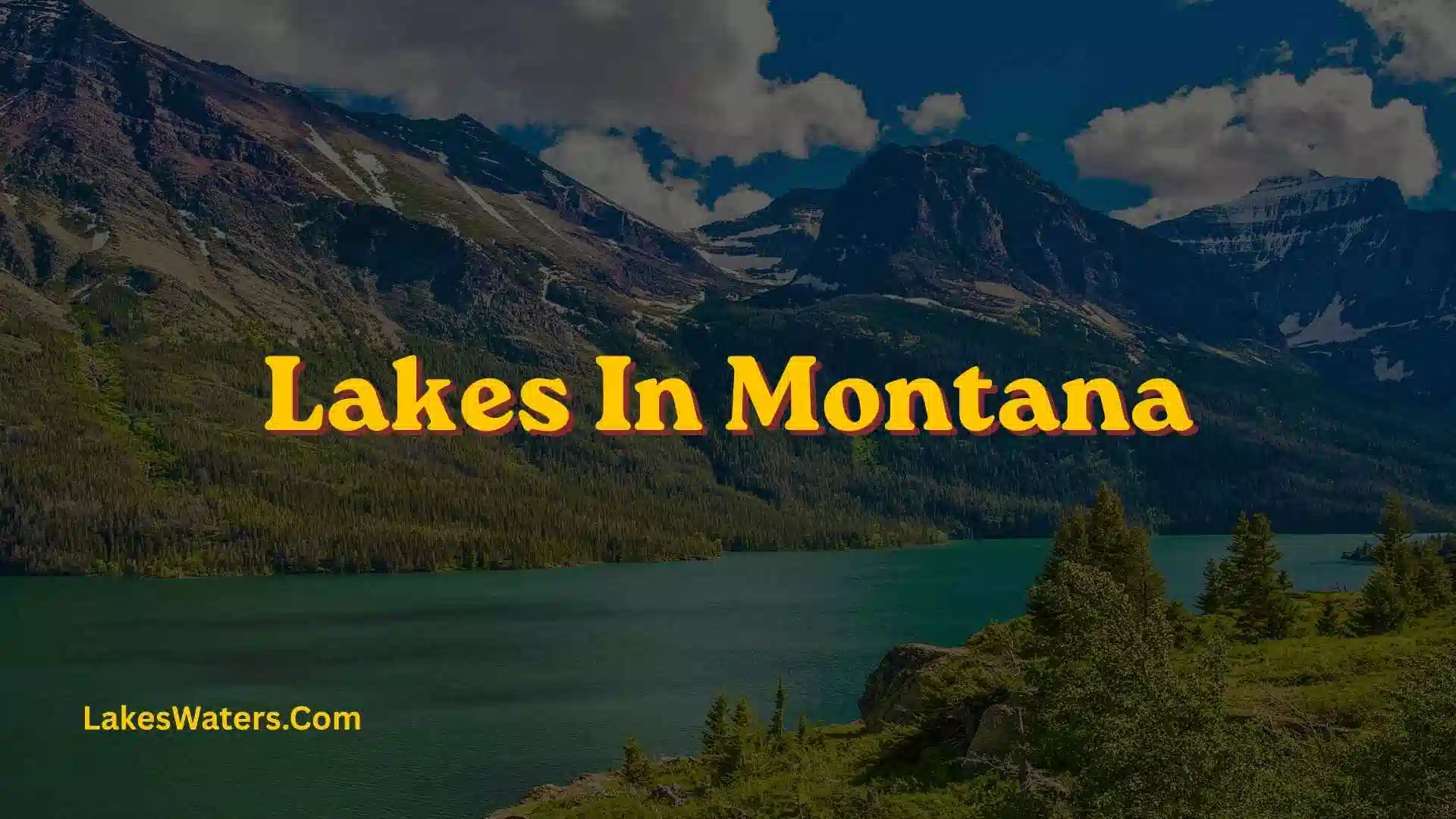
Montana is home to an unusually diverse collection of lakes, from enormous reservoirs built along major rivers to glacier-carved mountain lakes surrounded by forests and peaks. If you are searching for the best lakes in Montana, the right choice depends on what you want to do: fish for trout, spend a day swimming, launch a boat, camp beside the water, paddle a quiet lake, or explore dramatic scenery.
Montana Fish, Wildlife & Parks says the northwest part of the state alone contains more than 500 natural lakes, while Glacier National Park contains hundreds of lakes and ponds created or shaped by glacial processes.
This guide covers the most useful lakes to know, including Flathead Lake, Fort Peck Lake, Lake McDonald, Whitefish Lake, Canyon Ferry Reservoir, Hebgen Lake, Lake Koocanusa, Tiber Reservoir, Hyalite Reservoir, and Placid Lake. It also explains how Montana’s lakes differ, which ones are best for specific activities, what anglers need to know before fishing, and how to choose a lake that fits your trip.
Quick Answer: What Are the Best Lakes in Montana?
There is no single official ranking of Montana’s best lakes because the ideal lake depends on the activity. For most travelers, however, these are among the strongest choices:
| Lake | Best For | What Makes It Stand Out |
| Flathead Lake | Scenery, boating, swimming, camping | Montana’s largest natural freshwater lake by surface area |
| Fort Peck Lake | Fishing, boating, camping, wildlife | Montana’s largest body of water and a huge reservoir |
| Lake McDonald | Scenery, hiking, photography | Glacier-carved lake surrounded by mountains |
| Whitefish Lake | Families, swimming, boating, camping | Developed recreation with beach and campground options |
| Canyon Ferry Reservoir | Fishing, boating, camping | Large reservoir with extensive recreation facilities |
| Lake Koocanusa | Trout fishing, scenery, boating | Long mountain reservoir in northwest Montana |
| Hebgen Lake | Trout fishing, ice fishing | Important brown and rainbow trout fishery near West Yellowstone |
| Hyalite Reservoir | Fishing, winter recreation | Convenient mountain lake near Bozeman |
| Tiber Reservoir | Walleye and northern pike fishing | Large reservoir with multiple access points |
| Placid Lake | Families, camping, swimming | Smaller lake known for smooth water and trout fishing |
| Lake Elmo | Urban recreation | Convenient swimming, paddling and fishing near Billings |
| Saint Mary Lake | Glacier scenery | Dramatic lake along the east side of Glacier National Park |
| Hungry Horse Reservoir | Remote recreation and fishing | Mountain reservoir in the Flathead region |
| Georgetown Lake | Fishing and boating | Popular southwest Montana recreation lake |
| Lake Sherburne | Glacier-area recreation | Reservoir near Many Glacier with boating opportunities |
The list above is a curated guide rather than an official ranking. Lake choice should be based on your priorities, access, season, regulations and the kind of experience you want.
Also Check This Post: Lakes in Ohio: The Complete Guide to Scenic Getaways
Why Montana Has So Many Lakes
Montana’s lakes come from several different geological and human-made processes. Understanding that difference helps explain why one Montana lake may look like a narrow alpine basin while another resembles an inland sea.
Glaciers Created Many of Montana’s Mountain Lakes
During past ice ages, glaciers moved through mountain valleys and carved deep basins into the landscape. When the ice retreated, some of those depressions filled with water.
Glacier National Park provides one of the clearest examples. The National Park Service reports more than 700 lakes within the park, with 131 named in one NPS accounting. Many of the lower-elevation lakes occupy old glacial valleys, while high-elevation lakes can occur in basins carved into mountainsides.
That glacial origin explains features such as:
- steep mountain walls
- long, narrow lake shapes
- deep water close to shore
- clear mountain scenery
- cold water temperatures
- rocky or forested shorelines
Reservoirs Make Up Another Major Part of Montana’s Lake Landscape
Not every large Montana lake is natural.
Reservoirs were created by dams for purposes such as hydropower, irrigation, flood management, water storage, fish and wildlife habitat, and recreation. Fort Peck Reservoir, for example, was completed in 1937 and transformed the Missouri River into a large reservoir. Canyon Ferry is another major example, providing water-resource functions alongside fishing, boating, camping and swimming.
This distinction matters when comparing Montana lakes. A large reservoir can have a very different shoreline, water-level pattern and boating environment from a natural mountain lake.
15 Best Lakes in Montana to Visit
The following lakes were selected for their combination of recreation, scenery, fishing value, accessibility or geographic importance. They are not presented as a strict numerical ranking.
1. Flathead Lake
Best for: boating, swimming, camping, sightseeing and fishing
Flathead Lake is the first lake most visitors should know. Montana FWP describes it as the largest natural body of freshwater in the western United States by surface area, covering about 191 square miles. The state park system operates multiple recreation units around the lake, offering swimming, hiking, boating, fishing and camping.
The lake sits between the Swan Range and Mission Mountains, giving visitors a combination of open water and large mountain views.
Flathead Lake is particularly useful for travelers who want variety. You can spend one day boating, another hiking, and another exploring the shoreline or Wild Horse Island.
Wild Horse Island is the largest island on Flathead Lake and is itself a 2,160-acre state park. It is available for day use, with hiking and wildlife viewing, but camping is prohibited on the island.
Best trip style: A multi-day northwest Montana vacation where the lake is one part of a larger itinerary.
2. Fort Peck Lake
Best for: fishing, boating, camping, wildlife and solitude
Fort Peck Reservoir is different from the mountain lakes of western Montana. It is an enormous Missouri River reservoir in northeastern Montana.
Montana FWP’s fisheries management plan identifies Fort Peck as the largest body of water in Montana, with about 240,000 surface acres and approximately 1,500 miles of shoreline at full pool. The reservoir can reach about 220 feet at maximum depth and stretches roughly 130 miles.
That scale creates a remarkable range of experiences. Recreation.gov lists camping, boating, fishing, hunting, sightseeing, hiking, photography and wildlife viewing among the activities available around the Fort Peck Project.
Fort Peck is especially attractive to anglers who prefer large reservoirs and want more space than they may find around heavily developed recreation lakes.
Best trip style: A fishing or camping trip where solitude and water access matter more than resort-style development.
3. Lake McDonald
Best for: mountain scenery, photography, hiking and Glacier National Park
Lake McDonald is the largest lake in Glacier National Park. The National Park Service describes it as roughly 10 miles long and about 464 feet deep. Its basin was carved by glaciers, leaving a long lake surrounded by steep mountain terrain.
The lake is also closely connected to some of Glacier’s best-known visitor experiences. Lake McDonald Valley contains hiking trails, waterfalls, historic structures and Lake McDonald Lodge.
For visitors, the lake is less about spending an entire day on a motorboat and more about combining water views with hiking and sightseeing.
The National Park Service also warns that Glacier’s lakes are very cold, making hypothermia a real concern for swimmers and boaters.
Best trip style: A scenic Glacier National Park itinerary.
4. Whitefish Lake
Best for: families, swimming, camping, boating and paddleboarding
Whitefish Lake is one of the more convenient choices for travelers who want traditional lake recreation without giving up access to a developed mountain town.
Montana FWP’s Whitefish Lake State Park offers camping, swimming, boating and fishing. The park has 25 campsites and provides a boat launch, beach access and other visitor facilities.
The lake is also known for relatively calm conditions that can work well for water sports. FWP specifically notes boating, swimming, water skiing and fishing as popular activities.
For swimming, Les Mason State Park provides a developed day-use setting on the lake’s east shore, including a 585-foot sand and gravel shoreline.
Best trip style: Families or first-time Montana visitors who want a balance of nature and convenience.
5. Canyon Ferry Reservoir
Best for: fishing, boating, swimming and camping near Helena
Canyon Ferry Reservoir is one of Montana’s major recreation reservoirs. The Bureau of Reclamation lists approximately 33,500 surface acres and 96 shoreline miles, with fishing opportunities for rainbow trout, perch, burbot and walleye. Recreation facilities include boat ramps, campgrounds, swimming areas and marinas.
Its location near Helena makes it particularly practical for visitors who do not want to travel deep into remote Montana.
Canyon Ferry also illustrates why the word “lake” can be misleading when comparing Montana waters. The reservoir serves several water-resource functions, including hydropower, irrigation and flood management, while also supporting recreation.
Best trip style: A mixed recreation trip with fishing, boating and camping.
6. Lake Koocanusa
Best for: trout fishing, mountain scenery and northwest Montana exploration
Lake Koocanusa is a long reservoir in the Kootenai River drainage. Montana FWP fisheries documents identify it as an important recreational fishery and part of a broader system of mountain and valley lakes in northwest Montana.
The lake is also unusual because its waters extend across the international border into British Columbia.
Fishing is a major attraction. Lake Koocanusa is one of the limited Montana waters where intentional bull trout fishing is authorized under specific regulations and a required catch-card system.
That makes it a lake where checking the current rules is especially important.
Best trip style: Anglers and travelers exploring the Kootenai and northwest Montana region.
7. Hebgen Lake
Best for: trout fishing and ice fishing
Hebgen Reservoir is near West Yellowstone and is particularly well known for trout fishing.
Montana FWP describes Hebgen as a roughly 6,500-acre reservoir where anglers commonly catch wild brown and rainbow trout, with occasional brook and westslope cutthroat trout.
It is also one of the Montana lakes highlighted by FWP for ice fishing. However, the agency warns that ice conditions can vary across the reservoir because wind can keep portions of the lake unstable.
That is an important practical lesson: a lake being popular for ice fishing does not mean every part of its surface is safe.
Best trip style: Trout anglers and experienced winter recreationists.
8. Hyalite Reservoir
Best for: fishing, paddling and winter recreation near Bozeman
Hyalite Reservoir is a smaller mountain reservoir south of Bozeman. Montana FWP identifies it as approximately 206 acres and notes fishing opportunities for Yellowstone cutthroat trout, brook trout and Arctic grayling.
Its location is one of its biggest advantages. Visitors staying around Bozeman can reach a mountain recreation area without committing to a long-distance road trip.
Hyalite is also included in FWP’s ice-fishing guidance, making it relevant beyond the summer season.
Best trip style: Travelers based around Bozeman who want a quick mountain-water escape.
9. Tiber Reservoir
Best for: walleye, northern pike and boat fishing
Tiber Reservoir, also known as Lake Elwell, is an important fishing reservoir in north-central Montana.
A 2026 Montana FWP regional pond and lake guide lists the reservoir at about 14,842 acres and identifies walleye and northern pike among its major game fish, along with several other species. The agency notes that boat fishing is generally the easiest way to cover the reservoir.
Because it is a large reservoir, the weather deserves attention. FWP specifically warns that conditions can become dangerous during poor weather and recommends that smaller boats pay attention to forecasts before traveling far from launch ramps.
Best trip style: Serious freshwater anglers targeting warm-water species.
10. Placid Lake
Best for: families, swimming, camping and trout fishing
Placid Lake offers a smaller-scale alternative to Montana’s giant reservoirs.
Montana FWP describes Placid Lake State Park as a popular campground known for smooth water, good fishing, wildlife viewing and family recreation. The park provides 40 campsites, including sites with electricity, plus opportunities for boating, swimming, kayaking and fishing.
The park’s winter operating model also demonstrates why travelers should not assume that summer facilities remain available year-round. During the winter season, motorized traffic is closed and overnight camping is not available.
Best trip style: A relaxed family camping trip rather than a large-reservoir adventure.
11. Lake Elmo
Best for: easy urban recreation near Billings
Lake Elmo is a useful example of a Montana lake that does not require a wilderness road trip.
Montana FWP describes it as a 64-acre reservoir inside Billings where visitors can swim, boat, paddleboard, fish, picnic, birdwatch and walk the 1.4-mile trail around the water. Only non-motorized boating is allowed.
That makes Lake Elmo a practical choice for travelers who have limited time or families who want a convenient outdoor activity close to the city.
Best trip style: Short outings, families and urban recreation.
12. Saint Mary Lake
Best for: Glacier scenery and sightseeing
Saint Mary Lake sits on the eastern side of Glacier National Park and is one of the park’s major lakes.
Its setting is especially dramatic because the lake lies within the larger mountain landscape along the Going-to-the-Sun Road corridor.
Boating rules are more restrictive than at many Montana lakes. The National Park Service requires watercraft inspections and places specific limits on the types of vessels that can operate on park waters.
For many visitors, the lake’s greatest value is visual rather than recreational: mountain views, shoreline stops and access to nearby trails make it a major sightseeing destination.
Best trip style: Scenic drives, photography and Glacier National Park sightseeing.
13. Hungry Horse Reservoir
Best for: remote mountain recreation and fishing
Hungry Horse Reservoir is part of the Flathead drainage and offers a much more remote setting than lakes such as Whitefish or Lake Elmo.
It is also important from a fisheries-management perspective. Montana FWP identifies Hungry Horse Reservoir and part of the South Fork Flathead River as one of the specific areas where bull trout fishing is permitted under a restrictive catch-card system.
Because bull trout are a threatened species, the regulations are significantly different from ordinary recreational fishing.
Best trip style: Experienced anglers and visitors looking for a more remote northwest Montana setting.
14. Georgetown Lake
Best for: southwest Montana fishing and four-season recreation
Georgetown Lake is a well-known recreation destination in southwest Montana and fits travelers who want a mountain lake experience outside the Glacier region.
Its location makes it useful as part of a southwest Montana road trip connecting communities and outdoor destinations around the Anaconda and Butte area.
Before fishing, visitors should use Montana FWP’s current waterbody information and district regulations rather than relying on an older guidebook or previous year’s rules.
Best trip style: Southwest Montana fishing trips and mountain recreation.
15. Lake Sherburne
Best for: Many Glacier scenery and quieter water-based recreation
Lake Sherburne is a reservoir associated with the Many Glacier area of Glacier National Park.
The National Park Service currently permits non-motorized boating on Sherburne Reservoir, along with limited electric motorized boating under specific conditions. Watercraft inspection requirements also apply.
This makes it a good example of why a lake inside a national park should not be treated like an ordinary public reservoir. Park-specific rules can be more restrictive and may change according to wildlife, safety and resource-protection needs.
Best trip style: Visitors combining water views with a Many Glacier itinerary.
Best Montana Lakes by Activity
Choosing the right lake becomes much easier when you start with the activity rather than the lake name.
Best Lakes in Montana for Fishing
For fishing, consider:
- Fort Peck Lake for a huge reservoir fishery
- Hebgen Lake for brown and rainbow trout
- Lake Koocanusa for trout and specialized fishing opportunities
- Canyon Ferry Reservoir for trout, walleye, perch and burbot
- Tiber Reservoir for walleye and northern pike
- Hyalite Reservoir for Yellowstone cutthroat, brook trout and Arctic grayling
- Placid Lake for a smaller family-oriented trout experience
The species available are not the only consideration. Water temperature, depth, access, boat requirements, weather and current regulations can completely change the best choice.
Best Lakes in Montana for Swimming
If swimming is the priority, developed access matters more than lake size.
Good choices include:
- Whitefish Lake
- Flathead Lake
- Placid Lake
- Lake Elmo
- Canyon Ferry Reservoir
Whitefish Lake is particularly convenient because state park facilities provide beach access and camping.
However, cold mountain water should never be judged only by the air temperature. Glacier National Park specifically warns that its lakes and rivers remain cold enough to create hypothermia risks.
Best Lakes for Boating
For larger-scale boating, consider:
- Flathead Lake
- Fort Peck Lake
- Canyon Ferry Reservoir
- Lake Koocanusa
- Tiber Reservoir
- Whitefish Lake
For smaller boats, kayaks and paddleboards, lakes such as Placid Lake, Whitefish Lake and Lake Elmo may be easier to manage.
Always check local launch requirements and aquatic invasive species rules before traveling with a boat.
Best Lakes for Camping
For a lake-and-camping combination, strong options include:
- Flathead Lake
- Fort Peck Lake
- Whitefish Lake
- Canyon Ferry Reservoir
- Placid Lake
The experience varies significantly. Fort Peck offers everything from developed campgrounds to more alternative settings, while smaller state park lakes may provide a more compact campground experience.
Best Lakes for Scenic Mountain Views
If scenery is the main goal, prioritize:
- Lake McDonald
- Flathead Lake
- Saint Mary Lake
- Whitefish Lake
- Lake Koocanusa
Lake McDonald is particularly distinctive because its basin is a direct product of glacial carving, with steep mountain terrain surrounding the water.
Natural Lakes vs. Reservoirs in Montana
One of the most useful distinctions for visitors is whether a body of water is a natural lake or a reservoir.
| Feature | Natural Mountain Lake | Reservoir |
| Origin | Usually glacial or geological | Created by a dam |
| Shoreline | Often forested or steep | Can be broader and more variable |
| Water level | Usually follows natural cycles | Can change with water management |
| Typical size | Can range from tiny to very large | Some Montana reservoirs are enormous |
| Recreation | Hiking, paddling, swimming, fishing | Fishing, boating, camping, water sports |
| Example | Flathead Lake | Fort Peck Lake |
| Another example | Lake McDonald | Canyon Ferry Reservoir |
This does not mean one type is better.
A reservoir may be the better choice for fishing or motorized boating, while a natural glacial lake may offer the scenery a photographer is looking for.
Also Check This Post: Best Lakes in Texas: A Practical Guide to Outdoor Adventures
What Is the Largest Lake in Montana?
The answer depends on what you mean by lake.
Largest Natural Lake
Flathead Lake is Montana’s largest natural freshwater lake by surface area. Montana FWP describes it as the largest natural body of freshwater in the western United States by surface area.
Largest Body of Water
Fort Peck Reservoir is Montana’s largest body of water. Montana FWP’s fisheries management plan gives it approximately 240,000 surface acres at full pool.
This distinction prevents a common mistake: comparing a natural lake and a reservoir as though they were the same category.
Why Lake Measurements Can Differ Between Sources
You may notice that different websites give slightly different acreage or depth figures for the same Montana lake.
That does not automatically mean one source is wrong.
Reservoir measurements can depend on:
- current water level
- full-pool versus operating-pool conditions
- the date of the measurement
- the measurement method
- whether the source is describing the entire reservoir or a particular management area
Flathead Lake provides another example of why careful wording matters. Montana FWP describes it by surface area, while other official water-resource documents may provide different dimensions or water-storage measurements.
For this reason, this article uses the measurement and terminology supplied by the relevant official agency rather than presenting every number as an immutable value.
Montana Lakes by Region
Regional planning makes a lake trip much easier.
Northwest Montana
This is the strongest region for visitors who want large natural lakes, mountain scenery and trout fisheries.
Important lakes include:
- Flathead Lake
- Whitefish Lake
- Lake Koocanusa
- Hungry Horse Reservoir
- Lake McDonald
- Saint Mary Lake
Montana FWP says northwest Montana contains more than 500 natural lakes, making it the state’s richest region for natural lake concentration.
Southwest Montana
This region is particularly useful for travelers interested in mountain fishing and access from communities such as Bozeman, Butte and surrounding areas.
Key waters include:
- Hebgen Lake
- Hyalite Reservoir
- Georgetown Lake
- Clark Canyon Reservoir
- Canyon Ferry Reservoir
Central Montana
Central Montana provides a mix of reservoirs and smaller recreation waters.
Canyon Ferry is particularly important because of its size, recreation facilities and proximity to Helena.
Eastern Montana
Eastern Montana is where Fort Peck becomes especially important.
The landscape is more open and prairie-dominated than the mountainous west, and Fort Peck’s huge reservoir creates a major recreation and fishing destination in an otherwise very different environment.
How to Choose the Right Montana Lake
Instead of asking, “What is the best lake in Montana?” ask what kind of trip you want.
A Simple Lake-Selection Decision Guide
Want the most iconic mountain scenery?
→ Choose Lake McDonald or Flathead Lake.
Want a large fishing reservoir?
→ Consider Fort Peck, Canyon Ferry or Tiber Reservoir.
Want trout fishing near West Yellowstone?
→ Consider Hebgen Lake.
Want recreation close to Bozeman?
→ Consider Hyalite Reservoir.
Want family swimming and camping?
→ Consider Whitefish Lake or Placid Lake.
Want a quick outing near Billings?
→ Choose Lake Elmo.
Want a Glacier National Park lake experience?
→ Consider Lake McDonald, Saint Mary Lake or Lake Sherburne, while following NPS rules.
This approach is more reliable than choosing a lake solely because it appears on a “top 10” list.
Montana Lake Fishing Regulations: What Visitors Need to Know
Fishing regulations in Montana can change by district and by individual waterbody.
For 2026, Montana FWP states that lakes and reservoirs are generally open all year in the Western, Central and Eastern districts, but water-specific exceptions can override the standard rules.
Before fishing, FWP recommends this process:
- Identify the fishing district.
- Read the standard district regulations.
- Find the specific lake or reservoir.
- Check whether it has an exception.
- Follow the lake-specific rule if one exists.
This is especially important for species such as bull trout.
Montana FWP states that intentional bull trout fishing is generally closed except for specifically designated waters, including Hungry Horse Reservoir and part of the South Fork Flathead River, and Lake Koocanusa, where additional requirements apply.
Practical tip: Do not rely on a fishing rule you found in an old blog post, YouTube video or previous year’s regulation booklet. Use the current Montana FWP regulations for the year of your trip.
Boating and Aquatic Invasive Species Rules
Boat owners should treat aquatic invasive species prevention as part of trip planning, not as an optional extra.
Montana’s state parks emphasize the principle:
Clean. Drain. Dry.
At Whitefish Lake State Park, watercraft must be inspected before launching, and high-risk watercraft may also require decontamination.
Glacier National Park has its own inspection and boating rules. For example, vessels entering several park lakes must be inspected, and some motorized craft require quarantine or specific permits before launch.
Before traveling:
- Clean your boat and equipment.
- Drain water from compartments.
- Dry equipment thoroughly.
- Check the destination’s inspection requirements.
- Confirm launch hours.
- Check whether motorized boating is allowed.
- Carry required permits or documentation.
A beautiful lake is not worth accidentally transporting an invasive species into a new waterbody.
When Is the Best Time to Visit Montana Lakes?
The best season depends on what you want to do.
Summer
Summer is generally the easiest season for swimming, camping, boating and sightseeing. Popular state parks can be busy, so advance planning is useful.
Fall
Fall can provide quieter recreation, cooler temperatures and changing foliage. Fishing conditions can also be attractive, depending on the lake and regulations.
Winter
Winter changes the experience completely. Some lakes become destinations for ice fishing and other cold-weather activities.
Montana FWP specifically highlights Hebgen and Hyalite for ice fishing. However, ice thickness can vary dramatically, particularly on large wind-affected reservoirs.
Never assume a frozen-looking lake is safe to walk on.
Spring
Spring can bring changing water levels, cold conditions, muddy access roads and variable weather. Some facilities may not yet be operating.
For spring trips, check current park alerts, road conditions, launch availability and weather before leaving.
Common Mistakes Visitors Make at Montana Lakes
Choosing a lake only because it is large
The largest lake may not be the best lake for your activity. A huge reservoir can be harder to navigate, more exposed to wind and less convenient for swimming.
Assuming every lake allows motorboats
Rules vary substantially. Glacier National Park, for example, has lake-specific boating restrictions and inspection requirements.
Ignoring weather on large reservoirs
Large reservoirs can become difficult for small boats when wind rises. Montana FWP specifically warns about weather risks at Tiber Reservoir.
Treating mountain water like a swimming pool
Cold water can create a serious hypothermia risk even when the air feels comfortable. Glacier National Park explicitly warns visitors about cold-water conditions.
Using outdated fishing information
Montana’s fishing rules include water-specific exceptions. Always check the current year’s regulations before fishing.
Forgetting that access can be seasonal
A lake may exist year-round while its campground, drinking water, boat launch or other facilities operate only during part of the year. Placid Lake State Park, for example, has different summer and winter operating conditions.
A Practical Montana Lake Trip Checklist
Before leaving for a lake, check these items:
Before You Go
- Check the weather forecast.
- Confirm road and campground conditions.
- Check lake-specific fishing regulations.
- Check boat-launch availability.
- Review AIS inspection requirements.
- Reserve camping if required.
- Pack appropriate layers.
- Bring sun protection and drinking water.
- Tell someone your planned route for remote trips.
If You Are Fishing
- Carry the required license.
- Confirm the current fishing district.
- Check the water-specific exceptions.
- Know species and size limits.
- Carry required tags or catch cards.
- Learn to identify protected species.
If You Are Boating
- Inspect the boat before departure.
- Confirm the lake allows your type of vessel.
- Check launch requirements.
- Carry required safety equipment.
- Watch wind and weather.
- Wear appropriate flotation equipment.
- Clean, drain and dry before moving to another waterbody.
What Makes Montana Lakes Different From Lakes in Other States?
Montana’s lake experience is strongly shaped by geography.
In the northwest, natural lakes are closely connected to glacial valleys, mountain forests and cold-water fisheries. Glacier National Park’s lakes show this relationship particularly well: many occupy long, deep glacial valleys, while high-elevation lakes occur in glacially carved basins.
Elsewhere in the state, large reservoirs play a major role. Fort Peck and Canyon Ferry demonstrate how dams have created enormous water bodies that now support fishing, wildlife habitat, boating, camping and other recreation.
The result is an unusual variety. One Montana trip can involve a glacier-carved mountain lake, a large working reservoir and a small family recreation lake without leaving the state.
Frequently Asked Questions About Lakes in Montana
How many lakes are in Montana?
There is no single simple number that captures every lake and pond in the state because counts depend on the definition and size threshold being used. Montana FWP says the northwest region alone has more than 500 natural lakes, while Glacier National Park contains hundreds of lakes and ponds.
The important takeaway is that Montana’s lake landscape includes everything from tiny alpine tarns to enormous reservoirs.
What is the largest natural lake in Montana?
Flathead Lake is the largest natural freshwater lake in Montana by surface area. Montana FWP describes it as the largest natural body of freshwater in the western United States by surface area.
What is the largest lake or reservoir in Montana?
Fort Peck Reservoir is the largest body of water in Montana. Montana FWP’s fisheries management plan gives it approximately 240,000 surface acres at full pool.
What is the best lake in Montana for fishing?
There is no universal answer. Fort Peck is a strong choice for large-reservoir fishing, Hebgen is notable for trout, Tiber is popular for walleye and northern pike, and Hyalite offers trout and grayling opportunities near Bozeman.
Which Montana lake is best for swimming?
Whitefish Lake, Flathead Lake, Placid Lake, Lake Elmo and some recreation areas around Canyon Ferry can work well for swimming. Whitefish Lake is particularly convenient because FWP operates developed beach and camping facilities there.
Always consider water temperature, weather, local beach conditions and posted safety information.
Can you swim in Lake McDonald?
Swimming is possible in Glacier National Park, but visitors should understand that Lake McDonald is a very cold mountain lake. The National Park Service warns that Glacier’s lakes and rivers are cold year-round and that hypothermia is a risk.
Are Montana lakes good for boating?
Yes, but boating conditions vary greatly. Flathead Lake, Fort Peck, Canyon Ferry and several other large reservoirs offer extensive boating opportunities, while some smaller or protected lakes are better suited to kayaks, canoes or paddleboards.
Always check the specific lake’s boating regulations and AIS requirements before launching.
Can you ice fish on Montana lakes?
Yes. Montana has numerous ice-fishing opportunities, including Hebgen Reservoir and Hyalite Reservoir. However, ice conditions are highly variable, and FWP specifically warns about uneven ice on Hebgen because of wind.
Do you need a fishing license to fish Montana lakes?
In general, anglers should check Montana FWP’s current licensing requirements before fishing. The state also has water- and species-specific regulations, so possessing a license does not mean every species can be harvested everywhere.
Are Montana lakes natural or artificial?
Both. Flathead Lake and many Glacier National Park lakes are natural or primarily natural glacial lakes, while Fort Peck, Canyon Ferry, Tiber and other reservoirs were created through dam construction and water management.
Which Montana lakes are closest to major cities?
Lake Elmo is within Billings, while Hyalite Reservoir is near Bozeman and Canyon Ferry Reservoir is near Helena. These are useful options when you want outdoor recreation without traveling deep into remote countries.
Final Takeaway
The best lakes in Montana are not defined by size alone. Flathead Lake stands out for natural freshwater scenery and broad recreation opportunities. Fort Peck Lake dominates the state in reservoir scale and fishing potential. Lake McDonald delivers iconic Glacier National Park scenery, while Whitefish Lake and Placid Lake are strong choices for family recreation. Hebgen, Hyalite and Tiber become especially attractive when fishing is the priority.
The smartest way to choose is to start with your activity, then check the lake’s access, seasonal conditions, boating rules, fishing regulations and weather.
Montana’s greatest strength is variety: you can find a lake for a family beach day, a serious fishing trip, a mountain photography session, a camping weekend or a remote wilderness-style adventure.
Also Check This Post: Lakes in South Carolina: A Complete Guide for Visitors

I am Sophia Bennett, an environmental storyteller who explores the fascinating world of lakes, freshwater habitats, and natural ecosystems.
I write to educate and inspire people about water conservation, biodiversity, and the importance of maintaining clean water resources.
I believe that understanding nature is the first step toward protecting it.
Books by Sophia Bennett:
- Whispers of the Freshwater World
- The Journey of Water: From Source to Sustainability