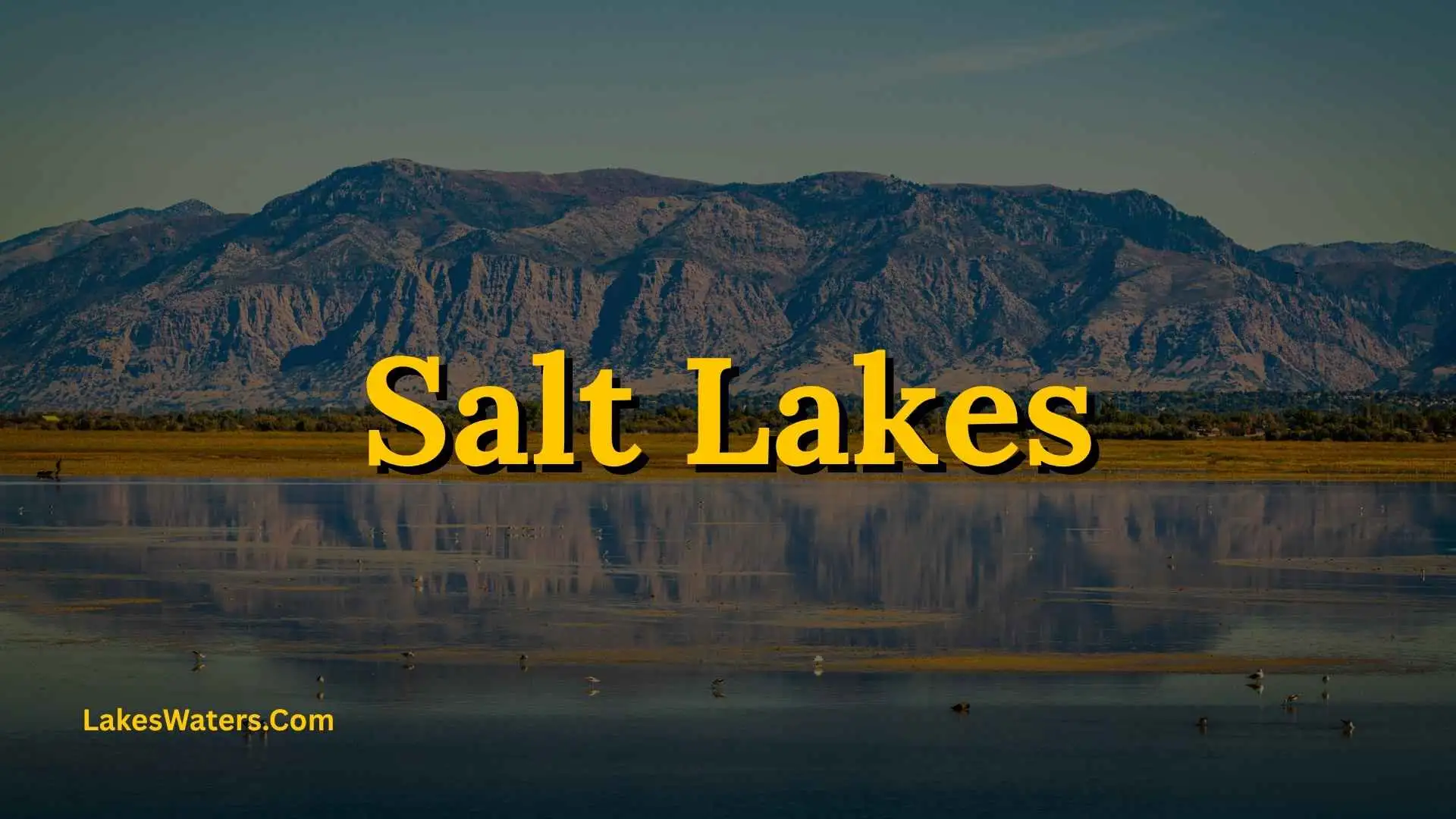
Salt lakes are some of the most unusual water bodies on Earth. They can be surrounded by deserts, mountains, salt flats, wetlands, or ancient geological landscapes, and their water may contain far more dissolved minerals than an ordinary freshwater lake.
If you are searching for salt lakes, you may want a simple definition, an explanation of why lakes become salty, examples from around the world, or information about wildlife, tourism, and environmental changes. This guide covers all of those questions while also explaining an important point that is often missed: not every closed lake is highly salty, and not every salt lake has the same chemistry.
The best way to understand these lakes is to look at their water balance. When dissolved minerals enter a basin but water leaves mainly through evaporation, salts can become concentrated over time. The result can be a saline or hypersaline lake with ecosystems and landscapes very different from those found in freshwater environments.
What Is a Salt Lake?
A salt lake is an inland lake containing a relatively high concentration of dissolved salts and minerals. The scientific term saline lake is often more precise because natural lake water contains several dissolved substances rather than only table salt.
Many salt lakes occur in closed or terminal drainage basins. In these basins, water may enter through rivers, streams, precipitation, or groundwater but does not leave through a river flowing to the sea. Evaporation then removes water while dissolved substances remain behind.
The U.S. Geological Survey explains that some lakes become saline because water cannot escape through a river outlet, allowing dissolved salts to accumulate. It also notes that some saline lakes can be saltier than the oceans.
Quick answer
Salt lakes form when dissolved minerals enter an inland basin and are not removed as quickly as water is lost, often because evaporation is the main form of water loss.
The process can be summarized as:
Mineral-rich water enters → water evaporates → dissolved minerals remain → salinity increases.
This process can continue for thousands of years, although the actual chemistry of each lake depends on geology, climate, groundwater, precipitation, inflow, and mineral precipitation.
Salt lake vs. freshwater lake
| Feature | Salt Lake | Freshwater Lake |
| Water chemistry | High concentration of dissolved salts | Relatively low dissolved salts |
| Common setting | Closed or terminal basin | Open or closed basins |
| Major water loss | Often evaporation | Evaporation, rivers, groundwater, or combinations |
| Aquatic life | Often specialized organisms | Usually broader freshwater communities |
| Fish | Limited or absent in highly saline water | Common in many lakes |
| Examples | Great Salt Lake, Dead Sea | Lake Superior, Lake Baikal |
| Salinity | Can range from mildly saline to hypersaline | Generally much lower |
One important exception is that a closed basin does not automatically become a salt lake. Water can leave through groundwater seepage, carrying dissolved material away. The chemistry therefore depends on the complete water and solute balance rather than simply whether a visible river outlet exists.
How Do Salt Lakes Form?
Salt lakes develop through a combination of hydrology, geology, climate, and evaporation. There is no single formation process that applies equally to every saline lake.
Evaporation concentrates dissolved minerals
Rainwater is not chemically pure. As water moves across landscapes, it interacts with soil and rocks and picks up dissolved minerals.
Rivers and groundwater can carry those substances into a lake.
If water then evaporates, the water molecules leave the lake and enter the atmosphere, while many dissolved minerals remain.
Repeated evaporation can therefore increase the concentration of dissolved substances.
This is why arid environments are especially favorable to the development of highly saline lakes. Strong evaporation can remove large amounts of water while the basin continues receiving mineral inputs.
Closed basins play an important role
A closed basin is a drainage area where surface water does not normally flow out to an ocean or another major drainage system.
This creates an important difference from many freshwater lakes.
In an open drainage system:
River inflow → lake → river outflow → ocean
In a terminal basin:
River inflow → lake → evaporation
The second system gives dissolved minerals more opportunity to accumulate.
However, groundwater can complicate this simple model. A closed lake may lose some water underground, and that water can carry dissolved substances away.
Ancient lakes can leave behind salty remnants
Some modern salt lakes are remnants of much larger ancient lakes.
The Great Salt Lake is a strong example. It is the modern remnant of prehistoric Lake Bonneville, a much larger lake that occupied the Great Basin during the Ice Age. USGS research shows that the Bonneville system went through major changes in water level and chemistry over tens of thousands of years.
As the climate became warmer and drier, the ancient lake system changed dramatically. The modern Great Salt Lake represents only a small remaining part of that much larger history.
This provides an important geological lesson: a salt lake can be the final stage of a much larger lake system.
Why Are Some Lakes Saltier Than Others?
Not all saline lakes have the same salt concentration.
Two lakes can both be called salt lakes while having very different chemistry.
Climate controls evaporation
A hot, dry climate can cause rapid evaporation.
If precipitation and river inflows do not replace the water lost through evaporation, lake levels decline and dissolved minerals become more concentrated.
This is one reason highly saline lakes are often associated with deserts and semi-arid regions.
Geology controls mineral inputs
The rocks surrounding a lake influence the chemistry of water flowing into it.
Different rocks release different minerals through weathering. Groundwater can also transport dissolved substances from underground geological formations into the basin.
The chemistry of Great Salt Lake, for example, reflects inputs from weathering in its drainage basin as well as springs, groundwater, precipitation, and rivers.
Lake level changes salinity
When the volume of water decreases while the amount of dissolved material remains substantial, salinity can increase.
When substantial freshwater enters the lake, the water can become more diluted.
Great Salt Lake provides a particularly clear example. USGS research has documented an inverse relationship between lake level and salinity in parts of the lake.
That means you should be careful with statements such as “this lake is X times saltier than seawater.” Such comparisons can change with location and lake conditions.
The Most Famous Salt Lakes Around the World
Salt lakes occur on several continents. Some are famous for their extreme salinity, others for wildlife, unusual colors, geological history, or tourism.
Great Salt Lake, Utah, United States
The Great Salt Lake is one of the most important saline lakes in North America.
USGS identifies it as the largest saline lake in North America and describes it as a closed basin whose water leaves primarily through evaporation.
The lake is the remnant of prehistoric Lake Bonneville and receives water from rivers, precipitation, and groundwater. Because it has no outlet to the sea, dissolved substances accumulate.
USGS historical information records substantial variation in salinity, including measurements south of the causeway ranging from 6% to 27% over a 22-year period.
The lake is also biologically important.
Its saline ecosystem supports organisms such as:
- Brine shrimp
- Brine flies
- Algae
- Microorganisms
Those organisms support larger food webs and make the lake an important stopover and habitat for migratory and nesting birds.
Great Salt Lake is also an excellent example of why lake level matters. USGS monitoring shows that its surface elevation and area can change dramatically over time.
Dead Sea
The Dead Sea, located in the Jordan Rift Valley, is one of the world’s most recognizable hypersaline lakes.
It is famous for extremely salty water, mineral-rich shorelines, and the ability of visitors to float unusually easily.
Its high salinity makes it unsuitable for ordinary freshwater fish and many other aquatic organisms.
However, the name “Dead Sea” should not be interpreted as meaning that absolutely no life exists. Microorganisms adapted to highly saline environments can survive under suitable conditions.
The Dead Sea also demonstrates an important principle: extreme salinity can create an ecosystem that looks lifeless to a casual observer but may still contain specialized microorganisms.
Lake Assal, Djibouti
Lake Assal is located in Djibouti in the Horn of Africa.
It is known for its extremely saline water and its setting in a dry, low-lying landscape.
Its environment illustrates the powerful combination of:
- High evaporation
- Limited water outflow
- Mineral accumulation
- Arid climate
- Geological activity
Lake Assal is therefore useful when studying how extreme environments can produce highly concentrated saline water.
Lake Urmia, Iran
Lake Urmia is a large saline lake in northwestern Iran.
It is particularly important for understanding how saline lake systems respond to changes in their water balance.
Declining water levels can alter the size, chemistry, habitat, and ecological conditions of a saline lake.
Lake Urmia demonstrates that salt lakes are not static geological features. Their condition can change significantly when precipitation, river inflow, evaporation, climate, and human water use change.
Lake Retba, Senegal
Lake Retba, also called Lac Rose, is known internationally for its unusual pinkish appearance and saline environment.
The color of saline lakes can be influenced by microorganisms, algae, minerals, sediment, water depth, and lighting conditions.
This is an important distinction:
A lake’s color does not provide a reliable measurement of its salinity.
A lake may look intensely colored without having the same chemical characteristics as another famous saline lake.
How Salty Are Salt Lakes?
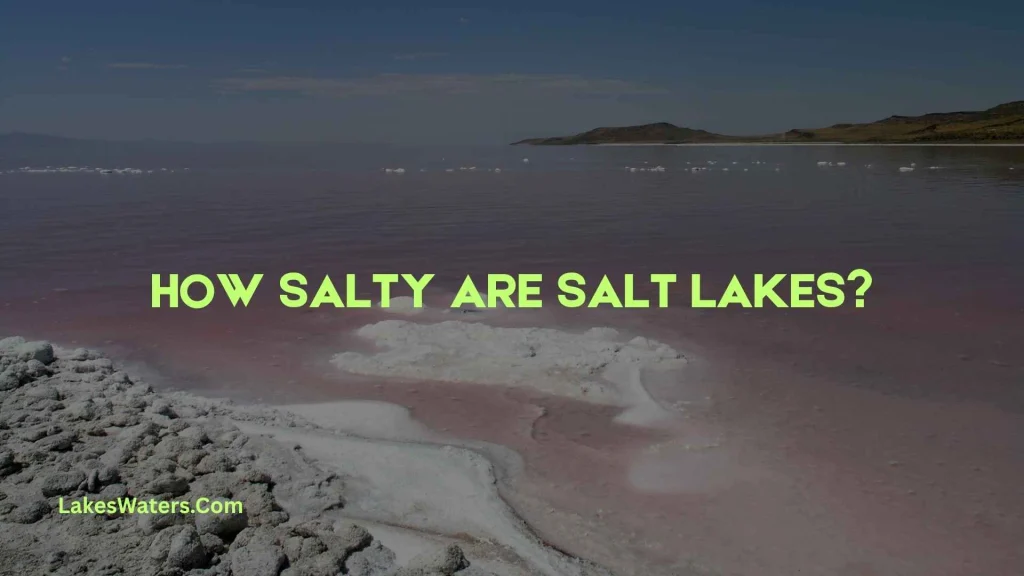
There is no single salinity level that applies to every salt lake.
Some are mildly saline, while others become hypersaline, meaning their salt concentration is exceptionally high.
What does hypersaline mean?
“Hypersaline” generally describes water whose salinity is higher than normal seawater.
These environments can become challenging places for ordinary aquatic organisms because high concentrations of dissolved salts create strong osmotic stress.
Organisms that live there must have adaptations that help them maintain the correct balance of water and dissolved substances.
Why salinity changes over time
Salinity can change because of:
- Rainfall
- Snowmelt
- River inflows
- Groundwater
- Evaporation
- Lake level
- Mineral precipitation
- Human water use
- Seasonal conditions
For this reason, scientific measurements are more reliable than a simple description such as “very salty.”
What Lives in Salt Lakes?
A common misconception is that salt lakes contain no life.
The reality is more interesting.
Brine shrimp and brine flies
Great Salt Lake supports brine shrimp and brine flies, which form an important part of its food web. USGS describes the lake as having an aquatic ecosystem containing more than 30 species of organisms.
Brine shrimp are particularly important because they can thrive in water that would be unsuitable for most freshwater fish.
Microorganisms
Some bacteria and other microorganisms are adapted to high-salt environments.
These organisms are often called halophiles, meaning salt-loving organisms.
They can provide scientists with valuable information about how life adapts to environmental extremes.
Birds
Salt lakes can be extremely important for birds even when they contain few fish.
Birds may feed on:
- Brine shrimp
- Brine flies
- Insects
- Algae
- Other organisms living around wetlands and shorelines
Great Salt Lake is an important example of a saline lake supporting major bird populations.
This creates an unusual ecosystem:
Salt water → specialized small organisms → abundant food → large bird populations
Salt Lakes vs. Oceans: What Is the Difference?
Both oceans and salt lakes contain dissolved salts, but they are not the same type of environment.
Oceans form a connected global system
The world’s oceans are connected and have enormous water volumes.
Salt lakes are inland and geographically isolated.
A salt lake may have no connection to the ocean at all.
Salt lakes can be much more variable
Ocean salinity is relatively stable on a global scale compared with many terminal lakes.
Salt lake salinity can change dramatically depending on rainfall, inflow, evaporation, water level, and mineral precipitation.
Great Salt Lake demonstrates this variability particularly well.
Their chemistry can be different
“Salt” is a general term.
Natural saline waters can contain different proportions of:
- Sodium
- Chloride
- Magnesium
- Calcium
- Potassium
- Sulfate
- Carbonate
- Other dissolved ions
The exact mixture depends on the geology and hydrology of each basin.
Why Are Salt Lakes Important?
Salt lakes have value far beyond tourism.
They are important environmental, geological, scientific, economic, and cultural resources.
They provide specialized habitats
Saline lakes can support organisms that cannot survive in ordinary freshwater.
These organisms form food webs that can support birds and other wildlife.
Great Salt Lake is a strong example of this ecological relationship.
They help scientists study extreme environments
Salt lakes provide natural laboratories for studying:
- Microbiology
- Ecology
- Geochemistry
- Climate
- Hydrology
- Mineral formation
- Environmental change
Their sediments can also preserve evidence of past environmental conditions.
They can contain valuable minerals
Some saline lakes support mineral extraction.
USGS historical information about Great Salt Lake describes a mineral industry associated with its high salinity.
However, mineral resources should be considered alongside ecological protection because the same chemical and hydrological conditions that create mineral deposits can also support sensitive ecosystems.
They preserve geological history
Sediments in ancient lake basins can contain clues about past climate and environmental changes.
Great Salt Lake research, for example, has reconstructed more than 30,000 years of lake history using sediment, geochemical, biological, and other evidence.
Why Are Some Salt Lakes Shrinking?
A salt lake shrinks when water losses exceed water entering the basin over a sustained period.
The basic relationship is:
Inflow + precipitation + groundwater input < evaporation + other losses
When that imbalance continues, lake levels fall.
Climate affects the water budget
Changes in precipitation can reduce the amount of water entering a lake.
Changes in temperature and atmospheric conditions can affect evaporation.
Because saline lakes often have no outlet, relatively small changes in their water budget can produce large ecological consequences.
Human water use can affect inflows
Rivers feeding terminal lakes may also provide water for:
- Agriculture
- Cities
- Industry
- Reservoirs
- Other human uses
When less water reaches the lake, its water level can fall.
The effect is not identical for every salt lake, but the principle is straightforward: a terminal lake cannot receive less water indefinitely without changing.
Shrinking can change salinity
As water volume decreases, dissolved substances become more concentrated.
That can change the conditions experienced by microorganisms and larger organisms.
It can also alter where different minerals precipitate.
Great Salt Lake research shows how lake level, salinity, mineral precipitation, and water chemistry interact.
What Happens When a Salt Lake Dries Up?
A lake does not necessarily disappear in one step.
It may pass through several stages.
Stage 1: The lake becomes shallower
Water levels decline, exposing more shoreline.
Stage 2: Salinity increases
The remaining water becomes more concentrated if dissolved minerals remain while water is lost.
Stage 3: Minerals begin to precipitate
When concentrations become high enough, certain minerals can crystallize or settle.
Stage 4: Salt-rich lakebed becomes exposed
Continued evaporation can leave behind salt deposits and other minerals.
Stage 5: A salt flat may develop
In extremely dry environments, the former lakebed can become a broad salt-covered landscape.
This is why some salt flats are evidence of former lakes rather than permanent bodies of water.
Can You Swim in a Salt Lake?
Some salt lakes are popular for swimming or floating, but salinity alone does not determine whether swimming is safe.
Before entering a saline lake, check current local guidance.
Things to consider before swimming
Look for information about:
- Water-quality advisories
- Swimming restrictions
- Current lake conditions
- Shoreline stability
- Weather
- Local wildlife
- Access rules
- Skin or eye irritation risks
Very salty water can irritate the eyes and damaged skin. Visitors should also avoid swallowing the water.
A lake that looks calm from shore can still contain unstable mud, sharp mineral deposits, strong winds, or other hazards.
Are Salt Lakes Good Places to Visit?
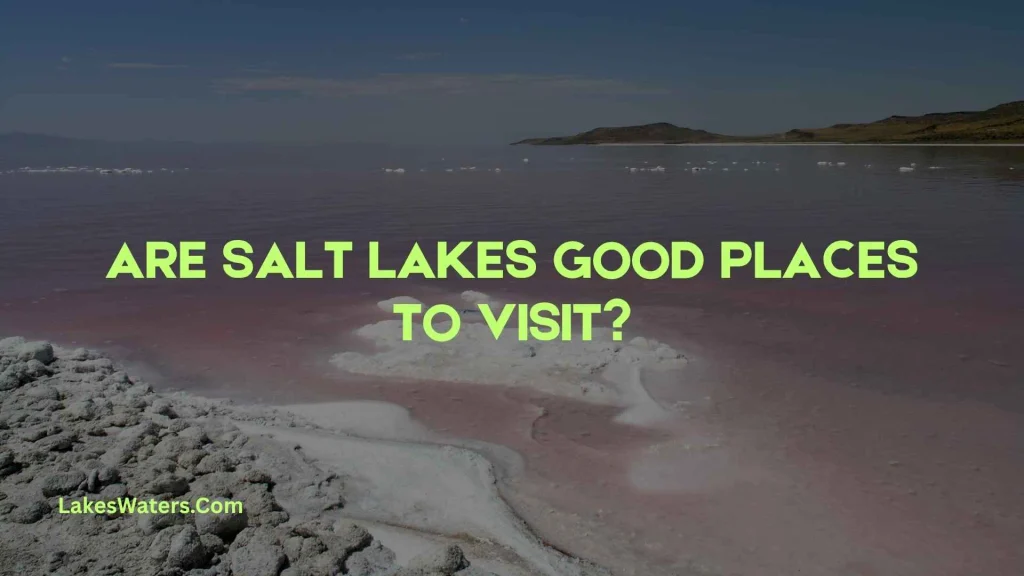
They can be excellent destinations for travelers who want landscapes that are different from ordinary freshwater lakes.
Why travelers visit
Common reasons include:
- Photography
- Wildlife watching
- Birding
- Floating experiences
- Geology
- Scenic landscapes
- Salt formations
- Desert exploration
- Cultural history
Choosing a salt lake for your trip
Use your purpose rather than a generic “best lake” ranking.
| Your goal | What to look for |
| Wildlife | Wetlands, birds, and specialized aquatic organisms |
| Photography | Salt flats, unusual colors, mountains, and reflections |
| Floating | Extremely saline water and permitted recreation |
| Geology | Ancient lake history and mineral formations |
| Birding | Major migration or nesting habitat |
| Family trip | Safe access, facilities, and current conditions |
| Scientific interest | Monitoring stations, research, and geological history |
This approach is more useful than simply asking which salt lake is “best,” because the right destination depends on what you want to experience.
How to Tell If a Lake Is Saline
You cannot reliably identify salinity just by looking at a lake.
Use water-quality information
For an unfamiliar lake, check:
- Official water-quality data.
- Reported salinity or dissolved-solids measurements.
- Geological information about the basin.
- Whether it has a surface outlet.
- Its main water sources.
- Regional climate and evaporation.
- Government or scientific monitoring.
Do not taste unknown lake water
Never use taste as a test.
Natural water can contain microorganisms, pollutants, or dissolved substances that make it unsafe to drink.
A white shoreline can indicate evaporated minerals, but it does not automatically tell you the exact salinity of the lake water.
Common Misconceptions About Salt Lakes
All salt lakes are completely lifeless
False.
Many saline lakes support specialized organisms. Great Salt Lake supports brine shrimp, brine flies, microorganisms, and other organisms while also providing important bird habitat.
Every salt lake is saltier than seawater
False.
Salinity varies widely among saline lakes and can change within the same lake over time.
Every lake without an outlet is salty
Not necessarily.
A closed lake can lose water through groundwater pathways, and dissolved material may also leave through those pathways.
Salt lakes contain only sodium chloride
False.
Natural saline water contains several dissolved ions. Great Salt Lake, for example, contains major dissolved ions including chloride, sulfate, sodium, magnesium, and potassium.
A pink lake is automatically extremely salty
Not necessarily.
Water color can result from microorganisms, algae, minerals, sediment, water depth, and lighting. Color should not be treated as a scientific measurement of salinity.
Salt lakes are always shrinking
Not always.
Lake levels can rise and fall naturally in response to precipitation, inflow, evaporation, and climate. Great Salt Lake has experienced both major rises and major declines during its recorded history.
A Simple Decision Guide for Understanding Salt Lakes
If you are trying to understand why a particular lake is salty, follow this framework:
Does the lake have a major surface-water outlet?
→ Yes: Salt may be carried away with outflow, so extreme salinity is less likely to develop solely through evaporation.
→ No: Continue to the next question.
Does the region experience substantial evaporation?
→ Yes: Dissolved minerals can become concentrated.
→ No: Salinity may still develop, but other factors such as groundwater and geology become more important.
Are minerals entering through rivers or groundwater?
→ Yes: Continued evaporation can concentrate those minerals.
→ No: Extreme salinity is less likely to develop unless other sources exist.
Is the lake level declining?
→ Yes: The remaining water may become more concentrated.
→ No: Salinity may remain relatively stable or decrease if freshwater inputs increase.
This decision guide is useful because it explains the process, rather than simply asking whether a lake is labeled “saltwater.”
Frequently Asked Questions About Salt Lakes
What is a salt lake?
A salt lake is an inland lake with elevated concentrations of dissolved salts and minerals. Many occur in closed drainage basins where evaporation removes water while dissolved substances remain.
Why are salt lakes salty?
They become salty when dissolved minerals enter the lake and water is lost faster than those minerals are removed. In many terminal lakes, evaporation is the main way water leaves the basin.
What is the most famous salt lake in the United States?
The Great Salt Lake in Utah is the best-known salt lake in the United States and is identified by USGS as the largest saline lake in North America.
Is the Great Salt Lake saltier than the ocean?
Parts of Great Salt Lake can be considerably saltier than seawater. Historical USGS measurements south of the causeway ranged from 6% to 27% salinity during the period studied.
Can fish live in salt lakes?
Most freshwater fish cannot tolerate extremely saline water. However, some salt lakes support specialized organisms such as brine shrimp, brine flies, algae, and microorganisms.
Why can people float in very salty lakes?
Highly saline water is denser than freshwater. The increased density provides greater buoyant force, allowing people to float more easily.
Are salt lakes natural?
Most famous salt lakes have natural geological and hydrological features. However, people can strongly influence their water balance through dams, river diversions, groundwater use, agriculture, and other activities.
Can a salt lake become less salty?
Yes. Increased freshwater inflow can dilute the lake, while changes in water level can alter the concentration of dissolved minerals. The response depends on the individual lake’s hydrology and chemistry.
Why do salt lakes dry up?
They can dry up when evaporation and other water losses remain greater than precipitation, river inflow, groundwater input, and other sources of water for a long enough period.
What is a hypersaline lake?
A hypersaline lake is a lake with salinity higher than normal seawater. These environments can support organisms specially adapted to high salt concentrations.
Are salt lakes important for birds?
Yes. Some provide major feeding, nesting, and migration habitat. Great Salt Lake is a well-known example because its specialized food web supports large numbers of birds.
Are salt lakes the same as oceans?
No. Oceans are connected marine environments, while salt lakes are inland bodies of water. Their chemistry, hydrology, ecosystems, and salinity patterns can be very different.
Why do some salt lakes have unusual colors?
Colors can result from microorganisms, algae, minerals, sediments, water depth, and sunlight. A distinctive color does not automatically indicate a particular salinity level.
Key Takeaways About Salt Lakes
The most important points to remember are:
- Salt lakes are inland bodies of water with elevated dissolved salts and minerals.
- Many form in closed or terminal basins.
- Evaporation can concentrate dissolved minerals over time.
- Not every closed lake is highly saline.
- Salinity can change as lake levels and water inflows change.
- Some salt lakes support highly specialized ecosystems.
- Great Salt Lake is a major example of a saline lake with ecological, geological, and economic importance.
- Salt lakes can shrink or expand depending on their water balance.
- A lake’s color does not reliably indicate its salinity.
- Current scientific and local authority information is the best source for water quality and recreation conditions.
Conclusion
Salt lakes are much more than bodies of water with a lot of salt. They are complex systems shaped by evaporation, geology, climate, groundwater, river inflow, mineral chemistry, and human activity.
Some formed as remnants of ancient lakes. Others occupy naturally closed basins where evaporation gradually concentrates minerals. Their salinity can range from moderately saline to extremely hypersaline, and their chemistry can change as water levels rise and fall.
The Great Salt Lake is one of the clearest examples. Its connection to prehistoric Lake Bonneville, changing water levels, variable salinity, specialized organisms, bird habitat, and mineral resources make it an important natural laboratory. USGS research shows that its history extends across thousands of years and that its chemistry is controlled by a complicated interaction of water inputs, evaporation, minerals, and lake circulation.
Understanding why salt lakes are salty also explains why they can be environmentally sensitive. When the balance between inflow and evaporation changes, the lake’s size, salinity, habitats, and mineral chemistry can change with it.
For that reason, the most useful way to think about salt lakes is not simply as “salty water,” but as dynamic ecosystems whose condition depends on the balance between water entering, water leaving, and minerals moving through the basin.

I am Daniel Brooks, an environmental enthusiast and writer focused on freshwater resources and the connection between humans and nature.
I enjoy researching lakes, wetlands, and water conservation practices to create informative content for readers. I believe that understanding our water systems is the first step toward protecting them.
Through my writing, I aim to inspire awareness and responsible actions for a better water future.
Books by Daniel Brooks:
- Freshwater Wonders: Stories From the World’s Lakes
- Protecting Our Blue Planet: Water Conservation Guide
 Ethan Reynolds