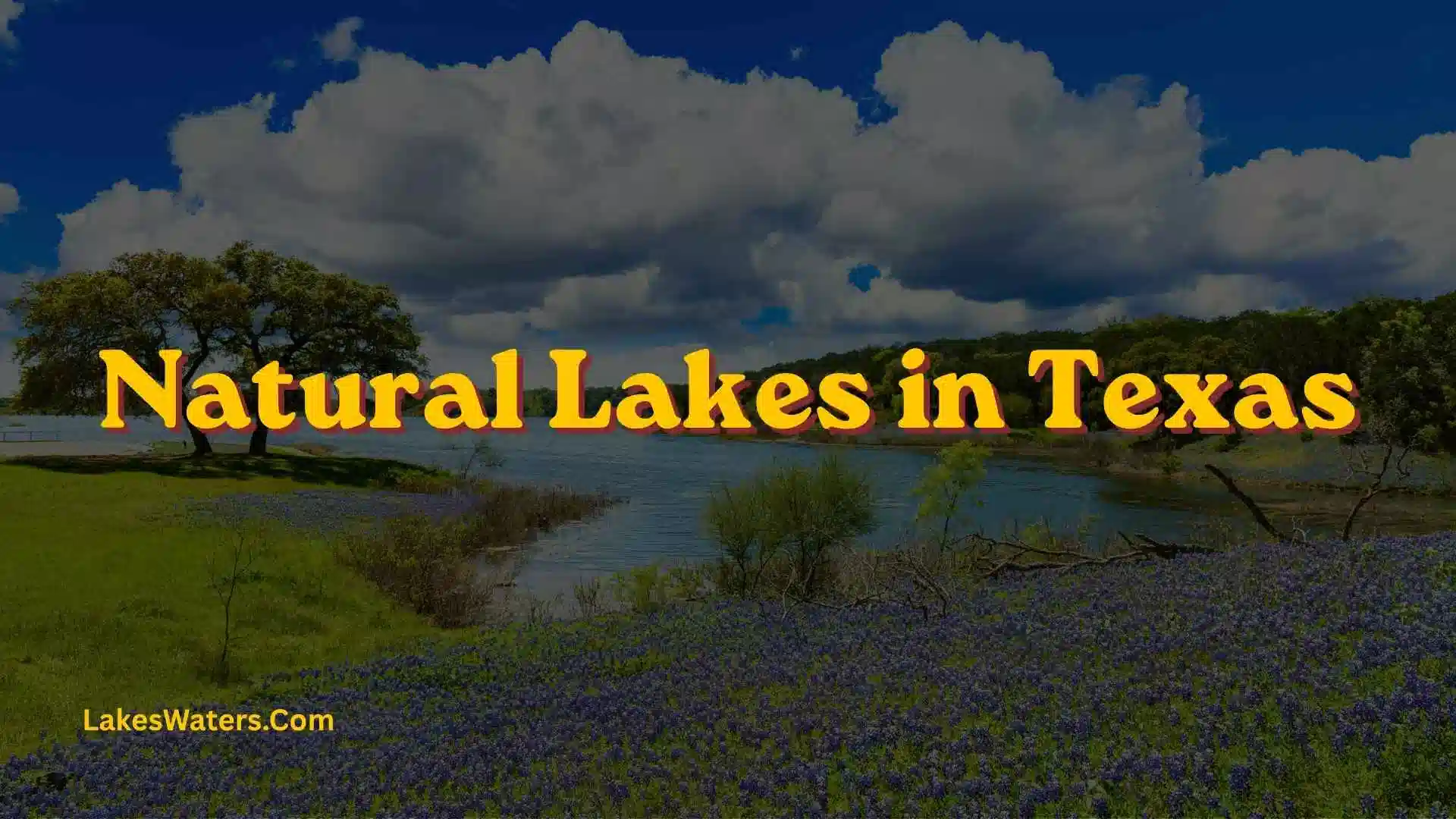
If you are searching for natural lakes in Texas, the first thing to know is that Texas is very different from states known for thousands of naturally formed lakes. Most of Texas’s famous lakes including Lake Travis, Lake Texoma, Lake Fork, and Lake Amistad are reservoirs created by dams. Naturally occurring lakes are much rarer.
The best-known example is Caddo Lake, widely described by Texas Parks and Wildlife as Texas’s only naturally formed large lake. However, the full picture is more nuanced. Texas also has other naturally formed water bodies, including oxbow lakes, resacas along the Rio Grande, playa lakes in the High Plains, and Green Lake on the Gulf Coastal Plain.
This guide explains which natural lakes and lake-like water bodies exist in Texas, how they formed, why they are rare, and how they differ from the state’s many reservoirs. It also covers common misconceptions, ecology, recreation, and practical tips for exploring them.
Quick Answer: What Are the Natural Lakes in Texas?
Caddo Lake is the most famous natural lake in Texas and is commonly identified as the state’s only naturally formed large lake. Texas also has smaller or differently classified natural water bodies, such as:
- Green Lake
- Oxbow lakes formed by changing river channels
- Resacas in the Lower Rio Grande Valley
- Playa lakes and seasonal playa basins
- Other natural wetlands and standing-water systems
The number depends on the definition of lake. If you mean a large, permanent natural lake, Caddo Lake is the clear answer. If you include smaller, seasonal, river-formed, and wetland-associated water bodies, Texas has a wider variety of naturally occurring lakes and lake-like features.
Key Takeaways
- Most major Texas lakes are human-made reservoirs.
- Caddo Lake is widely recognized as the state’s only naturally formed large lake.
- Natural origin and modern water management are not always the same thing.
- Oxbow lakes form when rivers abandon old bends.
- Resacas are former Rio Grande channels that can hold standing water.
- Playa lakes are shallow natural depressions that may fill seasonally.
- Green Lake is an important naturally formed water body in coastal Texas.
- The best answer depends on whether you are asking about large permanent lakes or all naturally occurring standing-water features.
What Makes a Lake Natural?
A natural lake is a body of standing water formed primarily by natural geological, hydrological, or ecological processes rather than by people building a dam.
That sounds simple, but the distinction becomes more complicated when a naturally formed lake is later altered by dams, channels, or other water-control structures.
Natural Lakes vs. Reservoirs
Natural lakes can form through processes such as:
- Changes in river channels
- Natural flooding
- Natural blockages
- Geological depressions
- Coastal processes
- Groundwater and surface-water accumulation
Reservoirs are generally created when people build a dam across a river or stream to store water.
| Feature | Natural Lake | Reservoir |
| Primary origin | Natural processes | Human engineering |
| Common formation | River changes, natural blockages, depressions | A dam blocks a river or stream |
| Water-level control | Mainly natural, though some may later be managed | Often actively controlled |
| Main Texas example | Caddo Lake | Lake Travis |
| Typical role | Ecosystem and natural water storage | Water supply, flood control, recreation, and other uses |
The name alone does not tell you how a lake formed. A body of water called “Lake” may be completely artificial, while a smaller wetland or abandoned river channel may be entirely natural.
Why Definitions Matter
One of the biggest mistakes in articles about natural lakes in Texas is saying either:
“Caddo Lake is the only natural body of water in Texas.”
or:
“Texas has many large natural lakes.”
Both statements are misleading.
A more accurate explanation separates large, permanent natural lakes from smaller natural water bodies. Caddo Lake stands out as the state’s best-known and largest example, while other naturally formed systems exist but may be seasonal, smaller, river-connected, or classified as wetlands rather than conventional lakes.
Why Are Natural Lakes So Rare in Texas?
Texas is the second-largest state in the United States, but size alone does not guarantee large numbers of natural lakes.
The state’s geology, climate, and river systems have shaped a landscape where reservoirs are much more common than large natural lakes.
Texas Does Not Have the Same Glacial Lake History as Northern States
Many of North America’s famous natural lakes were shaped or deepened by glaciers. The Great Lakes are the best-known example.
Texas was not shaped by the same large continental ice sheets that created extensive lake basins farther north. As a result, Texas lacks the widespread glacial depressions that helped create thousands of natural lakes in states such as Minnesota and Michigan.
Texas Rivers Keep Changing the Landscape
Texas has major river systems, including the Rio Grande, Brazos, Colorado, Trinity, and Sabine.
Rivers can create natural standing water when they:
- Change course
- Cut off a bend
- Flood low-lying land
- Leave behind an abandoned channel
- Interact with coastal plains and wetlands
These processes often create smaller or shallower lakes rather than large, deep, permanent ones.
Climate Limits Permanent Surface Water in Some Regions
Rainfall varies greatly across Texas. Eastern Texas is generally wetter than western Texas, while drought and high evaporation affect large areas of the state.
A natural depression may hold water after heavy rain but become shallow or dry during extended dry periods. This is one reason playa lakes and seasonal wetlands are important to understanding Texas water geography.
Caddo Lake: Texas’s Most Famous Natural Lake
Caddo Lake is the most important destination for anyone researching or visiting a natural lake in Texas.
Located in East Texas near the Louisiana border, Caddo is known for its bald cypress trees, wetlands, bayous, and slow-moving waterways. Its landscape looks very different from the broad, open water commonly associated with Texas reservoirs.
How Caddo Lake Formed
Caddo Lake has a natural origin connected to a massive logjam known as the Great Raft.
The natural accumulation of logs and debris affected water flow in the Red River region and contributed to the flooding and impoundment of the Cypress Creek Basin. This process helped create the lake and surrounding wetland system.
Later, changes to the river system and the removal of the Great Raft altered water conditions. Human-built structures eventually became important for maintaining modern water levels.
This history creates an important distinction:
Caddo Lake formed naturally, but its present-day water conditions are influenced by human water management.
That does not erase its natural origin. Instead, it explains why the lake should be understood as a natural landscape that has also been modified over time.
What Makes Caddo Lake Different From a Typical Texas Lake?
Many Texas reservoirs have wide open water, developed marinas, and shorelines designed for boating and recreation.
Caddo Lake offers a different experience. Its environment includes:
- Bald cypress forests
- Bayous
- Swampy channels
- Wetlands
- Aquatic vegetation
- Shallow backwaters
- Wildlife habitat
The lake’s character comes from the connection between open water and surrounding wetlands. This makes it especially valuable for paddling, wildlife observation, photography, and learning about freshwater ecosystems.
Things to Do at Caddo Lake
Visitors can enjoy activities such as:
- Kayaking
- Canoeing
- Fishing
- Hiking
- Camping
- Birdwatching
- Wildlife photography
- Nature study
For first-time visitors, paddling is often one of the best ways to experience the landscape because it allows access to quieter sections of the waterways.
However, natural waterways can be more complex than an open reservoir. Trees, vegetation, narrow channels, and changing water levels can affect navigation.
A smart preparation checklist includes:
- Check weather and water conditions.
- Confirm the public launch point.
- Carry an appropriate map or navigation tool.
- Wear required safety equipment.
- Tell someone where you plan to go.
- Avoid entering unfamiliar channels without preparation.
Green Lake and Other Natural Water Bodies in Coastal Texas
Green Lake is another important example in discussions about naturally formed lakes in Texas.
Located in the coastal plain of Calhoun County, it differs significantly from Caddo Lake in both geography and formation.
Why Green Lake Is Important
Green Lake shows why the subject cannot be reduced to a single sentence.
If the question is, “What is the only naturally formed large lake commonly identified by Texas Parks and Wildlife?” Caddo Lake is the answer.
If the question is, “Are there other naturally occurring lake-like or freshwater bodies in Texas?” the answer is yes.
Texas has natural water features shaped by different processes in different regions. Coastal plains, river valleys, floodplains, and dry basins can all produce standing water.
Natural Water Does Not Always Look Like a Classic Lake
When many people picture a lake, they imagine a large, deep body of permanent water with a clearly defined shoreline.
Texas challenges that idea.
Natural water bodies may be:
- Long and narrow
- Curved like an old river bend
- Shallow
- Seasonal
- Surrounded by wetlands
- Connected to floodplains
- Influenced by changing river or coastal conditions
This broader view helps explain why Texas has more natural water diversity than a simple list of major lakes suggests.
Oxbow Lakes: Natural Lakes Created by Rivers
An oxbow lake forms when a river changes its course and leaves behind part of its former channel.
These features are among the clearest examples of how rivers can create natural lakes without any dam being built.
How an Oxbow Lake Forms
The process usually happens over time:
- A river develops a wide bend.
- Flowing water erodes the outer bank.
- Sediment builds along other parts of the channel.
- Flooding or erosion creates a shorter path for the river.
- The river eventually bypasses the old bend.
- The abandoned section remains filled with water.
The result is often a curved or horseshoe-shaped body of water.
Why Oxbow Lakes Matter in Texas
Texas has large river systems that naturally meander across floodplains.
Where rivers shift course, old channels can remain behind as ponds, wetlands, or oxbow lakes. These water bodies may be much smaller than reservoirs, but they provide valuable examples of active landscape change.
They can also create important habitat for fish, birds, amphibians, and wetland plants.
Resacas of the Lower Rio Grande Valley
The resacas of South Texas are another important type of naturally formed standing-water system.
A resaca is generally associated with an old or abandoned river channel, particularly in the Lower Rio Grande Valley.
How Resacas Form
Rivers do not stay in exactly the same place forever.
Over long periods, erosion, flooding, and sediment movement can change a river’s path. When part of a former channel becomes disconnected from the main river, water may remain in that abandoned section.
The result can be a long, curved water body connected to wetlands and surrounding ecosystems.
Why Resacas Are Different From Reservoirs
A reservoir is intentionally created by people.
A resaca is created by the natural history of a river.
This difference matters because resacas tell the story of how the Rio Grande has changed over time. They are part of the region’s natural geography, even though many individual resaca systems may now be managed, restored, or affected by modern development.
Playa Lakes of the Texas High Plains
The Texas High Plains contain thousands of shallow natural depressions known as playas.
When these basins collect water, they are often called playa lakes.
Are Playa Lakes Always Filled With Water?
No.
Many playas are seasonal or temporary. Their water levels depend on rainfall, runoff, evaporation, and local conditions.
A playa may look like a dry basin during one period and hold substantial water after heavy rainfall.
This is why counting every playa as a permanent lake would be inaccurate. At the same time, ignoring them would overlook one of Texas’s most important natural water systems.
Why Playa Lakes Are Ecologically Important
Playas can provide:
- Temporary wetland habitat
- Feeding areas for birds
- Seasonal habitat for wildlife
- Storage for runoff
- Connections between surface water and local hydrology
Their importance is not based on whether they look like a recreational lake every day of the year.
They are an example of why geography and ecology use broader definitions than tourism guides.
Natural Lakes vs. Famous Texas Reservoirs
Texas has many well-known “lakes,” but most were created through major engineering projects.
Lake Travis
Lake Travis is a reservoir on the Colorado River. It is popular for boating, swimming, and waterfront recreation, but it is not naturally formed.
Lake Texoma
Lake Texoma was created by Denison Dam. It is one of the region’s major reservoirs and serves recreational and water-management purposes.
Lake Fork
Lake Fork is another reservoir and is especially well known for fishing.
Lake Amistad
Lake Amistad was created by the Amistad Dam on the Rio Grande.
These lakes are important parts of Texas recreation and water management, but they should not be included in a list of naturally formed lakes.
A Simple Guide: Which Texas Water Body Should You Explore?
Use this decision guide to match your interest with the right type of destination.
Do you want the closest thing to a classic, large natural lake?
↓
Choose Caddo Lake.
Do you want to study how rivers create lakes naturally?
↓
Explore oxbow lakes or resaca systems.
Are you interested in seasonal wetlands and dryland ecology?
↓
Learn about playa lakes in the High Plains.
Do you want a coastal natural water environment?
↓
Research Green Lake and other coastal plain water systems.
Do you mainly want marinas, large boat ramps, and developed water recreation?
↓
A Texas reservoir may better match your needs.
This approach is useful because the “best lake” depends on what you actually want to experience.
Why Natural Lakes and Wetlands Matter
Natural lakes are more than scenic destinations. They are part of larger ecosystems.
Wildlife Habitat
Different natural water systems support different types of habitat.
Caddo Lake supports a wetland environment with forests, aquatic plants, fish, birds, reptiles, and other wildlife.
Oxbow lakes can provide quieter water separated from the main river channel.
Resacas support wetland habitats in the Lower Rio Grande Valley.
Playas can become important temporary habitats in landscapes where permanent surface water is limited.
Water and Landscape Processes
Natural lakes also help people understand how landscapes work.
They can show:
- How rivers change course
- How wetlands store water
- How rainfall affects dry landscapes
- How sediment reshapes channels
- How natural and human water systems interact
For students, travelers, and nature enthusiasts, Texas offers a useful lesson: a lake does not have to be large or permanently full to be geographically important.
Practical Tips for Visiting Natural Lakes in Texas
Natural water bodies do not always have the same facilities as major reservoirs.
Planning ahead can make a trip safer and more enjoyable.
Check Access Before You Travel
Before visiting, confirm:
- Whether the land is public or private
- Where public access is located
- Whether boats are allowed
- Whether fishing is permitted
- Whether a license is required
- Whether swimming is allowed
- Whether seasonal restrictions apply
Do not assume that a body of water visible on a map has public access.
Check Conditions, Not Just the Forecast
Weather is important, but it is not the only factor.
Also consider:
- Water level
- Flood conditions
- Drought
- Recent storms
- Boat-launch availability
- Seasonal closures
This is particularly important for rivers, wetlands, and seasonal water bodies.
Protect Sensitive Habitats
A simple low-impact checklist includes:
- Take all trash with you.
- Stay on designated routes where provided.
- Avoid disturbing wildlife.
- Do not remove plants or animals.
- Clean boats and equipment when required.
- Follow fishing and boating regulations.
- Respect private property.
Natural lake systems can be more sensitive than heavily developed recreation areas.
Common Mistakes When Researching Natural Lakes in Texas
Mistake 1: Assuming Every Texas Lake Is Natural
This is the most common error.
Most large Texas lakes were created by dams. Always check the origin of a lake before describing it as natural.
Mistake 2: Saying Caddo Lake Is the Only Natural Water Body in Texas
Caddo Lake is widely recognized as the state’s only naturally formed large lake, but Texas has other naturally occurring water bodies.
The wording matters.
Mistake 3: Treating All Natural Water Bodies as the Same
An oxbow lake, a playa, a resaca, and a cypress wetland may all contain standing water, but they form differently and function differently.
A good article should explain those differences rather than placing everything into one undifferentiated list.
Mistake 4: Ignoring Human Changes to Natural Systems
A water body can have a natural origin while still being affected by dams, drainage projects, channels, or water management.
Caddo Lake is a useful example of this distinction.
Mistake 5: Confusing Map Labels With Geological Origins
A map may label something as “Lake,” but the label does not prove that it formed naturally.
Always look for information about:
- The original water source
- River connections
- Dams
- Construction history
- Geological formation
Expert Perspective: The Best Way to Classify Natural Lakes in Texas
Instead of asking only, “How many natural lakes does Texas have?” use a classification system.
Category 1: Large Permanent Natural Lakes
This category includes Caddo Lake as the best-known example.
Category 2: Smaller River-Formed Lakes
This includes oxbow lakes and other abandoned river channels.
Category 3: Former River Channels and Resacas
These are natural features shaped by the historical movement of rivers.
Category 4: Seasonal Natural Lakes and Playas
These may hold water during wet periods and become dry during other seasons.
Category 5: Coastal and Wetland-Associated Water Bodies
These systems may not fit the classic image of a deep inland lake but are still important naturally formed standing-water environments.
This framework provides a more accurate answer than simply counting every feature called a “lake” or, at the other extreme, mentioning only Caddo Lake.
Frequently Asked Questions
What is the only natural lake in Texas?
Caddo Lake is commonly identified as the only naturally formed large lake in Texas. However, the state also contains other naturally formed water bodies, including oxbow lakes, resacas, playa lakes, and other wetland-associated systems.
The wording “large lake” is important because the answer changes when smaller or seasonal natural water bodies are included.
Is Caddo Lake completely natural?
Caddo Lake has a natural origin, but its modern water conditions have been influenced by human water-control structures.
The most accurate description is that it is a naturally formed lake whose present-day system has also been affected by human management.
Why are most lakes in Texas artificial?
Texas has relatively few large natural lake basins compared with regions shaped by glaciers.
To create dependable water storage, communities and water-management agencies built dams across rivers and streams. These reservoirs now provide water supply, flood control, recreation, and other benefits.
Is Green Lake a natural lake?
Green Lake is an important naturally formed water body in coastal Texas and is often included in discussions of the state’s natural lakes.
Its coastal setting and formation differ from Caddo Lake, showing that Texas’s natural standing-water systems are geographically diverse.
Are playa lakes real lakes?
Playas are naturally formed depressions that can hold water, often seasonally.
Some are dry for long periods, so they are not the same as permanent lakes such as Caddo Lake. However, they are significant natural water features and important parts of Texas ecology.
Are Lake Travis and Lake Texoma natural lakes?
No. Lake Travis and Lake Texoma are reservoirs created by dams.
They are among Texas’s best-known water recreation destinations, but they should not be included on a list of naturally formed lakes.
What is the best natural lake to visit in Texas?
For most travelers, Caddo Lake is the best choice.
It provides the strongest combination of natural history, wetlands, cypress scenery, paddling, fishing, camping, hiking, and wildlife viewing.
Can you swim in natural lakes in Texas?
Swimming rules depend on the specific location. A natural lake or water body may have hazards, limited access, shallow areas, vegetation, wildlife, boat traffic, or no designated swimming facilities.
Always check local rules and current conditions before entering the water.
Conclusion
Natural lakes in Texas are rare, but the subject is more diverse than it first appears.
Caddo Lake is the state’s most famous example and is widely recognized as its only naturally formed large lake. Its cypress forests, bayous, and wetlands offer a landscape that is very different from Texas’s familiar dam-built reservoirs.
The broader story includes Green Lake, oxbow lakes, resacas, playa basins, and other naturally formed water systems. Some are permanent, while others are seasonal. Some were created by changing rivers, while others formed in natural depressions or coastal environments.
The key is to use the right definition. If you are looking for a large, classic natural lake to visit, Caddo Lake is the clearest answer. If you want to understand all of Texas’s naturally occurring standing-water systems, the picture becomes much richer.
Texas may not have thousands of natural lakes, but the ones it does have reveal an important story about rivers, wetlands, climate, geology, and the ways people have changed water systems over time.

I am Sophia Bennett, an environmental storyteller who explores the fascinating world of lakes, freshwater habitats, and natural ecosystems.
I write to educate and inspire people about water conservation, biodiversity, and the importance of maintaining clean water resources.
I believe that understanding nature is the first step toward protecting it.
Books by Sophia Bennett:
- Whispers of the Freshwater World
- The Journey of Water: From Source to Sustainability