West Virginia is known for mountains, forests, rivers, and outdoor adventure, but its lakes deserve just as much attention. The state has 121 public fishing lakes and ponds, with public lakes found in 48 of West Virginia’s 55 counties. Most of the larger lakes are reservoirs created by dams rather than naturally formed lakes.
That difference is important if you are researching lakes in West Virginia for travel, fishing, boating, camping, or geography. The state’s reservoirs provide large areas for recreation, while smaller lakes and ponds can offer quieter fishing and family outings.
Among the most notable destinations are Summersville Lake, Stonewall Jackson Lake, Tygart Lake, Cheat Lake, Bluestone Lake, Beech Fork Lake, and Tomlinson Run Lake. Each has a different combination of scenery, activities, access, and nearby facilities.
There is also one unusual exception. Trout Pond in Hardy County is recognized as West Virginia’s only natural lake, covering about two acres.
This guide explains the best lakes to know, how West Virginia’s lakes were formed, which ones are better for specific activities, where to go for family trips, fishing, boating, camping, and kayaking, and how to choose the right lake for your plans.
Quick Answer: What Are the Best Lakes in West Virginia?
The best lake depends on what you want to do.
Summersville Lake is a major destination for boating, swimming, fishing, diving, camping, and sightseeing. Stonewall Jackson Lake combines fishing and boating with state park and wildlife opportunities. Tygart Lake is a strong choice for anglers, boaters, campers, and visitors who enjoy a mountain setting.
Cheat Lake is convenient for people visiting the Morgantown area, while Bluestone Lake offers a southern West Virginia setting with access to outdoor recreation. Beech Fork Lake and Tomlinson Run Lake are useful options for visitors looking for lake recreation connected to state parks.
If your goal is specifically to see a natural lake, the answer is different: Trout Pond is the state’s recognized natural lake.
West Virginia Lakes At a Glance
| Lake | Type | Approximate Size or Character | Best For |
| Summersville Lake | Reservoir | 2,790 acres at summer pool | Boating, swimming, fishing, diving |
| Stonewall Jackson Lake | Reservoir | About 2,650 acres | Fishing, boating, wildlife, state park trips |
| Tygart Lake | Reservoir | About 1,750 acres | Fishing, boating, camping |
| Cheat Lake | Reservoir | Large recreational lake near Morgantown | Boating, fishing, paddling |
| Bluestone Lake | Reservoir | Major southern WV reservoir | Fishing, boating, camping |
| Beech Fork Lake | Reservoir | Major recreation lake | Families, fishing, boating |
| Tomlinson Run Lake | Park lake | Smaller recreational lake | Families, fishing, camping |
| Trout Pond | Natural lake | About 2 acres | Natural lake geography |
Lake measurements can differ depending on water level, season, and the measurement used by a source. For example, the West Virginia Encyclopedia gives Summersville Lake at 2,790 surface acres at summer pool, while its statewide lakes entry identifies Stonewall Jackson Lake as the largest lake at 2,790 acres.
How Many Lakes Are in West Virginia?
There is no single number that includes every pond, reservoir, private lake, and small waterbody under one universal definition.
The West Virginia Division of Natural Resources lists 121 public fishing lakes and ponds. Those public waters are spread across 48 of the state’s 55 counties.
This number is more useful for travelers and anglers than trying to count every small body of water in the state. It shows that lake recreation is available across much of West Virginia, even though many of the best-known large lakes are reservoirs.
Why the Number Can Vary
Different sources may classify waterbodies differently.
A body of water may be described as a:
- Lake
- Pond
- Reservoir
- Impoundment
- State park lake
- Public fishing lake
- Private lake
For that reason, a claim such as “West Virginia has exactly X lakes” should always be treated carefully unless the source explains what it is counting.
Are Most Lakes in West Virginia Natural or Alternative?
Most of West Virginia’s major lakes are alternative reservoirs.
The state’s largest reservoirs were created by dams, with flood control being a major reason for their construction. Other purposes include recreation, river-flow management, fish and wildlife conservation, and water storage for municipal and industrial uses.
This is one of the most useful pieces of context when comparing West Virginia with states that have many glacial or naturally formed lakes.
Why Reservoirs Are So Common
West Virginia’s landscape is dominated by mountains, valleys, and river systems. Dams allowed engineers to control water in important river valleys while also creating large reservoirs.
Over time, these reservoirs became much more than water-management projects. Parks, campgrounds, marinas, fishing areas, trails, and other recreation facilities developed around many of them.
The result is a state where lake recreation is extensive even though natural lakes are rare.
The Role of the U.S. Army Corps of Engineers
The U.S. Army Corps of Engineers created and operates several of West Virginia’s major reservoirs.
The West Virginia Encyclopedia identifies ten of the state’s largest lakes as Corps of Engineers impoundments. Their primary purpose is flood control, with additional benefits and uses including recreation, water management, conservation, and water supply.
This history helps explain why many famous West Virginia lakes have large shorelines and extensive recreational areas.
What Is the Only Natural Lake in West Virginia?
Trout Pond in Hardy County is recognized as West Virginia’s only natural lake.
It has a surface area of about two acres, making it tiny compared with major reservoirs such as Summersville Lake. Its importance comes from its natural origin rather than its size or number of recreational facilities.
This distinction makes Trout Pond especially interesting for people researching the geology and geography of West Virginia.
Why Trout Pond Is Different
If someone asks for a natural lake in West Virginia, naming Summersville Lake or Stonewall Jackson Lake would not answer the question correctly because those are reservoirs.
Trout Pond represents a different part of the state’s water history. It is a natural feature rather than a lake formed by damming a river.
Best Lakes in West Virginia to Visit
West Virginia’s lakes vary considerably. Some are large and suited to several water activities, while others are better for fishing, camping, quiet paddling, or family recreation.
Summersville Lake
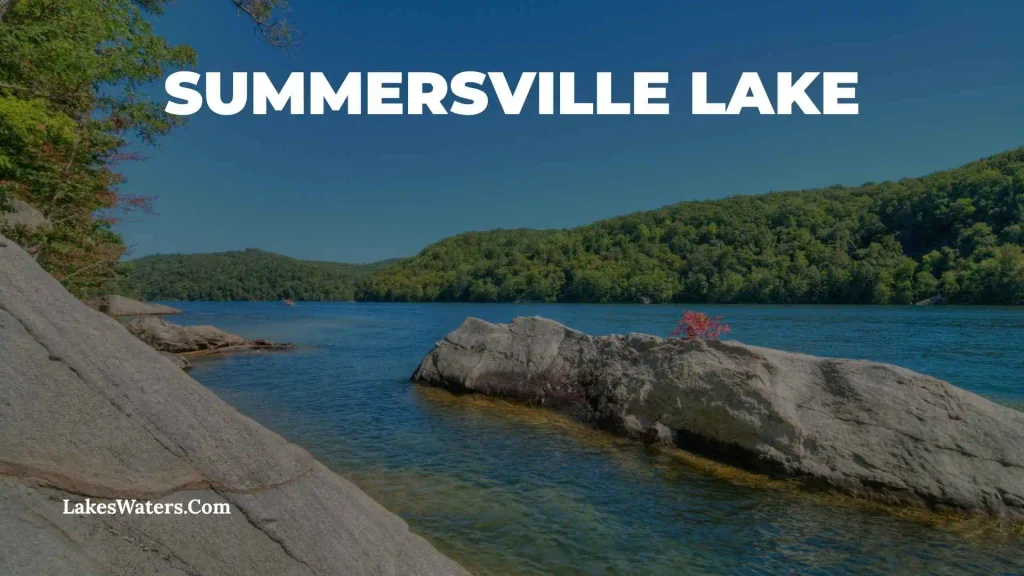
Summersville Lake is one of the state’s most prominent lake destinations. It lies on the Gauley River in Nicholas County and has 2,790 surface acres at summer pool and about 60 miles of shoreline. The U.S. Army Corps of Engineers built Summersville Dam between 1960 and 1966.
The size of the reservoir gives visitors plenty of room for water-based recreation. The surrounding landscape also adds hiking, sightseeing, camping, and other outdoor opportunities.
Summersville is particularly useful for travelers who want a lake trip with several possible activities rather than a destination focused on only one type of recreation.
Best for: boating, swimming, fishing, diving, camping, sightseeing, and active outdoor trips.
Stonewall Jackson Lake
Stonewall Jackson Lake lies on the West Fork River in Lewis County, near Weston. Its dam became fully operational in 1988. The lake has about 2,650 acres, a 26-mile length, and an extensive shoreline created partly by its irregular shape.
The lake is connected with Stonewall Jackson State Park and a wildlife management area, giving visitors access to more than just the water.
Fishing and boating are major attractions, while the surrounding parkland makes the area suitable for hiking, wildlife viewing, lodging, and family trips.
Best for: fishing, boating, wildlife, families, hiking, and longer stays.
Tygart Lake
Tygart Lake is one of West Virginia’s major reservoirs and is associated with Tygart Lake State Park.
It is especially well known among anglers and boaters, while the state park provides additional opportunities for camping, hiking, swimming, and lodging. West Virginia’s state park system currently lists Tygart Lake among its state parks and offers activity categories including boating, camping, fishing, hiking, and swimming.
Tygart also has an important place in the state’s reservoir history. The West Virginia Encyclopedia identifies it as the oldest of the ten large Corps of Engineers lakes in West Virginia.
Best for: fishing, boating, camping, swimming, and a traditional mountain-lake getaway.
Cheat Lake
Cheat Lake is located near Morgantown and is one of the most convenient major lake destinations for people exploring north-central West Virginia.
Its location makes it useful for shorter outings as well as longer recreational trips. Depending on the location and conditions, visitors can enjoy boating, fishing, paddling, swimming, hiking, and relaxing along the shoreline.
The biggest advantage for many visitors is accessibility. Someone staying around Morgantown does not necessarily need to travel deep into the state to find a substantial recreational lake.
Best for: Morgantown-area visitors, boating, fishing, paddling, and day trips.
Bluestone Lake
Bluestone Lake stretches through southern West Virginia and is connected with Bluestone State Park and the surrounding Appalachian landscape.
The lake and nearby public lands provide opportunities for fishing, boating, paddling, camping, hiking, and other outdoor activities.
Bluestone is also one of the major reservoirs around which West Virginia developed state park recreation. The West Virginia Encyclopedia identifies Bluestone among the Corps of Engineers lakes with state parks developed around them.
Best for: camping, fishing, boating, paddling, and mountain scenery.
Beech Fork Lake
Beech Fork Lake is a major recreational reservoir in western West Virginia and is associated with Beech Fork State Park.
The state’s park system lists Beech Fork among its state parks and provides a way for visitors to search for recreation such as boating, camping, fishing, hiking, and swimming.
Because the lake and park facilities are part of the same recreational destination, Beech Fork can work well for visitors who want a mixture of water activities and land-based recreation.
Best for: families, camping, fishing, boating, and outdoor weekends.
Lake Sherwood
Lake Sherwood offers a different experience from the state’s largest reservoirs.
Its forested setting provides the kind of atmosphere that appeals to visitors who want a quieter lake trip surrounded by Appalachian scenery.
For this type of destination, the attraction is not simply the size of the waterbody. The surrounding forest, access to outdoor recreation, and peaceful setting can be more important.
Best for: quiet recreation, fishing, camping, and forest scenery.
Tomlinson Run Lake
Tomlinson Run Lake is located within Tomlinson Run State Park in northern West Virginia.
It is smaller than the state’s major reservoirs, which can make it appealing for visitors who prefer a more compact recreational setting. The state park provides opportunities for camping, fishing, boating, and other outdoor activities.
Best for: families, fishing, camping, and a smaller lake experience.
Trout Pond
Trout Pond is worth visiting in a different sense because of what it represents.
It is West Virginia’s recognized natural lake and covers only about two acres.
It should not be compared with Summersville Lake based only on recreation, size, or facilities. Its appeal is its natural origin and its importance to understanding the state’s unusual lake geography.
Best for: natural-lake enthusiasts, geography, and visitors interested in unusual West Virginia landscapes.
Best Lakes in West Virginia for Fishing
Fishing is one of the most important reasons people visit West Virginia’s public lakes.
The state maintains fishing regulations and stocking information for numerous lakes and ponds. The current WVDNR regulations include lake and pond stocking schedules, demonstrating how actively many public waters are managed for fishing.
Good Fishing Destinations
Depending on the species and conditions you are targeting, consider:
- Tygart Lake
- Stonewall Jackson Lake
- Summersville Lake
- Cheat Lake
- Bluestone Lake
- Beech Fork Lake
- Tomlinson Run Lake
The important point is that there is no single “best fishing lake” for every angler.
A bass angler, trout angler, family fishing for panfish, and someone targeting larger sport fish may have completely different priorities.
What to Check Before Fishing
Before leaving home, check:
- Current fishing regulations
- License requirements
- Species-specific rules
- Creel limits
- Size limits
- Stocking information
- Boat-launch access
- Weather and water conditions
WVDNR’s current fishing materials should be treated as the primary source for regulations rather than an old travel article or social-media post.
Best Lakes in West Virginia for Boating
Large reservoirs are generally the most obvious places to consider when boating is the main goal.
Summersville Lake, Stonewall Jackson Lake, Tygart Lake, Cheat Lake, Bluestone Lake, and Beech Fork Lake all provide major recreational-water settings.
Choosing a Lake for Your Boat
The largest lake is not automatically the easiest lake for boating.
Think about:
- Boat-launch access
- Marina services
- Water conditions
- Wind exposure
- Boat traffic
- Shoreline shape
- Distance from your accommodation
- Local boating rules
A large open reservoir may be excellent for experienced boaters but less comfortable for someone who prefers quiet coves.
Boating Safety Matters
Conditions can change quickly on large bodies of water.
Before launching, check the forecast and local conditions. Carry required safety equipment and use an appropriately fitted personal flotation device.
For current boating requirements, use official West Virginia boating regulations rather than relying on outdated travel information.
Best Lakes in West Virginia for Kayaking and Canoeing
Kayaking and canoeing provide a slower way to experience a lake.
Instead of covering large distances, paddlers can explore coves, shoreline vegetation, quiet inlets, and sections of the reservoir that are difficult to appreciate from a vehicle.
Good Choices for Paddlers
Consider:
- Cheat Lake
- Stonewall Jackson Lake
- Tygart Lake
- Bluestone Lake
- Smaller state park lakes and ponds
The right choice depends on wind, boat traffic, launch access, and your experience level.
For beginners, a calm and protected section of a lake may be more appropriate than an exposed stretch of a large reservoir.
Best Lakes in West Virginia for Swimming
Swimming requires more planning than simply finding a beautiful shoreline.
Some state parks and recreational areas provide designated swimming opportunities, but not every lake shoreline is an appropriate swimming location.
West Virginia State Parks currently identifies swimming as one of its recreational activities and allows visitors to search its park system by activities including boating, camping, fishing, hiking, and swimming.
How to Choose a Swimming Spot
Before entering the water:
- Look for a designated swimming area.
- Follow posted signs.
- Check whether the area is open.
- Watch weather and water conditions.
- Keep children under close supervision.
- Use appropriate flotation equipment where needed.
Do not assume that a quiet shoreline is automatically safe or officially open for swimming.
Best Lakes in West Virginia for Families
A family lake trip works best when there are activities beyond swimming or boating.
Families may need:
- Easy parking
- Restrooms
- Picnic areas
- Swimming areas
- Short trails
- Fishing access
- Camping
- Cabins or lodging
- Boat rentals
- Nearby food and supplies
West Virginia State Parks currently offers a park finder organized around activities such as boating, camping, fishing, hiking, swimming, and wildlife viewing, making it easier to match a destination with a family’s needs.
Family-Friendly Options to Research
Stonewall Jackson Lake is useful for families who want a mixture of lake recreation, park facilities, wildlife, and lodging.
Tygart Lake works well for families who want water activities combined with state park recreation.
Beech Fork Lake provides another park-based lake experience.
Tomlinson Run Lake can be appealing when a smaller lake and park environment are more appropriate than a large reservoir.
Best Lakes in West Virginia for Camping
Camping changes the experience from a quick lake visit into a weekend adventure.
West Virginia State Parks provides several accommodation types, including cabins, camping, lodges, and other stays. Its park system includes lake destinations such as Tygart Lake, Bluestone, Beech Fork, Summersville Lake, and Tomlinson Run.
What to Look for in a Lake Campground
Before booking, check:
- Campsite availability
- Electric hookups
- Water access
- Restrooms and showers
- Fire rules
- Boat-launch access
- Swimming availability
- Hiking trails
- Nearby stores
- Seasonal operating dates
A beautiful lake is not necessarily the best campground if the facilities do not fit your needs.
Best Lakes Near Morgantown, West Virginia
If you are staying around Morgantown, Cheat Lake is the most obvious lake destination to investigate.
Its proximity makes it practical for a day outdoors without turning the trip into a long-distance excursion.
Travelers who have more time can expand their trip toward Tygart Lake and other north-central destinations.
Best Lakes Near Charleston, West Virginia
Visitors around Charleston have several options in central and southern West Virginia.
Summersville Lake is one of the most recognizable destinations for a larger lake trip. Other reservoirs and public waters in the Mountain Lakes and southern regions can also provide fishing, boating, camping, and outdoor recreation.
The best choice depends on how far you want to drive and whether your priority is water recreation, fishing, camping, or scenery.
Best Lakes in Southern West Virginia
Bluestone Lake is one of the major lake destinations in southern West Virginia.
The surrounding region gives visitors opportunities to combine lake recreation with mountain scenery, state parks, rivers, hiking, and other Appalachian experiences.
Pipestem Resort State Park also provides access to Long Branch Lake, the Bluestone River, and the New River, with activities including boating and fishing.
This makes southern West Virginia particularly useful for travelers who want a broader outdoor vacation rather than a trip centered on one lake alone.
Best Time to Visit West Virginia Lakes
The right season depends on your activity.
Spring
Spring can be a good time for fishing, hiking, and enjoying the landscape as outdoor recreation becomes more active.
Water temperatures may still be cold, so swimming is generally less attractive than it is later in the year.
Summer
Summer is the busiest period for traditional lake activities.
Boating, swimming, kayaking, fishing, camping, and family trips become especially popular. If you want a summer weekend at a popular lake, planning accommodation early can help.
Fall
Fall is especially attractive for visitors who want to combine lake recreation with Appalachian scenery.
Forested shorelines can become part of the experience rather than simply a backdrop.
This can be a particularly good season for photography, hiking, scenic drives, fishing, and quieter lake visits.
Winter
Winter provides a much quieter atmosphere, but services and access can be seasonal.
Before traveling in winter, verify park operations, road conditions, facilities, and access.
A Simple Decision Guide for Choosing a West Virginia Lake
Choosing by activity is usually more useful than choosing by popularity.
Want a large lake with many water activities?
→ Start with Summersville Lake.
Want fishing plus a state park setting?
→ Consider Tygart Lake or Stonewall Jackson Lake.
Staying near Morgantown?
→ Consider Cheat Lake.
Want a southern West Virginia outdoor trip?
→ Consider Bluestone Lake.
Want a family-oriented park experience?
→ Consider Beech Fork Lake or Tomlinson Run Lake.
Want to see West Virginia’s recognized natural lake?
→ Research Trout Pond.
Want a forest-focused, quieter experience?
→ Consider Lake Sherwood.
This approach is more useful than simply asking which lake is “best,” because the right destination changes with the purpose of the trip.
Common Mistakes to Avoid When Visiting West Virginia Lakes
Good lake planning is often about avoiding simple mistakes.
Assuming Every Lake Is Natural
This is the biggest misconception.
Most of West Virginia’s major lakes are reservoirs. If natural lake formation matters to your trip, check the origin of the specific waterbody.
Choosing a Lake Only Because It Is Large
Size does not tell you whether a lake is right for your plans.
A large reservoir may be ideal for boating but unnecessary for someone who wants a quiet fishing trip.
Assuming Every Lake Allows Swimming
A lake can look inviting without having a designated swimming area.
Always check local rules and use approved areas where available.
Ignoring Fishing Regulations
Rules can change and may differ by species and location.
Check the current WVDNR regulations before fishing rather than relying on an old article.
Arriving Without Checking Facilities
A lake may have beautiful scenery but limited services.
Check camping, parking, boat ramps, restrooms, swimming areas, and seasonal operations before leaving.
Forgetting Mountain Weather
West Virginia’s mountainous terrain can produce rapidly changing conditions.
Bring layers, rain protection, drinking water, and appropriate safety equipment, particularly when spending several hours outdoors.
How to Plan a Lake Trip in West Virginia
A simple planning process can make the trip much easier.
Step 1: Decide What You Want to Do
Pick your main activity first:
- Fishing
- Boating
- Kayaking
- Swimming
- Camping
- Hiking
- Wildlife watching
- Photography
- Relaxing
Step 2: Match the Activity to the Lake
Use the lake’s facilities, access, location, and surrounding recreation to narrow your choices.
For example, someone looking for fishing should check regulations and fish-management information, while a family should pay more attention to swimming, camping, restrooms, lodging, and short trails.
Step 3: Check Current Conditions
Conditions can change after storms, seasonal drawdowns, maintenance, or changes in park operations.
Check the appropriate official source shortly before the trip.
Step 4: Check Regulations
Fishing and boating rules are not something to guess.
Use current West Virginia regulations and official park information.
Step 5: Plan Your Safety Gear
Depending on the activity, you may need:
- Life jackets
- First-aid supplies
- Drinking water
- Sun protection
- Rain gear
- Navigation equipment
- Fishing equipment
- Emergency communication
Step 6: Leave No Trace
Take your trash with you, follow campground rules, respect wildlife, and avoid damaging vegetation.
Responsible recreation protects the lakes and surrounding forests for future visitors.
What Makes West Virginia Lakes Different From Lakes in Other States?
The biggest difference is the relationship between the lakes and the state’s Appalachian terrain.
West Virginia’s most prominent recreational lakes are largely river reservoirs. Instead of broad glacial basins, many follow valleys created by rivers and streams.
That is why several lakes have irregular shorelines, coves, narrow sections, and surrounding hills.
The result is a lake experience that often feels closely connected to the surrounding mountains and forests.
Why This Matters to Visitors
The landscape affects how you use the lake.
A reservoir surrounded by steep hills may provide beautiful views but also expose boaters and paddlers to changing wind conditions.
A lake inside a state park may provide easier access to camping, trails, and family facilities.
A smaller lake may be more practical for a short fishing trip.
Understanding the landscape helps you choose a destination based on how you actually plan to spend your time.
Frequently Asked Questions About Lakes in West Virginia
How Many Public Lakes Are in West Virginia?
The West Virginia Division of Natural Resources lists 121 public fishing lakes and ponds, with public lakes located in 48 of the state’s 55 counties. The exact number of all lakes and ponds can vary depending on how different sources classify waterbodies.
What Is the Only Natural Lake in West Virginia?
Trout Pond in Hardy County is recognized as West Virginia’s only natural lake. It has a surface area of about two acres.
What Is the Largest Lake in West Virginia?
The answer depends on the source and measurement basis. The West Virginia Encyclopedia’s statewide lake entry identifies Stonewall Jackson Lake as the largest at 2,790 acres, while its dedicated Summersville Lake entry gives Summersville Lake 2,790 surface acres at summer pool.
This difference illustrates why lake-size comparisons should specify the measurement and water level being used.
Is Summersville Lake Natural?
No. Summersville Lake is a reservoir created by Summersville Dam on the Gauley River. The U.S. Army Corps of Engineers built the dam between 1960 and 1966.
Are Most West Virginia Lakes Alternative?
Yes. Most of the state’s major lakes are reservoirs created through dam and river impoundment projects. Flood control was a major purpose, with recreation, water management, conservation, and water supply also important.
What Is the Best Lake in West Virginia for Fishing?
There is no single lake that is best for every angler. Tygart Lake, Stonewall Jackson Lake, Summersville Lake, Cheat Lake, Bluestone Lake, Beech Fork Lake, and other public waters provide different fishing opportunities.
The best choice depends on the species you want, season, regulations, access, and current conditions.
What Is the Best Lake for Families?
A family should usually choose a lake based on facilities rather than size.
Stonewall Jackson Lake, Tygart Lake, Beech Fork Lake, and Tomlinson Run Lake are useful destinations to research because they are connected with state park recreation and can provide multiple activities beyond fishing or boating.
What Lakes Are Near Morgantown?
Cheat Lake is the most prominent major lake near Morgantown and is a convenient option for boating, fishing, paddling, and other recreation.
Can You Kayak on West Virginia Lakes?
Yes. Kayaking is possible on many West Virginia lakes and reservoirs, but conditions vary.
Choose a launch area and water section appropriate for your experience, check weather conditions, and use the required safety equipment.
Can You Swim in West Virginia Lakes?
Swimming is available at some recreational areas, but not every lake shoreline is designated for swimming.
Check the rules for the specific lake and use designated swimming areas when available.
Are There Lakes With Camping in West Virginia?
Yes. Several lake destinations are associated with state parks that offer camping, cabins, lodges, or other accommodations. West Virginia State Parks currently lists boating, camping, fishing, hiking, swimming, and lodging among its park features.
Do You Need a Fishing License in West Virginia?
If you plan to fish, check the current West Virginia fishing regulations and license requirements before your trip. Requirements can vary according to circumstances, and current WVDNR information should be used rather than an outdated third-party source.
References
- West Virginia Encyclopedia — Lakes: Statewide information on public lakes and ponds, Trout Pond, major reservoirs, and lake history.
- West Virginia Encyclopedia — Summersville Lake State Park: Information about Summersville Lake, its size, shoreline, dam, and history.
- West Virginia Encyclopedia — Stonewall Jackson Lake: Information about the reservoir, dam, shoreline, recreation, and history.
- West Virginia State Parks: Official information about parks, activities, camping, boating, fishing, swimming, hiking, and lodging.
- West Virginia Division of Natural Resources — Fishing Regulations: Current fishing regulations and lake and pond stocking information.
- West Virginia State Parks — Pipestem Resort State Park: Information about Long Branch Lake, Bluestone River, boating, camping, and fishing.
Conclusion
The lakes in West Virginia offer much more variety than the state’s relatively small number of natural lakes might suggest. The state has 121 public fishing lakes and ponds, but most of its major recreational lakes are reservoirs created by dams.
For a large, activity-filled lake trip, Summersville Lake provides extensive shoreline and several forms of recreation. Stonewall Jackson Lake combines boating and fishing with state park and wildlife opportunities, while Tygart Lake is a strong option for anglers, campers, and outdoor travelers. Cheat Lake is convenient for visitors around Morgantown, and Bluestone Lake offers a southern Appalachian setting.
If natural lake formation is your main interest, Trout Pond is the important exception because it is recognized as West Virginia’s only natural lake.
The smartest way to choose among West Virginia’s lakes is to start with your purpose: fishing, boating, swimming, kayaking, camping, family recreation, or simply enjoying mountain scenery. Then check current regulations, facilities, access, weather, and water conditions before traveling. That approach gives you a more useful answer than simply choosing the biggest or most famous lake.

I am Ethan Reynolds, a nature researcher and writer focused on freshwater environments, aquatic ecosystems, and sustainable water solutions.
I enjoy sharing knowledge about lakes, rivers, wetlands, and the challenges facing global water resources.
My goal is to help readers understand the value of water and encourage responsible actions to protect it.
Books by Ethan Reynolds:
- Lakes and Landscapes: Stories from Nature
- Protecting Water for Future Generations