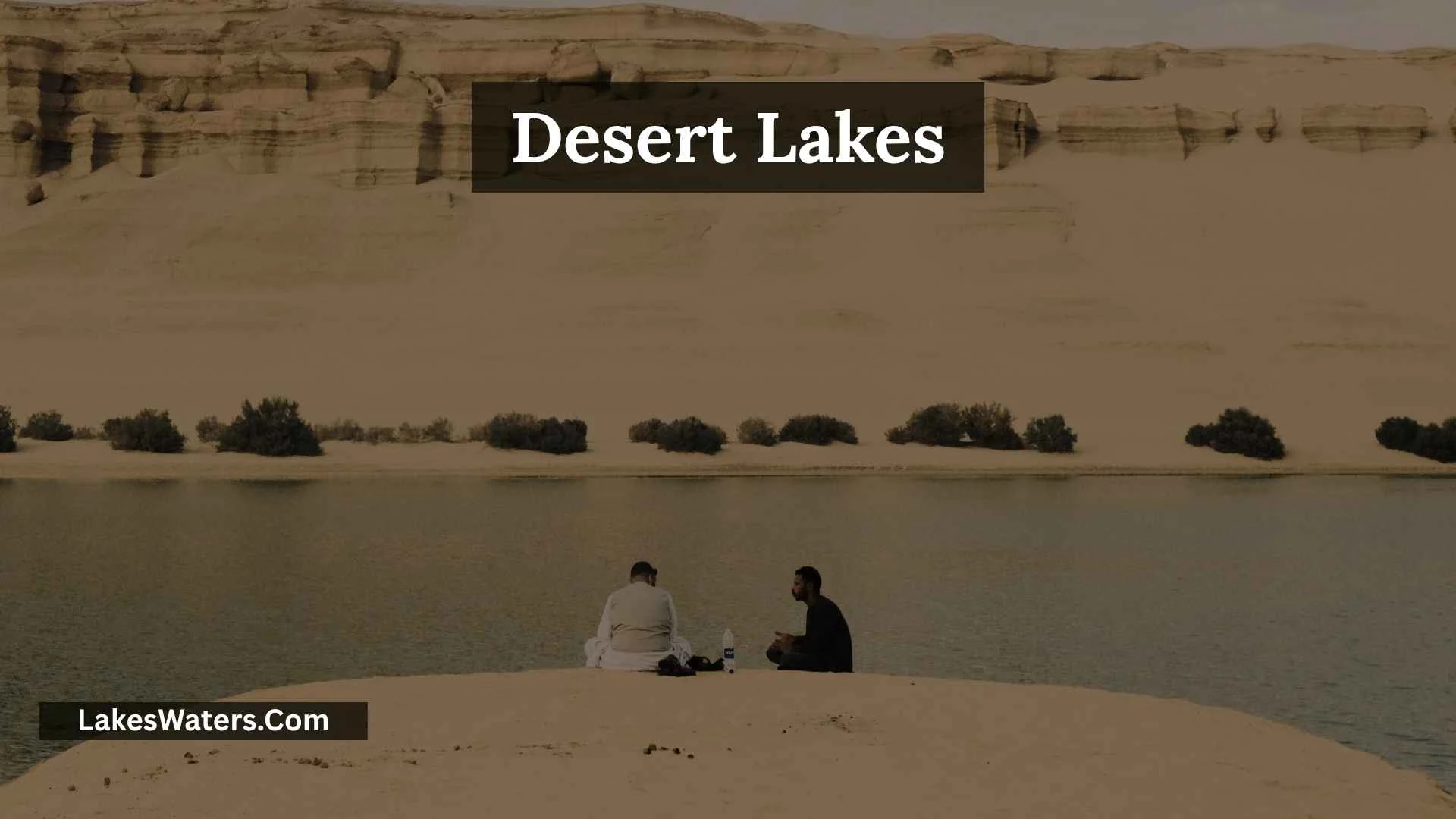
Desert lakes are some of the most unusual water features on Earth. They can appear in dry landscapes surrounded by sand dunes, rocky mountains, and sparse vegetation. Some hold water throughout the year, while others fill after rainfall or seasonal floods and later become dry lakebeds. Their water may be fresh, salty, or somewhere between, depending on the local geology, climate, and water sources.
Understanding desert lakes means looking beyond their appearance. The way they form, the reason some become salty, and the plants and animals that depend on them reveal how water moves through dry regions. This guide explains what desert lakes are, how they develop, where to find famous examples, how they differ from playas and salt flats, and what to know before visiting one.
Quick Answer: What Are Desert Lakes?
Desert lakes are bodies of water found in arid or semi-arid regions where rainfall is limited and evaporation is often high. They may receive water from rain, rivers, underground aquifers, mountain runoff, or occasional floods. Some remain wet for long periods, while others are temporary and dry out when water loss exceeds water supply.
Not every desert lake is salty. Lakes with enough freshwater inflow and suitable drainage may remain relatively fresh, while lakes in closed basins often collect dissolved minerals as water evaporates.
Key Takeaways About Desert Lakes
- They can be permanent or temporary: Some contain water year-round, while others fill only during wet periods.
- Their water sources vary: Rain, rivers, groundwater, and runoff can all feed desert lakes.
- Salinity depends on local conditions: Evaporation, mineral-rich rocks, and drainage patterns affect how salty a lake becomes.
- They support wildlife: Even temporary water bodies can provide important feeding, breeding, and resting areas.
- A dry lakebed is not always a lake today: Some are former lake basins, while others are playas that flood only occasionally.
- Climate and human activity matter: Groundwater pumping, water diversion, drought, and changing rainfall can alter lake levels.
What Is a Desert Lake?
A desert lake is a natural or, in some cases, human-created body of water located in a desert or another dry region. The term describes its setting rather than a single type of lake. Desert lakes vary in size, depth, water chemistry, and how long they retain water.
Some are surrounded by sand dunes, while others sit between mountains or across broad, flat basins. A lake in a dry climate may receive water from a distant mountain range, even if little rain falls around the lake itself.
How Desert Lakes Differ From Ordinary Lakes
The main difference is the balance between water entering and leaving the lake. In many deserts, rainfall is scarce and evaporation is high. Water may disappear faster than it is replaced, causing lake levels to fall or the basin to dry out.
Desert lakes can also experience large changes in water level. A lake may expand after a period of heavy rain and shrink during a long dry spell. Some lakes are naturally saline because water leaves mainly through evaporation rather than flowing out through a river.
However, desert lakes are not all shallow, salty, or short-lived. Their characteristics depend on local geology, groundwater connections, climate, and the size of their drainage basins.
Why Desert Lakes Matter
Desert lakes can create pockets of life in landscapes where surface water is limited. Birds may use them as resting and feeding areas during migration. Other wildlife depends on the water directly or on plants and small organisms supported by it.
These lakes also help scientists study past climates. Sediment layers, shoreline marks, and mineral deposits can preserve evidence of earlier wet periods. In some places, lakes and nearby groundwater also support communities, tourism, fishing, and other local activities.
How Do Desert Lakes Form?
Desert lakes form when water collects in a low area of land and remains there long enough to create a lake. The water may come from several sources, and the shape of the basin determines whether it can hold water.
Rainfall and Flash Floods
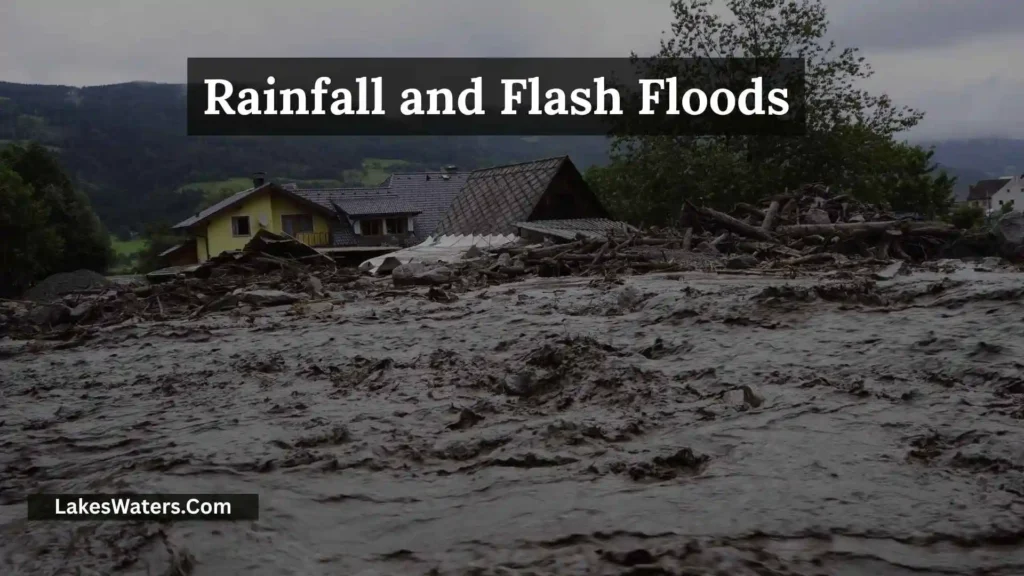
A heavy rainstorm can send water across dry ground into a low-lying basin. Because desert soils and rock surfaces may absorb water slowly, runoff can move quickly through channels and washes. This water may temporarily fill a basin that has been dry for months or years.
The result can be a seasonal lake or a short-lived pool. Whether it lasts depends on the amount of water that enters, the depth of the basin, the ground’s ability to absorb water, and the rate of evaporation.
Example: In the Southern High Plains of the United States, many playa lakes fill after rainfall and provide wetland habitat. These shallow basins may be dry for long periods, so their appearance changes with the weather.
Rivers and Mountain Runoff
Some desert lakes receive water from rivers that begin in wetter or higher-elevation areas. Snowmelt and rainfall in distant mountains can feed streams that cross dry landscapes before reaching a lake basin.
This means a lake can exist in a desert even when the surrounding area receives very little precipitation. Its water supply depends partly on conditions far beyond the shoreline.
River-fed lakes may also change when upstream water is diverted for irrigation, stored in reservoirs, or reduced by drought.
Underground Aquifers and Springs
Groundwater can feed desert lakes through springs, seepage, or connections between an aquifer and the lakebed. An aquifer is a layer of rock or sediment that stores and transmits groundwater.
This source can help a lake retain water even when local rainfall is low. The balance is delicate, however. If groundwater levels decline because of heavy pumping or reduced recharge, the lake may shrink or lose its water supply.
The Ounianga Lakes in Chad are a notable example of lakes in the Sahara whose water balance is strongly connected to groundwater and the surrounding landscape.
Closed Basins and Natural Depressions
Many desert lakes occupy closed basins, meaning water flows into the basin but has no permanent surface outlet to the sea. Water can leave through evaporation, seepage, or occasional underground movement.
When evaporation removes water but leaves dissolved minerals behind, those minerals can build up over time. This process helps explain why many closed-basin lakes are salty.
Not every depression becomes a lake. A basin needs a sufficient supply of water, suitable ground conditions, and a shape that allows water to collect.
Types of Desert Lakes
Desert lakes can be grouped by how long they hold water, the chemistry of their water, and the way they form. These categories can overlap: a temporary lake can also be saline, for example.
Permanent Desert Lakes
Permanent desert lakes retain water for long periods, although their levels may rise and fall. They often depend on reliable river inflow, groundwater, springs, or a combination of water sources.
A permanent lake does not necessarily have a stable shoreline. Drought, water diversion, and changes in groundwater supply can still cause substantial changes in its size.
Seasonal and Temporary Lakes
Seasonal lakes form or expand during wetter periods and may shrink or disappear during dry months. Some hold water for weeks or months after a storm; others respond to seasonal rainfall or snowmelt.
Their temporary nature does not make them unimportant. Wet periods can provide food, shelter, and breeding opportunities for wildlife. For this reason, a dry basin should not automatically be treated as biologically worthless.
Saline and Saltwater Lakes
A saline lake contains a higher concentration of dissolved salts than a typical freshwater lake. In desert regions, salinity often increases when water evaporates and dissolved minerals remain behind.
The term saline is more precise than calling every salty inland lake “saltwater.” Inland saline lakes are not necessarily connected to the ocean, and their chemistry can differ greatly from seawater.
Freshwater Desert Lakes
Freshwater lakes can exist in deserts when their water supply, drainage, and local geology prevent salt from accumulating to high levels. Groundwater inflow or regular replacement with relatively fresh water can help maintain lower salinity.
The Ounianga Lakes in Chad include mostly freshwater lakes despite their location in the Sahara. Their existence shows why climate alone cannot determine whether a lake is fresh or salty.
Famous Desert Lakes Around the World
Desert lakes differ widely across continents. Some are known for their clear water, others for their salt content, unusual setting, wildlife, or dramatic changes in size.
Ounianga Lakes, Chad
<PRIVATE_PERSON> The Ounianga Lakes lie in the Sahara Desert in northeastern Chad. This group of lakes is notable because water persists in an extremely dry environment. Groundwater helps sustain the lakes, while wind-shaped dunes and the surrounding basin create a distinctive landscape.
The lakes do not all have identical water conditions. Many are freshwater, while some differ in salinity and vegetation. Their variety reflects differences in depth, water circulation, and local conditions.
The Ounianga Lakes also offer insight into the Sahara’s environmental history. The region has experienced wetter periods in the past, and lake sediments can help researchers understand how the desert climate has changed.
Badain Jaran Desert Lakes, China
The Badain Jaran Desert in China’s Inner Mongolia region contains lakes nestled among very tall sand dunes. Many of these lakes are saline, although conditions vary from one lake to another.
Their presence in a sandy desert raises an important question: where does the water come from? Researchers have investigated groundwater and regional water movement as possible contributors. The exact water balance can differ across the desert, so it is best not to assume that every lake has the same source.
The combination of dunes and lakes makes this landscape unusual. It also demonstrates that large sand dunes do not automatically mean that every nearby depression must be dry.
Kati Thanda–Lake Eyre, Australia
Kati Thanda–Lake Eyre is a major lake basin in the arid interior of Australia. It is shallow and often contains little or no standing water, but large inflows can transform it into a broad temporary lake.
Water may travel through inland river systems after rainfall in distant parts of the catchment. Because those flows are irregular, the lake’s appearance can change dramatically from one period to another.
The lake is a useful example of why a desert lake should not be judged from a single visit or photograph. A dry basin may later hold extensive water after exceptional flooding.
Great Salt Lake, United States
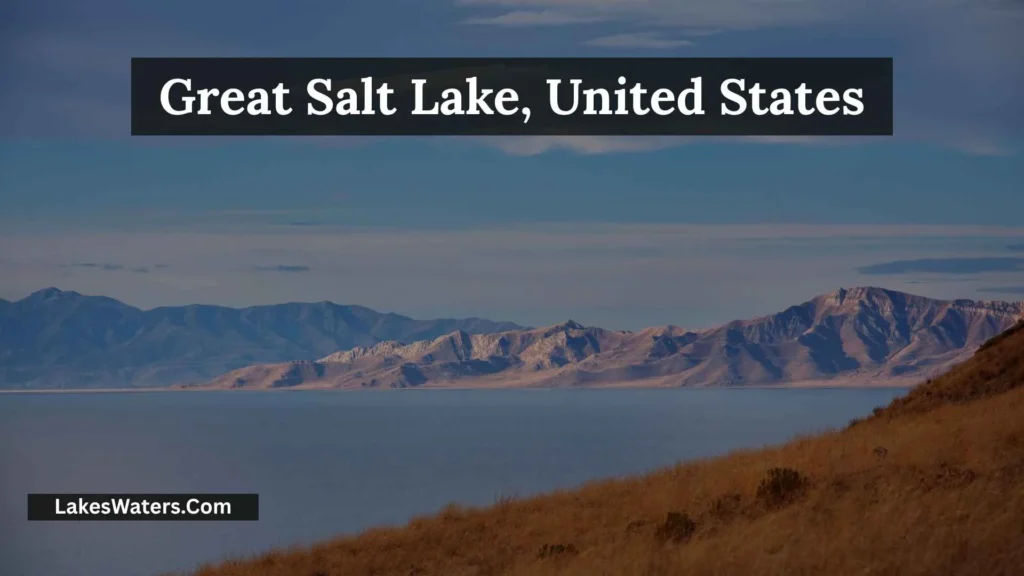
The Great Salt Lake in Utah is a large saline lake in the Great Basin region. It is not a typical ocean-fed water body; its salinity is linked to its inland basin and the balance between inflowing water and evaporation.
The lake’s level and salinity can change with precipitation, river inflow, evaporation, and water use across its watershed. These changes matter because the lake supports habitats used by birds and other wildlife.
The Great Salt Lake is often discussed alongside desert lakes because it lies in an arid region and illustrates how closed-basin systems concentrate salts. It should not be confused with a dry salt flat: it is a lake, although exposed lakebed can appear when water levels fall.
Lake Turkana, Kenya and Ethiopia Region
Lake Turkana lies in the arid region of East Africa and is known for its large size, saline water, and ecological importance. Much of its inflow comes from the Omo River system, making upstream conditions important to the lake’s water balance.
The lake supports fish and wildlife and is important to communities living around it. Changes in river flow, drought, and water use can affect the lake and the people who depend on it.
Lake Turkana also shows that a desert lake can be large and ecologically complex rather than a small, isolated pool.
Why Are Many Desert Lakes Salty?
Many desert lakes become salty because dissolved minerals enter the water from rocks, soil, groundwater, and runoff. When water evaporates, much of the dissolved salt remains in the basin.
Evaporation Leaves Minerals Behind
Rain and runoff can carry small amounts of dissolved minerals into a lake. In a region where evaporation is high, water may leave faster than it is replaced. Over time, minerals become more concentrated.
If the lake has no regular outlet that carries dissolved minerals away, salinity can continue to rise. The result may be brackish water, saline water, or—in some conditions—mineral deposits around the lake’s edge.
Why Some Desert Lakes Stay Fresh
A desert lake may remain relatively fresh if it receives enough fresh water, has groundwater that continually replenishes it, or has an outlet that removes dissolved minerals. Lake depth and circulation can also affect how salt is distributed.
This is why it is inaccurate to say that every desert lake is salty. Water chemistry depends on the entire basin, not just on how hot or dry the surrounding climate is.
Are Saline Lakes the Same as Salt Flats?
No. A saline lake contains standing water with a relatively high concentration of dissolved salts. A salt flat is a broad surface where salts have accumulated and may form a visible crust after water evaporates.
Some salt flats develop in basins that once held lakes or that flood occasionally. Others are part of landscapes with a long history of mineral accumulation. A lake can also have exposed salt-covered margins during periods of low water.
Desert Lakes, Playas, Oases, and Salt Flats: What’s the Difference?
These terms describe related but different features. Knowing the distinction helps readers understand maps, travel information, and scientific descriptions of dry landscapes.
| Feature | What It Means | Typical Water Condition | Key Point |
| Desert lake | A body of water in an arid region | Fresh, brackish, saline, or variable | May be permanent or temporary |
| Playa | A flat basin floor that may flood after rain | Often dry for long periods | May hold a temporary lake |
| Salt flat | A surface with accumulated salts | Usually dry, though it may flood | Salt crusts may form as water evaporates |
| Oasis | A place where water supports vegetation in a dry region | Often linked to groundwater or a spring | May include a pool, but is not always a lake |
| Ancient lakebed | Land that was covered by a lake in the past | Usually dry today | Preserves clues about former climates |
A playa can temporarily become a lake, and a former lakebed can later become a salt flat. An oasis may include a small lake or spring-fed pool, but the terms are not interchangeable.
Wildlife and Ecosystems Around Desert Lakes
Desert lakes can support surprisingly rich ecosystems. Water availability may be brief or unpredictable, so many species depend on seasonal changes rather than a permanent supply.
Birds and Migratory Wildlife
Shorebirds, waterfowl, and other birds may use desert lakes for feeding, nesting, or resting during migration. Temporary wetlands can provide insects, small aquatic animals, seeds, and shallow-water feeding areas.
The value of a lake depends on more than its size. A shallow basin that fills at the right time can provide important habitat, even if it dries later.
Fish and Aquatic Life
Some desert lakes support fish, plankton, aquatic insects, and other organisms. Their survival depends on factors such as salinity, oxygen, temperature, water depth, and whether the lake remains connected to rivers or groundwater.
Not every lake can support fish. Very high salinity, frequent drying, or limited oxygen can restrict which species survive. Some temporary water bodies are instead dominated by organisms adapted to short wet periods.
Plants Around the Shoreline
Plants around desert lakes may include reeds, salt-tolerant shrubs, grasses, and other vegetation suited to local soil and water conditions. The type of vegetation depends on salinity, flooding frequency, and how far groundwater sits below the surface.
Plants can help stabilize shorelines and provide food or shelter for wildlife. However, changes in lake level and water chemistry may reduce vegetation or shift the boundary between wetland and dry ground.
Why Desert Lakes Are Important to People and Science
Desert lakes provide more than scenery. Depending on the region, they may support local livelihoods, recreation, wildlife conservation, and research into climate history.
Water, Food, and Local Livelihoods
Some communities use lake water or nearby groundwater for household needs, farming, fishing, or livestock. These uses must be managed carefully because desert water supplies are often limited and can be slow to recover after heavy use.
A lake’s visible surface does not always reveal how much usable water it contains. Salinity, pollution, seasonal variation, and legal or environmental restrictions may limit what people can safely take from it.
Tourism and Outdoor Recreation
Visitors may travel to desert lakes for photography, birdwatching, camping, boating, or sightseeing. The experience depends on the lake’s conditions and the facilities available nearby.
Before planning a trip, check local access rules, weather forecasts, road conditions, water levels, and any restrictions on swimming or boating. A remote lake may have few services, and a dry-looking route can become hazardous after rain.
Clues About Past Climate
Sediments, fossils, shorelines, and mineral deposits can preserve evidence of past water levels. Researchers use these clues to investigate periods when deserts were wetter or drier than they are today.
Ancient lakebeds are especially useful because they can record environmental changes over long periods. However, a single feature rarely tells the whole story; scientists compare several types of evidence to reconstruct how a basin evolved.
Threats Facing Desert Lakes
Desert lakes can be sensitive to changes in climate and water use. Because many depend on limited or irregular water supplies, even a modest change in inflow can affect their size, salinity, and habitat.
Drought and Rising Evaporation
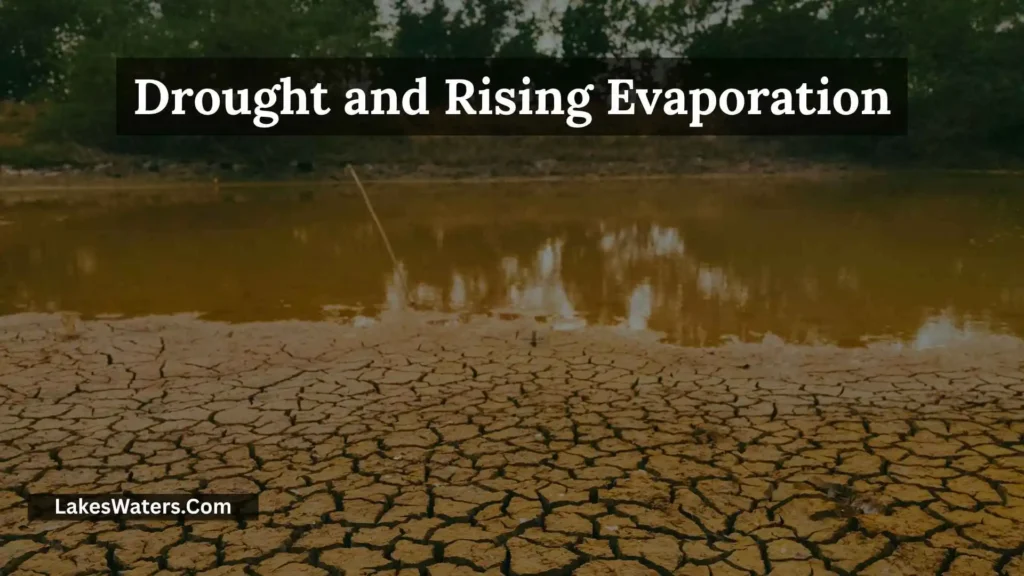
Long dry periods reduce rainfall, runoff, and sometimes groundwater recharge. High temperatures can also increase evaporation, although the actual effect depends on wind, humidity, lake conditions, and other local factors.
When water levels fall, shoreline habitats may disappear and exposed lakebeds may release dust. Salinity can rise as water volume declines, affecting plants and animals that cannot tolerate the change.
Groundwater Pumping and Water Diversion
Groundwater pumping can lower aquifer levels, while river diversions and upstream storage can reduce the water reaching a lake. These impacts may be difficult to reverse if the basin depends on slow groundwater recharge.
Water management should therefore consider the entire watershed, not just the lake itself. Monitoring river flows, groundwater levels, and lake conditions helps identify changes before they become more severe.
Pollution and Habitat Loss
Agricultural runoff, untreated wastewater, industrial pollution, and disturbance from recreation can harm desert-lake ecosystems. Salt and mineral concentrations may also interact with pollutants, changing how they behave in water and sediment.
Responsible management includes protecting inflow areas, limiting harmful discharges, conserving wetlands, and monitoring water quality. Local rules are especially important where lakes support protected species or fragile habitats.
How to Visit a Desert Lake Safely
Desert lakes can be rewarding places to explore, but remote locations and extreme weather require preparation. Conditions can change quickly, and a lake that appears calm may still have unstable shorelines or unsafe water.
Before You Go
Use this checklist before visiting:
- Check current weather forecasts and flash-flood warnings.
- Confirm that the lake and access roads are open to visitors.
- Carry more drinking water than you expect to need.
- Bring sun protection, suitable footwear, navigation tools, and a charged phone or emergency communication device.
- Tell someone your route and expected return time if traveling into a remote area.
- Check whether camping, swimming, fishing, boating, or drone use is restricted.
During Your Visit
Stay on permitted routes and avoid driving onto soft lakebeds unless local authorities specifically allow it. Dry-looking ground may contain mud, salt crust, or weak sediment beneath the surface. Vehicles can become stuck, and recovery may be difficult far from help.
Do not assume that clear water is safe to drink or swim in. Salinity, harmful microorganisms, chemical contamination, and local advisories can affect water safety. Use designated facilities where available and follow local guidance.
What to Do if Rain Is Forecast
Avoid dry washes, narrow canyons, and low-lying routes when flash flooding is possible. Rain can fall far upstream and send water toward a basin even when the sky above you looks clear.
If official warnings are issued, postpone the trip or leave the area according to local instructions. Never cross floodwater on foot or in a vehicle.
How to Identify the Type of Desert Lake
You can make a useful first assessment by looking at the basin, the water, and the surrounding landscape. Visual clues are not enough to confirm water chemistry or geological history, but they can help you understand what you are seeing.
A Simple Decision Guide
Step 1: Is there standing water?
- Yes: It may be a permanent, seasonal, or temporary lake.
- No: It could be a dry playa, salt flat, former lakebed, or a lake that has temporarily dried.
Step 2: Does the water remain through dry periods?
- Usually yes: It may be a permanent or groundwater-supported lake.
- No or uncertain: It may be seasonal or dependent on occasional floods.
Step 3: Is the water salty?
- Known to be saline: It is a saline lake; check local scientific or official sources for its water chemistry.
- Not known: Do not judge salinity by color or appearance alone. Use verified water-quality information.
Step 4: What does the basin look like?
- A flat, frequently dry basin may be a playa.
- A broad, salt-crusted surface may be a salt flat.
- A water body surrounded by dry terrain may be a desert lake.
- A former shoreline or ancient sediments may indicate an older lakebed, but geological evidence is needed to confirm its history.
This guide is a starting point rather than a scientific classification. Some landscapes contain more than one of these features, and their conditions may change over time.
Common Misconceptions About Desert Lakes
Every Desert Lake Is Salty
False. Some desert lakes are saline, but others contain fresh or less-saline water. Groundwater inflow, river supply, drainage, and mineral content all affect salinity.
A Dry Basin Has Never Held Water
False. A dry basin may fill seasonally, during rare floods, or during a wetter period in the distant past. However, not every flat desert basin was once a large permanent lake.
Desert Lakes Never Support Much Wildlife
False. Some provide important habitat for migratory birds, fish, aquatic organisms, and shoreline plants. The kinds of life present depend on the water’s chemistry, duration, and connection to other habitats.
All Desert Lakes Are Safe to Swim In
False. Water quality, salinity, submerged hazards, unstable shorelines, and local regulations all matter. Check official guidance before entering the water.
A Large Desert Lake Always Has a Reliable Water Supply
False. A large basin may depend on irregular floods or water from a distant catchment. Its size alone does not show whether its water supply is stable.
Frequently Asked Questions
What Is the Largest Desert Lake?
There is no single answer without defining what counts as a desert lake and whether temporary, saline, or intermittently flooded basins are included. Kati Thanda–Lake Eyre in Australia is a major lake basin in an arid region, but it is often dry or contains limited water. Comparisons should specify whether they refer to basin area, maximum flooded area, or the area covered by water at a particular time.
Can Desert Lakes Dry Up Completely?
Yes. Temporary lakes may disappear as water evaporates, seeps into the ground, or flows away. Even lakes that usually contain water can shrink greatly during drought or when inflow decreases. Some dry basins refill after heavy rainfall or flooding.
Are Desert Lakes Freshwater or Saltwater?
They can be either. Some contain freshwater, while others are saline or brackish. The difference depends on the water supply, evaporation, drainage, geology, and groundwater connections.
Why Do Lakes Exist in Places With Almost No Rain?
A lake can receive water from rivers, springs, groundwater, mountain runoff, or storms far away. Its water supply may therefore depend on conditions outside the immediate desert area. A basin can also retain water after an unusually wet period.
Do Desert Lakes Have Fish?
Some do, but not all. Fish need suitable water chemistry, oxygen, food, and conditions that allow them to survive. Very salty lakes and basins that dry frequently may support few or no fish, while other lakes sustain diverse aquatic communities.
Can You Drink Water From a Desert Lake?
Do not assume that it is safe. Even clear water may contain harmful microorganisms, dissolved salts, or pollutants. Follow official water-quality advice and use properly treated drinking water rather than relying on an untested natural source.
What Is the Difference Between a Desert Lake and an Oasis?
A desert lake is a body of water in a dry region. An oasis is an area where water supports vegetation and other life in the desert, often because of groundwater or a spring. An oasis may include a pool or small lake, but it does not have to.
Why Are Desert Lakes Important for Birds?
They can provide food, resting places, and breeding habitat in landscapes where water is scarce. Temporary wetlands may be particularly valuable during migration or seasonal breeding. Their ecological importance can be much greater than their size or the length of time they hold water might suggest.
Are Desert Lakes Formed by Climate Change?
Some lakes are shaped by long-term climate patterns, but climate change is not the only cause of their formation. Basin geology, rivers, groundwater, and rainfall also play major roles. Climate changes can alter an existing lake’s size, duration, and salinity.
How Can Scientists Tell Whether a Desert Lake Existed in the Past?
Researchers examine lake sediments, fossils, mineral deposits, ancient shorelines, and other geological evidence. They may also use satellite images and climate records. Multiple lines of evidence help distinguish a former lake from a basin that floods only occasionally.
Conclusion
Desert lakes show how water can persist in some of the driest environments on Earth. Some are permanent, some appear only after rain or floods, and others become saline as evaporation leaves minerals behind. Their conditions depend on geology, groundwater, rivers, climate, and the shape of the basin.
Examples such as the Ounianga Lakes, the Badain Jaran Desert lakes, Kati Thanda–Lake Eyre, the Great Salt Lake, and Lake Turkana demonstrate how different these systems can be. They also reveal why desert lakes matter: they support wildlife, preserve evidence of past climates, and sometimes sustain communities and local economies.
To understand a particular desert lake, look at its water source, seasonal changes, salinity, and relationship with the surrounding watershed. These details explain more than the word desert alone ever could.

I am Ethan Reynolds, a nature researcher and writer focused on freshwater environments, aquatic ecosystems, and sustainable water solutions.
I enjoy sharing knowledge about lakes, rivers, wetlands, and the challenges facing global water resources.
My goal is to help readers understand the value of water and encourage responsible actions to protect it.
Books by Ethan Reynolds:
- Lakes and Landscapes: Stories from Nature
- Protecting Water for Future Generations