Lakes are more than bodies of water surrounded by land. They are complex parts of Earth’s water cycle, shaped by glaciers, volcanoes, tectonic forces, rivers, landslides, climate, and human activity. Some lakes are shallow enough to see the bottom from the shore, while others extend more than a mile beneath the surface. Some contain fresh water, while others are naturally salty.
If you are searching for facts about lakes, this guide explains the subject from several angles. You will learn what a lake is, how lakes form, where their water comes from, why some are salty, how lake ecosystems work, what scientists mean by terms such as limnology and eutrophication, and why lake size, depth, and volume are not the same thing.
These details also explain why two lakes can look completely different while both fitting the basic definition of a lake.
Quick Answer: What Is a Lake?
A lake is an inland body of water that collects in a basin or depression surrounded by land. Water can enter through precipitation, surface runoff, rivers, streams, snowmelt, glaciers, and groundwater. It can leave through rivers, evaporation, groundwater movement, or human withdrawals.
There is no single size or depth that defines every lake worldwide. Natural lakes can be freshwater or saline, ancient or relatively young, shallow or extremely deep. Reservoirs are human-made lakes, although some are commonly called lakes rather than reservoirs.
Key Facts About Lakes
Here are some of the most useful facts to know:
- Lakes are inland bodies of water occupying natural or human-made basins.
- Lake water can come from rainfall, snowmelt, rivers, streams, runoff, glaciers, and groundwater.
- Water can leave a lake through evaporation, seepage, an outlet river, or human withdrawals.
- Glaciers have shaped many lakes, particularly across regions affected by past ice sheets.
- Tectonic activity can create exceptionally deep lake basins.
- Volcanic craters and calderas can fill with water and become lakes.
- River bends can become isolated and form oxbow lakes.
- Landslides can block valleys and create natural lakes.
- Dams can create reservoirs, which are human-made lakes.
- Most lakes are freshwater, but saline lakes occur in many parts of the world.
- Closed-basin lakes can become increasingly salty because evaporation removes water while dissolved minerals remain.
- Lake size can be measured by surface area, volume, length, or depth.
- A lake with a large surface area is not necessarily deep.
- Deep lakes can develop layers with different temperatures and oxygen conditions.
- Seasonal mixing can redistribute heat, oxygen, and nutrients.
- Lake ecosystems contain shoreline, open-water, deep-water, and bottom habitats.
- Trophic state describes the biological productivity and nutrient condition of a lake.
- Excess nutrient inputs can accelerate eutrophication and contribute to algae growth, murky water, oxygen depletion, and fish kills.
- A lake is part of a watershed, so activities far from the shoreline can affect it.
- Lake sediments can preserve evidence of environmental conditions from the past.
How Do Lakes Form?
There is no single process that creates every lake. The shape and origin of a lake depend on the geological and hydrological history of its basin.
Glacial Lakes
Glaciers are among the most important lake-forming forces in areas that experienced major glaciation.
Moving ice can erode bedrock and sediment, carve valleys, deepen depressions, and alter drainage patterns. When glaciers retreat, meltwater can collect in these newly shaped basins.
The Great Lakes are a major example of lakes whose present basins were strongly influenced by glacial activity. USGS notes that glaciers played a major role in creating the Great Lakes as a major freshwater storehouse.
Many smaller lakes across Canada, the northern United States, Scandinavia, and other formerly glaciated regions also have strong connections to past glacial activity.
Tectonic Lakes
Tectonic lakes form when movements in Earth’s crust create or deepen a basin.
Faulting and rifting can produce enormous depressions capable of holding large quantities of water.
Lake Baikal in Russia is a famous example. Its basin is associated with the Baikal Rift and reaches extraordinary depths. The lake is also extremely old, making it valuable for geological and environmental research.
Tectonic lakes can persist for millions of years when geological conditions allow their basins to remain stable.
Volcanic Lakes
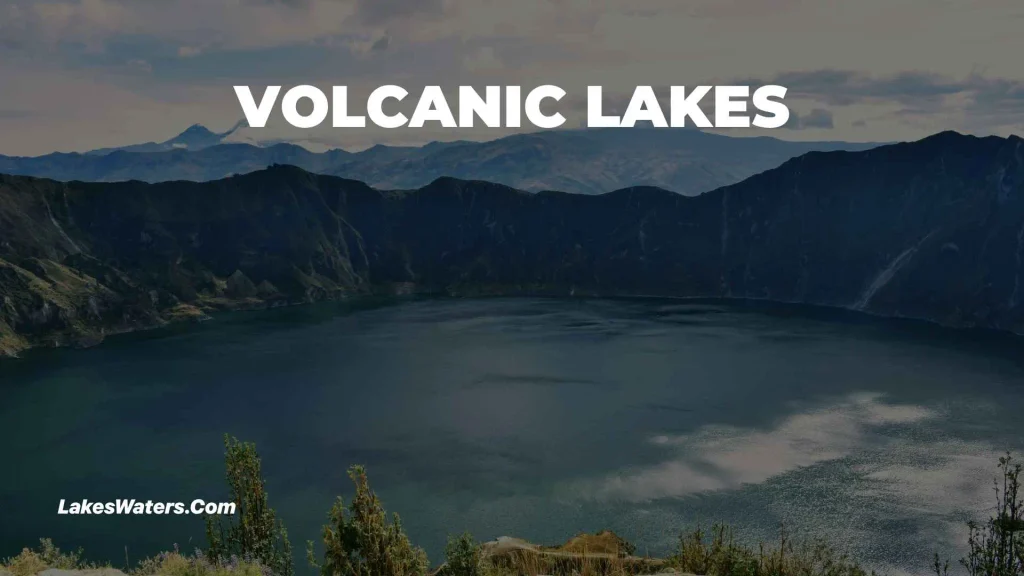
Volcanic activity can create lake basins in several ways.
A crater may collect rainfall and snowmelt, while a volcanic caldera formed by collapse can create a much larger depression capable of holding a lake.
Crater Lake in Oregon is a well-known example. It occupies the caldera formed after the collapse of Mount Mazama.
Volcanic lakes can therefore provide a direct connection between geological activity and surface water.
Oxbow Lakes
Oxbow lakes are created by rivers rather than by glaciers or volcanoes.
A winding river gradually erodes some parts of a meander while depositing sediment elsewhere. Eventually, the river can cut through the narrow neck of the bend and follow a shorter route.
The abandoned bend may remain as a separate crescent-shaped lake.
Oxbow lakes are especially common across floodplains where rivers frequently change course.
Landslide Lakes
A landslide can move rock, soil, and debris into a valley and block a river or stream.
Water then accumulates behind the natural barrier.
These lakes can be temporary or long-lasting, depending on the stability of the blockage and the amount of water entering the basin.
Attabad Lake in Pakistan is a well-known example of a lake formed after a major landslide blocked the Hunza River.
Reservoirs
People can create lake-like bodies of water by building dams across rivers.
Water backs up behind the dam and forms a reservoir. Reservoirs can provide water storage, irrigation, hydropower, flood management, and recreation.
USGS defines a reservoir as a human-made lake and notes that some reservoirs are confusingly given names that include the word “lake.”
Where Does Lake Water Come From?
A lake may receive water from several sources at the same time.
Common sources include:
- Rainfall
- Snowmelt
- Glacier melt
- Rivers
- Streams
- Surface runoff
- Springs
- Groundwater
- Direct precipitation on the lake surface
The importance of each source depends on the lake’s location and surrounding geology.
A mountain lake may receive substantial snowmelt, while a lake in a humid lowland may receive much of its water from rainfall, streams, and groundwater.
Why the Watershed Matters
A watershed is the area of land that drains water toward a common lake, river, or other outlet.
This concept is essential when studying lake health.
Rain does not simply fall into a lake. It may first travel over soil, forests, farms, roads, cities, and other landscapes. Along the way, it can pick up sediment, nutrients, pollutants, and organic material.
USGS describes surface-water inflows as including precipitation, overland runoff, groundwater seepage, and tributary inflows.
That is why lake management often requires attention to the entire watershed rather than only the shoreline.
How Does Water Leave a Lake?
Water leaves lakes through several pathways.
Rivers and Streams
Many lakes have an outlet where water flows into a river or stream.
This allows lake water to become part of a larger drainage network.
Evaporation
Solar energy causes water to evaporate from the lake surface.
Evaporation can be particularly important in dry climates and closed basins.
Groundwater
Water can move between a lake and underground sediments or rock.
Depending on local conditions, groundwater can either supply water to a lake or carry water away from it.
Human Withdrawals
People may remove lake water for drinking supplies, agriculture, industry, or other purposes.
USGS identifies evaporation, groundwater movement, surface outflow, and human withdrawals among the ways water leaves surface-water systems.
Are All Lakes Freshwater?
No.
Many lakes contain freshwater, but saline lakes are also found around the world.
USGS defines freshwater as water containing less than 1,000 milligrams per liter of dissolved solids.
The chemistry of a lake depends partly on what enters the basin and how water leaves it.
Why Do Some Lakes Become Salty?
A lake can become saline when dissolved minerals enter with water but are not carried away efficiently.
In a closed basin, water may primarily leave through evaporation. The water disappears into the atmosphere, while dissolved salts remain in the lake.
Over long periods, this can produce very high salinity.
The Great Salt Lake is a familiar example of a saline lake.
This also explains an important difference between an open lake and an endorheic, or closed-drainage, lake: an outlet can remove dissolved materials, while evaporation without an outlet tends to concentrate them.
Why Are Some Lakes Deep and Others Shallow?
Lake depth depends on the shape and origin of its basin.
A tectonic rift can produce a very deep depression. A glacier can carve a deep valley. A shallow floodplain depression may create a lake that covers a considerable area without being very deep.
This is why lake comparisons should specify the measurement being used.
Surface Area Is Not the Same as Volume
Surface area tells you how much land is covered by water at the surface.
Volume tells you how much water the lake contains.
Maximum depth tells you the deepest known point.
These three measurements can produce very different answers when someone asks which lake is “largest.”
For example, Lake Baikal is famous for its enormous depth and freshwater volume, while other lakes have much greater surface areas.
Lake Baikal
Lake Baikal in Russia is the world’s deepest lake. USGS reports a maximum depth of more than 1,600 meters and a freshwater volume of roughly 23,000 cubic kilometers.
Its great age and unusual geological setting also make it one of the world’s most scientifically significant lakes.
What Are the Main Zones of a Lake?
A lake does not have identical conditions everywhere.
Light, temperature, oxygen, vegetation, pressure, and food availability can change significantly from the shoreline to the deepest water.
Littoral Zone
The littoral zone is the shallow area near the shore where sunlight can reach the bottom.
It can support rooted aquatic plants and provide important habitat for insects, fish, amphibians, birds, and other organisms.
Because this zone connects the lake with its surrounding land, shoreline development can have a major effect on it.
Limnetic Zone
The limnetic zone is the open-water area away from the immediate shoreline.
Phytoplankton and other microscopic organisms can perform photosynthesis here when enough light is available.
These organisms form an important foundation of many aquatic food webs.
Profundal Zone
The profundal zone refers to deeper water where sunlight is insufficient for significant photosynthesis.
Conditions here can differ sharply from those near the surface, especially in deep, stratified lakes.
Benthic Zone
The benthic zone is the bottom of the lake, including its sediments.
Organisms living in or on the sediment contribute to decomposition and nutrient cycling.
The bottom is also where organic material from the water column can accumulate.
What Is Limnology?
Limnology is the scientific study of inland waters, including lakes, ponds, rivers, wetlands, and related aquatic systems.
A limnologist may investigate:
- Water chemistry
- Temperature
- Dissolved oxygen
- Nutrients
- Algae
- Aquatic plants
- Fish
- Plankton
- Sediments
- Water movement
- Biological communities
- Human impacts
This field helps explain why lakes with similar appearances can function very differently.
For example, two clear mountain lakes may have different nutrient levels, oxygen conditions, biological communities, and watershed pressures.
Why Do Lakes Develop Temperature Layers?
Deep lakes can separate into temperature layers through thermal stratification.
Sunlight warms surface water, while deeper water can remain colder.
Because water density changes with temperature, the difference can limit mixing between upper and lower layers during certain seasons.
Epilimnion
The epilimnion is the relatively warm upper layer.
Wind can mix this part of the lake, distributing heat and dissolved substances.
Thermocline
The thermocline is the zone where temperature changes relatively rapidly with depth.
It can act as a boundary between warmer surface water and colder deep water.
Hypolimnion
The hypolimnion is the deeper, colder layer below the thermocline.
In strongly stratified lakes, it can become relatively isolated from the atmosphere for periods of time.
These layers matter because oxygen, nutrients, and organisms are not distributed evenly throughout a deep lake.
What Is Lake Turnover?
Lake turnover is seasonal mixing that occurs when temperature conditions allow water from different depths to circulate more freely.
In many temperate lakes, turnover commonly occurs during spring and autumn.
The process can redistribute:
- Oxygen
- Nutrients
- Heat
- Dissolved materials
- Organic matter
Not every lake experiences turnover in exactly the same way. Climate, depth, wind exposure, and water chemistry all influence how a lake mixes.
What Does Trophic State Mean?
Trophic state describes the biological productivity and nutrient condition of a lake.
EPA commonly discusses four broad conditions:
| Trophic State | General Characteristics |
| Oligotrophic | Lower nutrient levels and lower biological productivity |
| Mesotrophic | Intermediate nutrient levels and productivity |
| Eutrophic | Higher nutrient levels and productivity |
| Hypereutrophic | Extremely high productivity and nutrient-related stress |
EPA explains that trophic state can be evaluated using indicators such as chlorophyll-a, which helps estimate algal biomass.
Oligotrophic Lakes
Oligotrophic lakes generally have relatively low nutrient concentrations and biological productivity.
They often have clearer water and lower algal biomass, although individual lakes vary.
Mesotrophic Lakes
Mesotrophic lakes fall between oligotrophic and eutrophic conditions.
They generally have intermediate nutrient availability and biological productivity.
Eutrophic Lakes
Eutrophic lakes have relatively high nutrient availability and biological productivity.
They can support abundant algae and aquatic plants.
Being eutrophic does not automatically mean a lake is polluted. Natural lake aging can gradually increase nutrient levels over very long periods.
Hypereutrophic Lakes
Hypereutrophic conditions represent very high biological productivity and nutrient-related stress.
Human activities can accelerate nutrient enrichment and contribute to excessive algae, poor water clarity, oxygen depletion, odors, and fish kills.
What Is Eutrophication?
Eutrophication is the enrichment of a water body with nutrients that can increase biological productivity.
It can occur naturally as lakes accumulate sediment and nutrients over long periods.
Human activities can accelerate the process by sending excessive nitrogen and phosphorus into watersheds.
Where Do Excess Nutrients Come From?
Common sources include:
- Agricultural runoff
- Fertilizer
- Wastewater
- Urban stormwater
- Soil erosion
- Septic-system leakage
- Disturbed shorelines
EPA notes that excessive nutrient inputs can contribute to nuisance algae, excessive plant growth, murky water, lower dissolved oxygen, odors, and fish kills.
Why Eutrophication Matters
A lake does not have to look polluted for nutrient problems to be developing.
A gradual increase in nutrients can change algae levels, water clarity, oxygen conditions, plant communities, and fish habitat.
This is why scientists use multiple indicators rather than judging lake health by appearance alone.
How Do Lakes Support Wildlife?
Lakes contain several connected habitats.
The shoreline can provide shelter and breeding areas, open water can support fish and plankton, and sediments can support bottom-dwelling organisms.
A lake food web can include:
- Phytoplankton
- Zooplankton
- Aquatic plants
- Insects
- Fish
- Amphibians
- Reptiles
- Birds
- Mammals
- Bacteria
- Fungi
These organisms are connected through feeding relationships and nutrient cycling.
A change in one part of the system can affect other parts.
Why Is the Lake Shoreline So Important?
The shoreline is where the aquatic ecosystem meets the surrounding landscape.
Vegetated shorelines can:
- Provide wildlife habitat
- Reduce erosion
- Filter some runoff
- Provide shade
- Supply organic material
- Create shelter for young aquatic organisms
Removing vegetation or heavily developing a shoreline can change erosion patterns, runoff, habitat, and water temperature.
For this reason, a healthy lake cannot be evaluated only by looking at the open water.
How Do Lake Levels Change?
Lake levels naturally rise and fall.
The balance depends on water entering and leaving the system.
Important influences include:
- Rainfall
- Snowmelt
- River inflow
- Groundwater
- Evaporation
- River outflow
- Human withdrawals
- Seasonal weather
- Long-term climate patterns
USGS describes lakes as dynamic components of the water cycle whose storage changes as inflows and outflows change.
Why Lake Levels Matter
Changes in lake level can affect:
- Shoreline erosion
- Beaches
- Wetlands
- Fish habitat
- Marinas
- Navigation
- Recreation
- Water supplies
- Nearby infrastructure
A changing water level is not automatically evidence of a problem. Scientists need to examine the lake’s normal range, recent weather, watershed conditions, water use, and longer-term trends.
Can Lakes Freeze?
Yes.
In cold regions, lake surfaces can freeze when temperatures remain low enough.
Freshwater reaches its greatest density at about 4°C. As surface water cools below that point, it becomes less dense and remains near the top, where it can eventually freeze.
The resulting ice cover can slow heat loss from the water below.
Ice also changes light penetration and the exchange of gases between the lake and atmosphere, affecting organisms beneath the surface.
Can Lakes Be Saltier Than the Ocean?
Yes.
Some saline lakes can reach very high salt concentrations.
This is most likely where a basin receives water but has little or no surface outflow. Evaporation removes water while dissolved salts remain.
The result can be a lake with salinity far higher than ordinary freshwater and, in some cases, higher than seawater.
This is why the term “lake” does not automatically mean “freshwater.”
Can a Lake Disappear?
Yes.
A lake can shrink substantially or disappear if water losses remain greater than water inputs for an extended period.
Possible causes include:
- Prolonged drought
- Increased evaporation
- Reduced river inflow
- Changes in groundwater
- Water withdrawals
- Sediment accumulation
- Long-term climate shifts
- Changes in drainage
Some lakes also naturally evolve over long periods as sediment and organic material accumulate.
An oxbow lake, for example, can gradually fill and transition toward wetland or terrestrial conditions.
Can New Lakes Form?
Yes.
New lakes can develop after:
- Glacial retreat
- Volcanic eruptions
- Landslides
- Earthquakes
- River channel changes
- Flooding
- Dam construction
- Changes in drainage
A newly formed lake may initially have relatively simple biological communities. Over time, plants, microorganisms, invertebrates, fish, and other organisms can colonize it.
The ecosystem then develops as nutrients, sediments, vegetation, and species interactions change.
How Old Can Lakes Be?
Lake ages range from very young to millions of years.
Ancient lakes are particularly valuable to scientists because their sediments can preserve records of past environmental conditions.
Each layer of sediment can contain physical, chemical, and biological clues about the environment at the time it was deposited.
Lake Baikal is especially notable for its age. USGS describes it as more than 25 million years old and notes the importance of its sediments for reconstructing environmental history.
What Are the Most Remarkable Lakes?
Different lakes are remarkable for different reasons.
| Lake | Notable Characteristic |
| Lake Baikal | World’s deepest lake and an exceptionally old freshwater system |
| Lake Superior | Largest of the Great Lakes by surface area |
| Great Salt Lake | Major saline lake in Utah |
| Crater Lake | Volcanic lake occupying the caldera of Mount Mazama |
| Caspian Sea | World’s largest lake by surface area despite being called a sea |
| Lake Pontchartrain | Very large surface area but relatively shallow |
| Attabad Lake | Formed after a major landslide blocked the Hunza River |
These examples show why there is no single definition of what makes a lake “large,” “deep,” or “important.”
What Is the Difference Between a Lake, Pond, River, and Reservoir?
| Water Body | Main Characteristic |
| Lake | Inland body of water occupying a basin |
| Pond | Usually smaller and shallower, although definitions vary |
| River | Flowing water moving through a channel |
| Reservoir | Human-made lake, often created by a dam |
| Wetland | Land saturated with water long enough to support wetland processes and vegetation |
There is no universal size limit that perfectly separates a lake from a pond.
Local terminology also matters. A body of water may be called a lake in one region and a pond in another.
The more reliable approach is to examine its physical characteristics, origin, depth, water movement, and ecological function.
Natural Lakes vs. Reservoirs
The most important distinction is how they originated.
| Feature | Natural Lake | Reservoir |
| Formation | Natural geological or hydrological processes | Human construction or modification |
| Typical causes | Glaciers, tectonics, volcanoes, rivers, landslides | Dams and engineered water-storage systems |
| Water management | Primarily natural processes | Often actively managed |
| Common uses | Ecosystem, recreation, water storage, wildlife habitat | Water supply, irrigation, hydropower, flood management, recreation |
USGS identifies reservoirs as human-made lakes and specifically uses Lake Mead as an example of a reservoir formed by Hoover Dam.
How Do Scientists Measure Lake Health?
Scientists do not rely on one measurement.
EPA’s National Lakes Assessment uses physical, chemical, biological, and human-health or recreational indicators to understand lake condition. These include factors such as dissolved oxygen, nutrients, chlorophyll-a, biological communities, shoreline habitat, and human disturbance.
Common measurements include:
- Water temperature
- Dissolved oxygen
- pH
- Nitrogen
- Phosphorus
- Chlorophyll-a
- Water clarity
- Sediment characteristics
- Biological communities
- Lake levels
- Shoreline condition
Why Clear Water Does Not Always Mean Healthy Water
Clear water can be a useful observation, but it is not a complete health assessment.
Some important water-quality problems are invisible.
A lake may appear clear while having concerns involving nutrients, dissolved oxygen, contaminants, invasive species, or biological changes.
That is why scientific monitoring uses multiple indicators.
How Do Human Activities Affect Lakes?
Human activity can change lakes directly and indirectly.
Major pressures include:
- Excess nutrients
- Agricultural runoff
- Urban development
- Wastewater
- Shoreline disturbance
- Sediment runoff
- Water withdrawals
- Dams and altered flows
- Invasive species
- Habitat loss
- Changes in temperature and precipitation
The effect depends on the lake.
A remote alpine lake may have little direct human development, while an urban lake may receive runoff from roads, buildings, lawns, and storm drains.
Why Watershed Management Matters
A lake is connected to the land around it.
If nutrients, sediment, or pollutants enter a stream upstream, they can eventually reach the lake.
That means protecting the water often requires protecting the watershed.
How Can People Help Protect Lakes?
Practical lake-protection measures depend on local conditions, but several principles are broadly useful:
- Reduce unnecessary fertilizer use near waterways.
- Maintain natural vegetation along shorelines.
- Control soil erosion.
- Keep litter and waste out of waterways.
- Maintain septic systems properly.
- Reduce polluted stormwater runoff.
- Avoid unnecessary shoreline disturbance.
- Follow local boating and fishing regulations.
- Prevent the spread of aquatic invasive species.
- Support watershed conservation.
The key idea is to prevent problems before pollutants and excess nutrients reach the lake.
How to Understand Any Lake: A Simple Decision Guide
If you want to understand a lake quickly, ask these questions in order:
How did the basin form?
→ Glacial, tectonic, volcanic, river-related, landslide, or human-made?
Where does its water come from?
→ Rain, snow, rivers, groundwater, glaciers, or a combination?
Where does the water leave?
→ River outlet, evaporation, groundwater, or human withdrawal?
Is it a closed basin?
→ If yes, evaporation can concentrate dissolved salts.
How deep is it?
→ Depth affects light, temperature, pressure, oxygen, and habitat.
What surrounds it?
→ The watershed can strongly influence water quality.
How productive is it?
→ Trophic state helps describe nutrient availability and biological productivity.
What happens beneath the surface?
→ Temperature layers, oxygen conditions, sediments, and biological communities can reveal characteristics that are invisible from shore.
This framework helps you understand a lake as an entire system instead of judging it only by size or appearance.
50+ Facts About Lakes
Here are concise facts that bring together the most important information:
- A lake is an inland body of water occupying a basin.
- Lakes can be natural or human-made.
- Lakes occur on every continent.
- Lake water can come from rainfall.
- Snowmelt can supply lakes with water.
- Rivers and streams can feed lakes.
- Groundwater can feed lakes.
- Evaporation removes water from lakes.
- Some lakes have surface outlets.
- Some lakes have no surface outlet.
- Glaciers have created many lakes.
- Tectonic activity can create deep lakes.
- Volcanoes can create lake basins.
- Rivers can create oxbow lakes.
- Landslides can create natural lakes.
- Dams can create reservoirs.
- Most lakes contain freshwater.
- Some lakes are saline.
- Closed basins are more likely to accumulate salts.
- Lake size can be measured by surface area.
- Lake volume is a different measurement from surface area.
- Maximum depth is different from average depth.
- Lake Baikal is the world’s deepest lake.
- Lake Baikal is more than 25 million years old according to USGS.
- The Great Lakes were strongly shaped by glacial processes.
- A lake can be very large but relatively shallow.
- Deep lakes can develop thermal stratification.
- The thermocline is a zone of rapid temperature change.
- Lake turnover can redistribute oxygen and nutrients.
- The littoral zone is the shallow nearshore area.
- The limnetic zone is open water.
- The profundal zone refers to deeper water.
- The benthic zone is the lake bottom.
- Lakes support complex food webs.
- Phytoplankton can form the base of aquatic food webs.
- Trophic state describes biological productivity.
- Oligotrophic lakes generally have low nutrient levels.
- Mesotrophic lakes have intermediate conditions.
- Eutrophic lakes have higher nutrient availability and productivity.
- Hypereutrophic conditions represent extreme productivity.
- Human activities can accelerate eutrophication.
- Excess nutrients can contribute to harmful ecological effects.
- Lake levels naturally change.
- Drought can lower lake levels.
- Heavy precipitation can raise lake levels.
- Water withdrawals can affect lake storage.
- Shoreline vegetation provides important habitat.
- Lake sediments can preserve environmental history.
- Lakes are connected to their surrounding watersheds.
- Clear water does not automatically mean perfect water quality.
- A saline lake can contain far more dissolved salt than a freshwater lake.
- A reservoir is a human-made lake.
- Lake and pond definitions can vary by region.
- A lake can gradually become shallower as sediment accumulates.
- New lakes can form after geological or human changes.
Common Misconceptions About Lakes
Are All Lakes Deep?
No. Lake depth depends on basin shape and origin. A lake can have a large surface area but remain relatively shallow.
Are All Lakes Freshwater?
No. Saline lakes occur naturally, particularly in closed drainage basins where evaporation concentrates dissolved minerals.
Is a Bigger Lake Always Deeper?
No.
“Biggest” can mean surface area, volume, length, or another measurement. These categories can produce different results.
Does Eutrophic Mean Polluted?
Not necessarily.
Eutrophic describes relatively high nutrient availability and biological productivity. Natural lake aging can produce eutrophic conditions, although human nutrient inputs can accelerate eutrophication.
Does Clear Water Mean a Lake Is Healthy?
Not necessarily.
Water clarity is only one indicator. Scientific assessment can also include nutrients, oxygen, biological communities, contaminants, habitat, and other measurements.
Does Every Lake Have a River Flowing Out?
No.
Some lakes have no surface outlet and lose much of their water through evaporation or groundwater movement.
Are Reservoirs Natural Lakes?
No.
Reservoirs are human-made lakes, commonly created when dams cause water to accumulate behind them. Some are nevertheless given names containing the word “lake.”
Frequently Asked Questions About Lakes
What Is the Most Important Fact About Lakes?
The most important idea is that lakes are dynamic systems rather than isolated pools of water. Their water, sediments, organisms, atmosphere, and surrounding watershed constantly interact.
How Many Types of Lakes Are There?
There is no single universal number because lakes can be classified in different ways.
They can be grouped by formation, such as glacial, tectonic, volcanic, oxbow, and landslide lakes, or by ecological characteristics such as trophic state.
What Is the Deepest Lake in the World?
Lake Baikal in Russia is the world’s deepest lake, reaching more than 1,600 meters in depth.
What Is the Largest Lake in the World?
It depends on the measurement.
The Caspian Sea is the world’s largest lake by surface area, while Lake Baikal is the largest freshwater lake by volume. The distinction shows why lake comparisons should always specify the measurement used.
Why Are Some Lakes Blue?
Lake color can be influenced by depth, suspended particles, minerals, algae, dissolved organic material, and the way light interacts with the water.
Blue water does not automatically mean that a lake is safe or free from environmental problems.
Why Do Some Lakes Turn Green?
Green water can result from algae, cyanobacteria, suspended material, or other biological and chemical conditions.
A strong green discoloration may indicate high biological productivity, but color alone cannot determine the cause.
Can a Lake Become a Wetland?
Yes.
Sediment and organic material can gradually accumulate, making a lake shallower. Aquatic vegetation may expand, and parts of the system can eventually develop wetland characteristics.
Can Lakes Have Tides?
Most lakes do not experience tides comparable to ocean tides. Very large lakes can experience small astronomical tidal effects, but noticeable lake-level movements are more commonly associated with wind, atmospheric pressure, inflows, outflows, and other processes.
Why Do Lakes Matter to Humans?
Lakes provide water resources, wildlife habitat, recreation, fisheries, transportation in some regions, tourism, and other ecosystem services.
Their importance varies according to location and local use.
What Is Limnology?
Limnology is the scientific study of inland waters, including lakes, ponds, rivers, and wetlands.
Why Is a Lake’s Watershed Important?
The watershed controls much of the water and material entering a lake. Runoff can carry nutrients, sediment, and pollutants from surrounding land into the water.
Can Lakes Dry Up?
Yes.
A lake can shrink or disappear if water losses remain greater than inflows for an extended period. Drought, evaporation, reduced inflow, groundwater changes, and human withdrawals can all contribute.
Conclusion
Lakes are among Earth’s most varied freshwater and saline environments. Their origins can be traced to glaciers, tectonic movement, volcanic activity, rivers, landslides, and human engineering. Their behavior is controlled by water balance, climate, geology, chemistry, temperature, nutrients, sediments, and living organisms.
Understanding a lake requires looking beyond its surface. Its watershed explains where the water comes from, its basin explains its shape and depth, its chemistry explains whether it is fresh or saline, and its biological and physical conditions reveal how the ecosystem functions.
The next time you look at a lake, consider more than its scenery. Ask how the basin formed, where its water comes from, where the water goes, what lives beneath the surface, and how the surrounding landscape affects it. Those questions turn a simple body of water into a much more interesting story about Earth’s geology, water cycle, and ecosystems.

I am Daniel Brooks, an environmental enthusiast and writer focused on freshwater resources and the connection between humans and nature.
I enjoy researching lakes, wetlands, and water conservation practices to create informative content for readers. I believe that understanding our water systems is the first step toward protecting them.
Through my writing, I aim to inspire awareness and responsible actions for a better water future.
Books by Daniel Brooks:
- Freshwater Wonders: Stories From the World’s Lakes
- Protecting Our Blue Planet: Water Conservation Guide